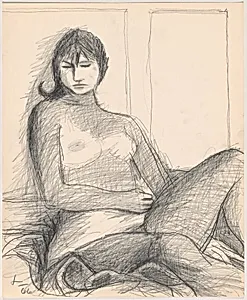
Frank Lobdell was an American abstract painter born in Kansas City, Missouri, in 1921, who became a central figure of the San Francisco Bay Area art scene in the postwar decades. He studied at the St. Paul School of Art before his education was interrupted by service in the United States Army during World War II, an experience of profound and lasting consequence for his art. After the war, he enrolled at the California School of Arts and Crafts and later studied in Paris on the GI Bill, where exposure to European modernism — particularly the work of Paul Klee and the Surrealists — further shaped his developing sensibility.
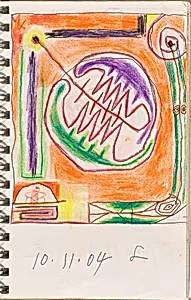
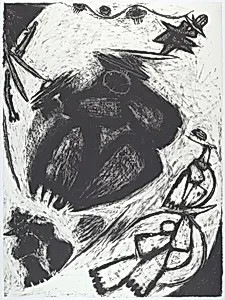
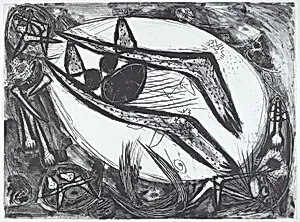
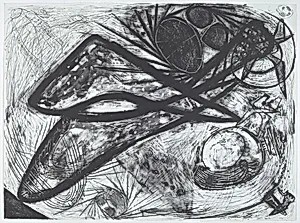
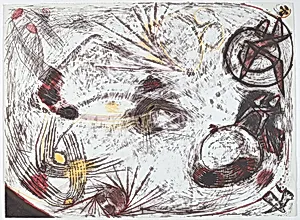
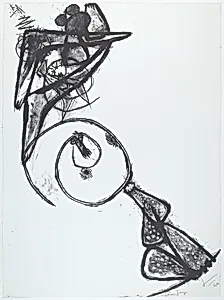
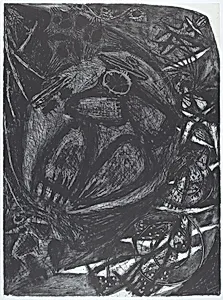
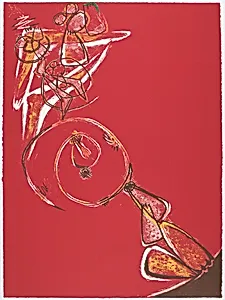
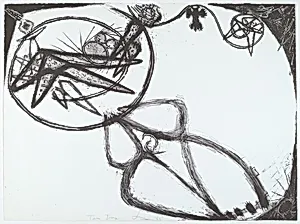
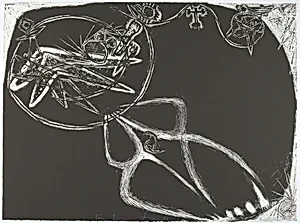
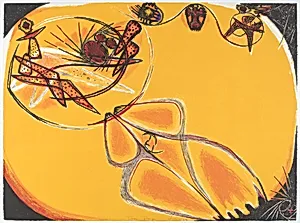
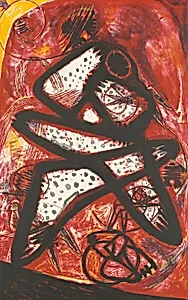
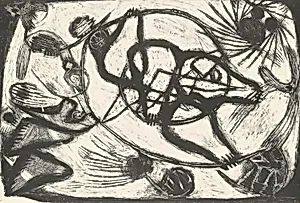
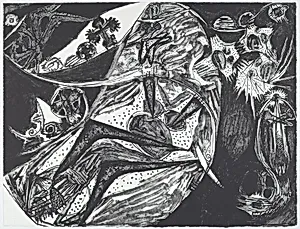
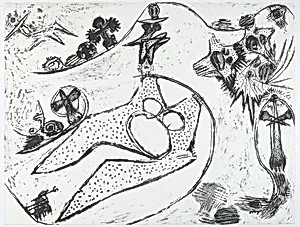
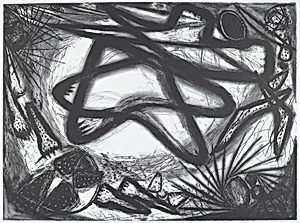
Lobdell's mature painting is characterized by a powerful, anguished figural abstraction that sets him apart from the more gestural or lyrical strains of Abstract Expressionism. His canvases feature recurring biomorphic forms — suggestive of figures, limbs, and organic structures — locked in dense, often tormented compositions that communicate suffering, endurance, and existential struggle. The palette tends toward dark, intense chromatics relieved by passages of luminous color, and the paint is applied with a physicality that gives his surfaces a quality of bodily urgency. His work has been read as a sustained meditation on mortality, violence, and survival — themes that his wartime service rendered not abstract but immediate.
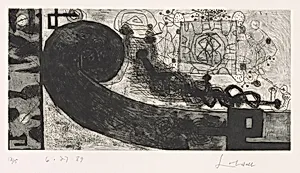
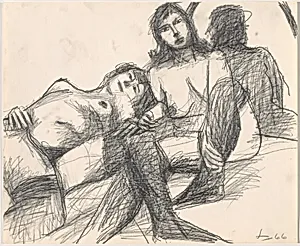
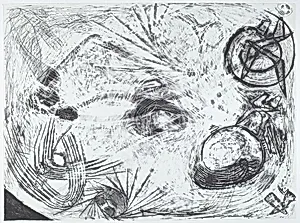
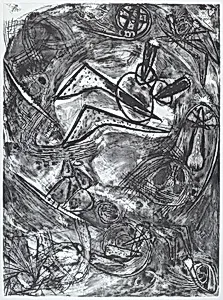
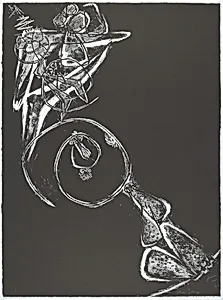
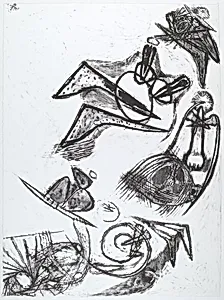
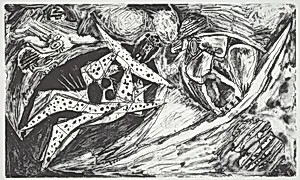
Lobdell taught for many years at Stanford University, where he became a respected and influential teacher, shaping generations of West Coast artists. He was associated with the group of Bay Area painters that included Hassel Smith, Elmer Bischoff, and David Park, though his work pursued a more consistently abstract and formally severe direction than some of his colleagues. His prints, particularly his lithographs, extended the visual language of his painting into the graphic medium with comparable force.
Lobdell died in 2013, and his work is represented in the permanent collections of major American museums. He is recognized as one of the significant figures of postwar American abstraction, an artist whose uncompromising vision produced a body of work of exceptional emotional and formal depth.