Frank Stella, born on May 12, 1936, in Malden, Massachusetts, to first-generation Italian-American parents, grew up immersed in art from an early age. His father, a gynecologist who painted houses to fund medical school, enlisted young Stella in sanding and scraping tasks as an informal apprenticeship, while his mother, an artist who painted landscapes, further nurtured his creative inclinations. Stella studied at Phillips Academy in Andover, Massachusetts, where teacher Patrick Morgan introduced him to painting in his sophomore year, and he encountered influences like Josef Albers and Hans Hofmann. He continued at Princeton University, majoring in history while taking art courses under professors Stephen Greene and William C. Seitz, who exposed him to the New York art scene and artists such as Jackson Pollock and Franz Kline.
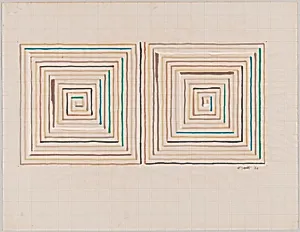
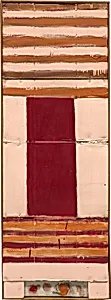
Stella's early work defined minimalism and post-painterly abstraction through his Black Paintings series (1958–1960), featuring stark black enamel stripes on raw canvas, such as *Die Fahne Hoch!* (1959) and *The Marriage of Reason and Squalor, II* (1959), which emphasized the picture as a flat object: "What you see is what you see." These shaped canvases rejected Abstract Expressionist illusionism, pioneering hard-edge painting. By the mid-1960s, he produced irregular polygons and the vibrant Protractor Series (1967–1971), with arcs and vivid colors inspired by Middle Eastern architecture, including *Harran II* (1967).
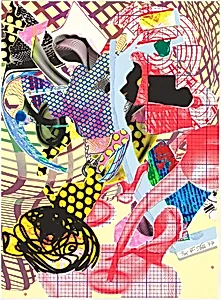
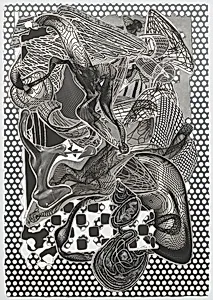
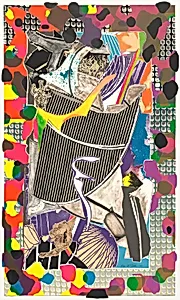
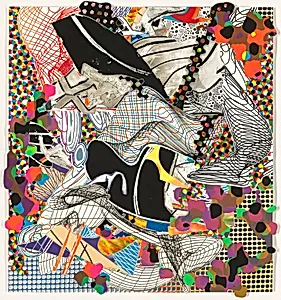
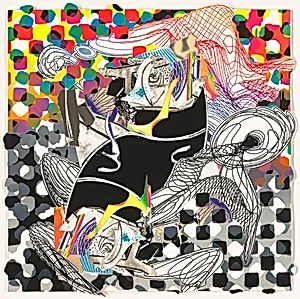
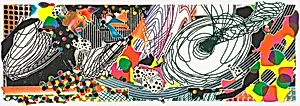
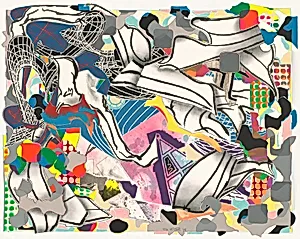
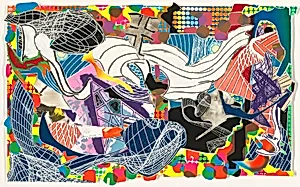
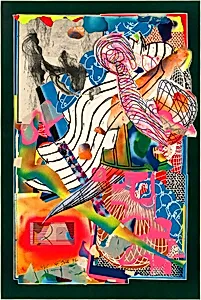
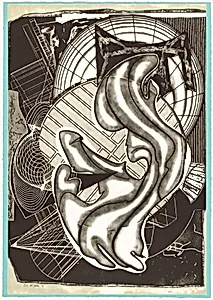
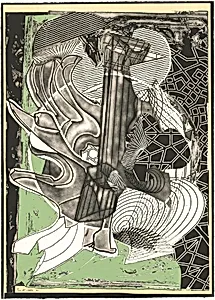
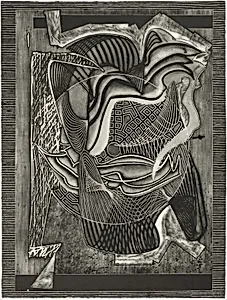
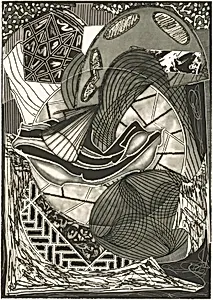
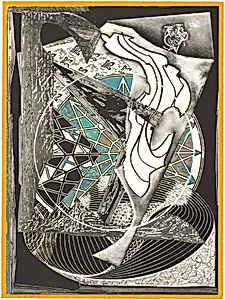
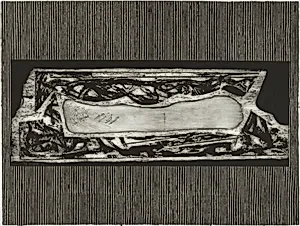
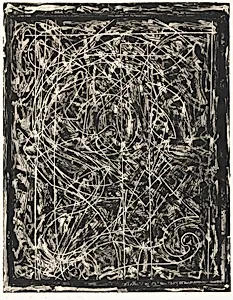
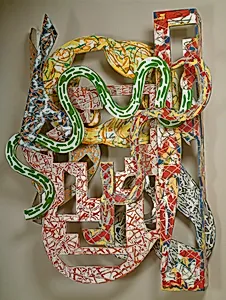
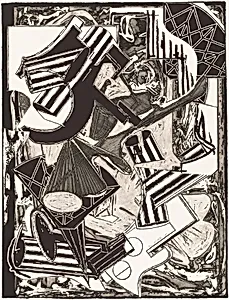
Stella's style evolved dramatically into "maximalist" baroque reliefs and sculptures. The Polish Village series (1970–1973) drew from destroyed synagogues, while the Moby-Dick series (mid-1980s–mid-1990s) featured 260 multimedia pieces with 3D forms, collages, and digital tech, such as *The Honor and Glory of Whaling* (1991). Later, the Scarlatti K series (2006–2012) used 3D printing for dynamic polychrome stars, culminating in works like *Jasper's Split Star* (2017). Married twice—first to art historian Barbara Rose (1961–1970), with whom he had two children, then to Harriet E. McGurk—he balanced family with prolific output across painting, sculpture, and printmaking.
Stella's legacy as a transformative American artist spans minimalism's austerity to exuberant, industrial-scale innovations, influencing generations with his rejection of illusion and embrace of the object. Major retrospectives at MoMA (1970, 1987) and Whitney (2015) cemented his impact; he died on May 4, 2024, in New York City from lymphoma, leaving over 147 works in prominent collections.