Ctrl K
1569–1622
Frans Pourbus the Younger, born in Antwerp around September–November 1569, emerged from a distinguished dynasty of Netherlandish painters spanning three generations. He was the son of the portraitist and genre painter Frans Pourbus the Elder and Suzanna Floris, daughter of the architect and sculptor Cornelis Floris de Vriendt; his grandfather, Pieter Pourbus, was a leading portrait and history painter in Bruges. Orphaned young after his father's death at age 36 when Frans was just 12, he trained under his father in the traditional Flemish style and likely continued in his grandfather's workshop, honing skills in meticulous portraiture. By 1591–92, at age 22, he gained master status in Antwerp's Guild of St. Luke, marking his professional debut.
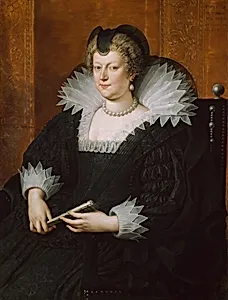
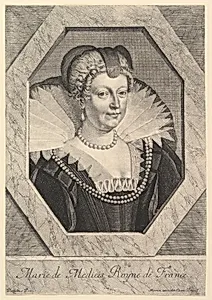
Pourbus's career propelled him across Europe's royal courts, embodying the refined Flemish portrait tradition while adapting to international patronage. He first served the Spanish regents Archduke Albert and Infanta Isabella in Brussels, painting her portrait in 1600, now in the Royal Collection. Recruited by Vincenzo I Gonzaga, he became court painter in Mantua from 1600 to 1609, producing works like Portrait of Eleonora de' Medici Gonzaga (1600–1602). In 1609, Marie de' Medici summoned him to Paris as her principal portraitist, where he remained until his death in 1622, naturalizing as French. His style featured elegant, static compositions emphasizing lavish costumes, jewelry, and draperies, as seen in portraits of Henry IV of France and Marie de' Medici herself (Louvre), blending Flemish precision with courtly grandeur.
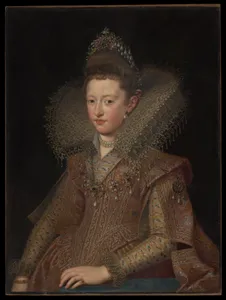
Among his masterpieces are full-length regal portraits such as Louis XIII with the Order of Saint Esprit, Anne of Austria, Margherita Gonzaga (Metropolitan Museum of Art), and Infanta Isabella (Prado), alongside group scenes like Charles d'Arenberg and Anne de Croy with family (possibly including a self-portrait). Pourbus's versatility extended to religious works like St. Francis of Assisi Receiving the Stigmata. His legacy endures as one of the era's most sought-after court artists, bridging Flemish heritage with the opulence of Mantuan and French courts, influencing subsequent generations of portraitists through his technical mastery and diplomatic adaptability.