Ctrl K
1798–1898
**Frédéric Bouchot (1798–after 1850)** was a French lithographer, illustrator, and caricaturist active in Paris during the first half of the nineteenth century. He specialized in producing humorous and satirical prints for popular periodicals, capturing the quirks of everyday life, social types, and cultural scenes with a light, observational touch.
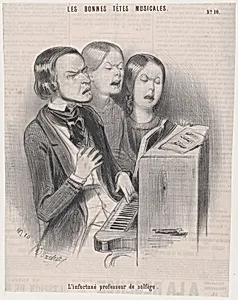
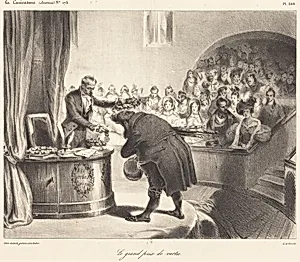
Bouchot contributed regularly to leading satirical journals of the era, including *Le Charivari*, *La Caricature*, and *Journal pour rire*. His lithographs often depicted musicians, tradespeople, lovers, and urban characters in exaggerated or ironic situations. Notable examples include the 1840 print *The Unfortunate Teacher of Musical Theory* (Metropolitan Museum of Art) and the series *Les Malheurs d’un amant heureux* (The Misfortunes of a Contented Lover), as well as *Le Grand Prix de vertu* from the 1830s (National Gallery of Art). He also created illustrations for albums such as *Debtors and Creditors* and scenes of Parisian districts, like the flower market.
Working in the vibrant tradition of French graphic satire alongside contemporaries such as Honoré Daumier and Paul Gavarni, Bouchot helped shape the visual language of the illustrated press. His output reflects the lively print culture of July Monarchy and Second Empire Paris, where lithography enabled rapid, affordable distribution of witty commentary. Though less celebrated today than some peers, his work remains valued by collectors and institutions for its charm and historical insight into nineteenth-century French society.
Bouchot’s legacy endures through the many prints preserved in major museums, including the British Museum, Cincinnati Art Museum, and others. These holdings document his role in the golden age of French caricature and continue to offer engaging glimpses into the humor and habits of his time.