Ctrl K
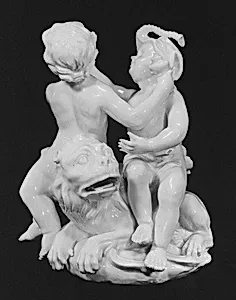
1723–1785
Friedrich Elias Meyer der Ältere (1723–1785) was a prominent German sculptor and porcelain modeler whose career bridged the glittering Rococo era's fascination with delicate, ornate figurines and grand table services. Born in Erfurt to sculptor Matthias Meyer, he grew up in Gotha after his father's early death and began his apprenticeship in 1737 under court sculptor Michael Grünbeck. By 1741, Meyer served as court sculptor to Heinrich I von Schwarzburg-Sondershausen, then moved to the Weimar court under Ernst August I, who sponsored study trips to Berlin (1743) and Dresden (1745). These experiences honed his skills in Baroque design, evident in his contributions to Eisenach's new castle in 1746–47. In 1748, following the duke's death, he joined the Meissen Porcelain Manufactory, stepping in for the ailing Johann Friedrich Eberlein and collaborating with master modeler Johann Joachim Kändler.
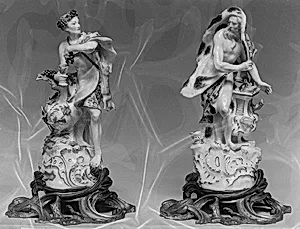
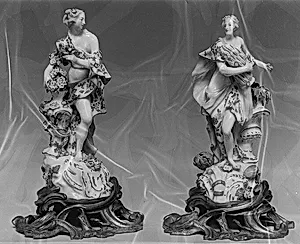
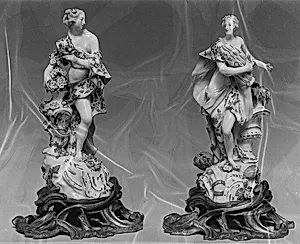
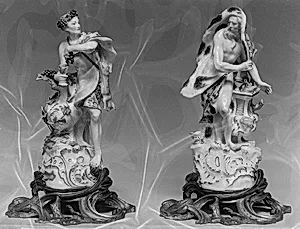
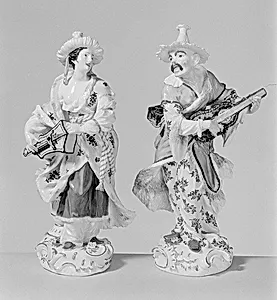
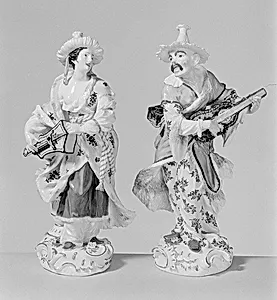
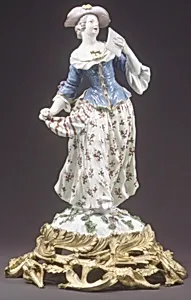
At Meissen, Meyer thrived in the Rococo tradition, crafting whimsical porcelain figures on rocaille bases. His iconic series included the exotic "Malabaren" group (c. 1750) and the "Galante Kapelle" musicians and singers, capturing the era's playful theatricality. Economic woes from the Seven Years' War and tensions with Kändler prompted his 1761 recruitment to Berlin's nascent porcelain factory under Johann Ernst Gotzkowsky, which became the Königliche Porzellan-Manufaktur (KPM) in 1763. There, as model master with a lavish 1,500 Taler salary, he worked alongside his brother Wilhelm Christian Meyer, director of the Prussian Academy of Arts.
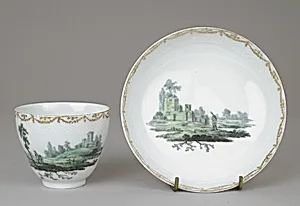
Meyer's Berlin output defined KPM's early elegance under Frederick the Great's patronage. He designed enduring service patterns like "Reliefzierat" (1765–66, for Potsdam's Neues Palais), "Neuzierat," "Antikzierat" (Rocaille), and "Neuosier," blending floral reliefs, gilding, and rococo scrolls. Highlights include a lavish 1770–72 dessert service for Catherine the Great (Hermitage, St. Petersburg), the "Merkur und Amor" group (c. 1770, Kunstgewerbemuseum Berlin), and a bust of Frederick II (1778). Appointed academy professor in 1782, he married Johanna Friederica Martius in 1776, fathering sculptors like son Friedrich Elias Meyer der Jüngere. Meyer's legacy endures in KPM's foundational repertoire, influencing porcelain design across Europe with his masterful fusion of sculpture and luxury craft—elegant, narrative-driven works that embodied Enlightenment opulence.