
Ctrl K
1753–1820
**Charles-Melchior Descourtis (1752/1753–1819/1820)** was a French printmaker renowned for his mastery of color engraving techniques during the late eighteenth and early nineteenth centuries. Born in Paris, he spent his entire career in the city, becoming one of the most accomplished practitioners of multi-plate color printing in his era.
He studied under the prominent engraver Jean-François Janinet, whose innovative methods in aquatint and wash-manner printing profoundly shaped Descourtis’s approach. Like his teacher, Descourtis specialized in producing vibrant color prints through the careful registration of multiple plates—typically four—to achieve harmonious blends of hues without relying solely on aquatint’s tonal effects. His work often combined etching, engraving, and toolwork on the plates, resulting in refined, painterly images that captured both everyday scenes and dramatic subjects.
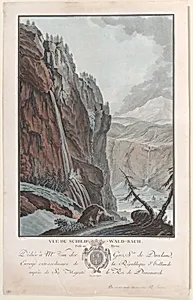
Descourtis created notable series after leading artists of the day, including views of Paris after Pierre-Antoine de Machy (Demachy), gallant and village scenes after Jean-Frédéric Schall and Nicolas Antoine Taunay, and revolutionary-era compositions. Standout examples include *L’Amant surpris* (The Lover Surprised), *Noces de village* (Village Wedding), and plates from the *Paul et Virginie* series, as well as political prints such as depictions of the Corps législatif and the 18 Brumaire coup. He also produced views of Italy and Switzerland. Some prints associate him with Swiss artist Rudolph Samuel Henzi, reflecting the international exchange of printmaking in this period.
Though his output was relatively small and remained somewhat underrecognized in later centuries, Descourtis’s technical precision and coloristic sensitivity contributed significantly to the golden age of French color printmaking. His works are held in major collections, including the National Gallery of Art and the Metropolitan Museum of Art, where they continue to illustrate the transition from Rococo elegance to Revolutionary-era imagery.