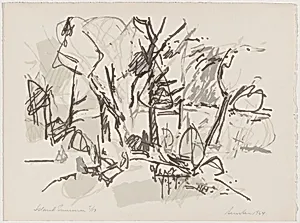
George Raymond Bunker (1923–1991) was an American painter and educator whose deeply felt engagement with landscape placed him in a tradition stretching from Cézanne's Provençal motifs to the meditative abstraction of mid-twentieth-century American art. Born in 1923, Bunker built a distinguished career as both an artist and an institution builder, holding high academic positions at two important art institutions — first in Philadelphia and later in Houston — where he shaped generations of emerging painters. His works are held in the collections of the National Gallery of Art, the Pennsylvania Academy of the Fine Arts, and the Woodmere Art Museum in Philadelphia.
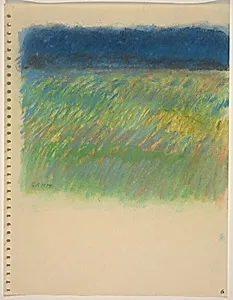
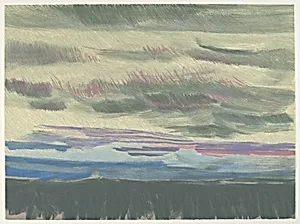
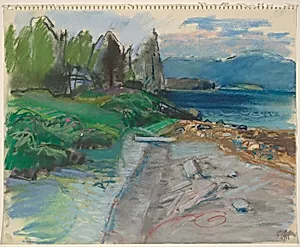
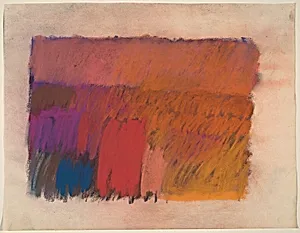
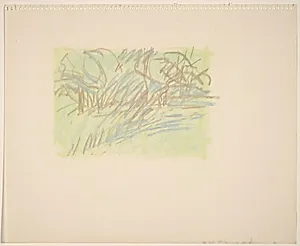
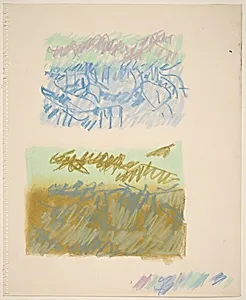
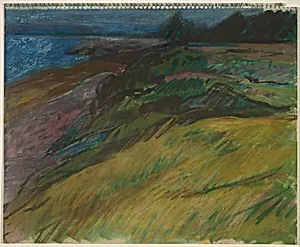
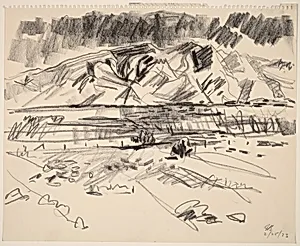
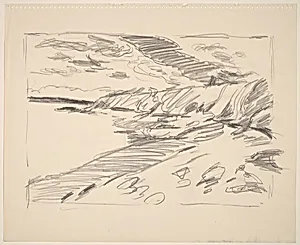
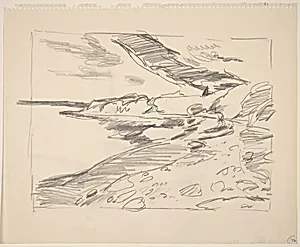
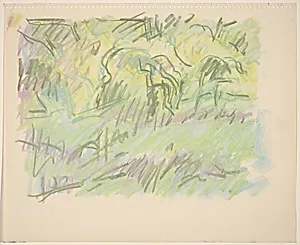
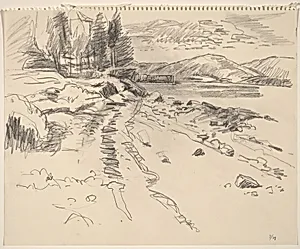
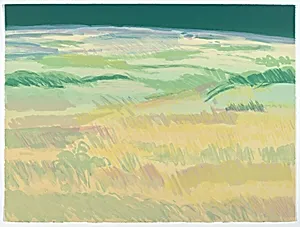
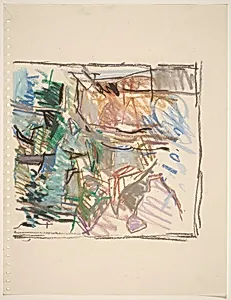
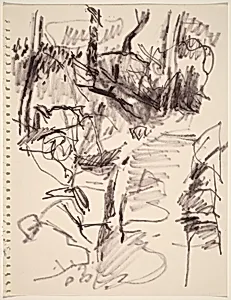
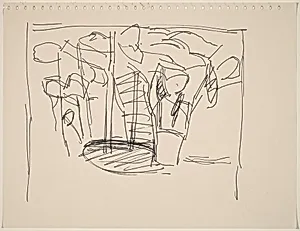
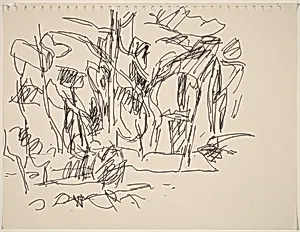
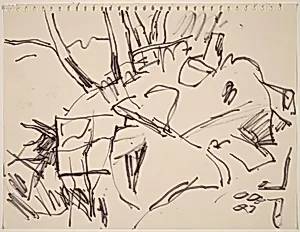
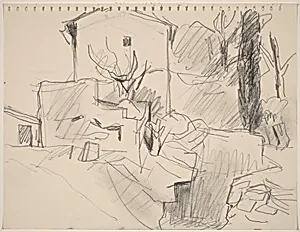
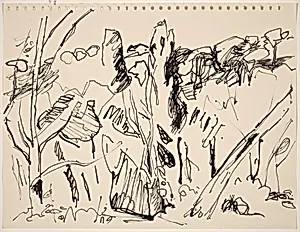
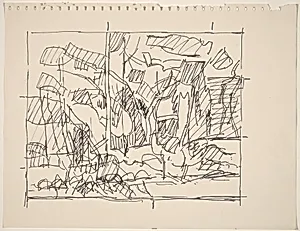
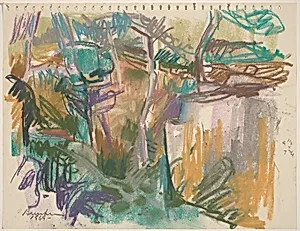
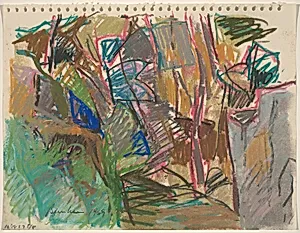
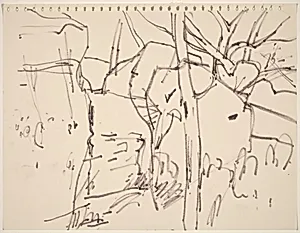
All of Bunker's artistic production was rooted in landscape observed directly from nature. Working outdoors in a variety of media, including pastel, he filled sketchbooks with studies that became the foundation for finished drawings, collages, prints, and paintings. His relationship to Cézanne was formative and sustained: Bunker owned part of the Bibemus Quarry near Aix-en-Provence, France — one of the famous sites that Cézanne himself had painted repeatedly — and he also maintained a studio on Cranberry Island off the coast of Maine. These two locations, one steeped in European modernism and the other defined by spare northern light, anchored his mature vision. His works include In the Quarry (1956, collage on cardboard) and Landscape (1972), both held at the Pennsylvania Academy of the Fine Arts.
Over the course of his career, Bunker's landscapes grew increasingly abstracted and minimal, shifting emphasis from the rhythmic particulars of a given place toward its underlying structure and color. His work occupies a thoughtful middle ground between representation and abstraction — never abandoning the specific landscape as its point of departure, but always pressing toward essences. As a teacher and academic leader, Bunker's influence extended well beyond his own canvases, helping to foster serious engagement with landscape as a subject worthy of sustained formal inquiry during a period when abstraction often dominated critical discourse.