Ctrl K
1834–1896
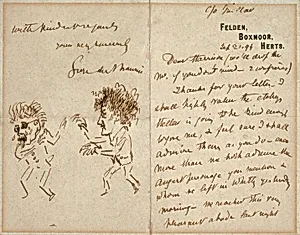
George Louis Palmella Busson du Maurier (1834–1896) was a French-born British illustrator, cartoonist, and novelist whose sharp wit captured the absurdities of Victorian society. Born in Paris to Louis-Mathurin Busson du Maurier and Ellen Clarke—daughter of the notorious Regency courtesan Mary Anne Clarke—he grew up immersed in a fabricated family lore of aristocratic émigrés, though his grandfather had fled France amid fraud allegations. The family settled in England when George was seventeen, where he pursued chemistry briefly at University College London before committing to art.
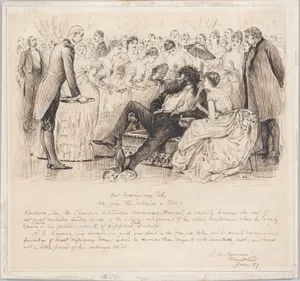
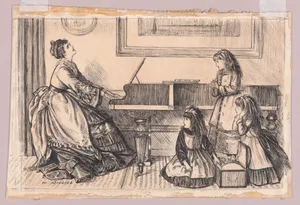
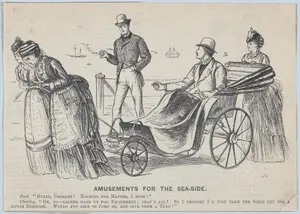
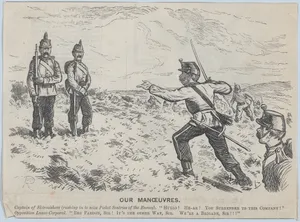
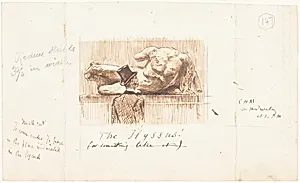
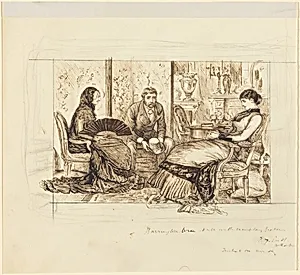
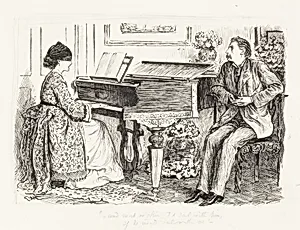
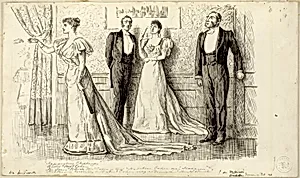
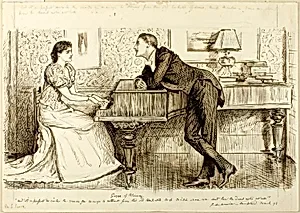
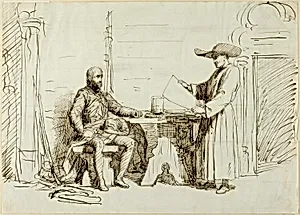
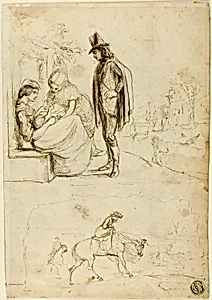
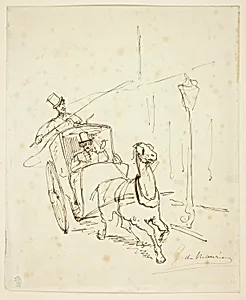
Du Maurier honed his skills studying under the esteemed painter Charles Gleyre in Paris's Latin Quarter, immersing himself in bohemian student life that later inspired his fiction. A tragic accident in Antwerp cost him vision in his left eye, compelling him to abandon oil painting for the precision of black-and-white drawing. By 1859, he exhibited historical and literary paintings at the Royal Academy, but his true métier emerged in illustration. Joining Punch as a staff artist in 1865, he produced two cartoons weekly, satirizing the pretensions of the bourgeoisie, aesthetes, and nouveau riche with gentle acuity.
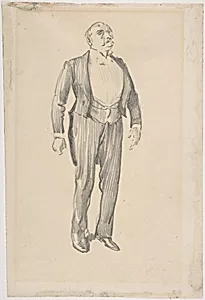
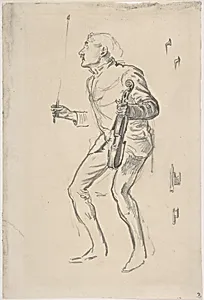
His iconic Punch contributions included "True Humility" (1895), which birthed the phrase "good in a curate's egg," the "bedside manner" cartoon (1884), and a prescient depiction of "Edison's telephonoscope" (1879). Beyond Punch, du Maurier illustrated literary masterpieces: The Notting Hill Mystery (1862–63), Elizabeth Gaskell's Cousin Phillis (1863–65) and Wives and Daughters (1864–65), Thomas Hardy's The Hand of Ethelberta and A Laodicean, Wilkie Collins's The Moonstone (1890 frontispiece), and George Meredith's The Adventures of Harry Richmond. His own Gothic novel Trilby (1894), featuring the hypnotic Svengali, included 121 self-illustrations and became a sensation.
Du Maurier's legacy endures in his influence on social caricature and popular fiction; Peter Ibbetson (1891) and the posthumous The Martian (1897) further showcased his versatility. Married to Emma Wightwick with five children—including Sylvia, mother of author Daphne du Maurier—his Hampstead home fostered literary ties, notably with Henry James. Though eyesight faltered by 1891, his oeuvre of over 3,000 Punch drawings remains a vivid chronicle of Victorian mores, blending humor, humanity, and artistic finesse.