
Ctrl K
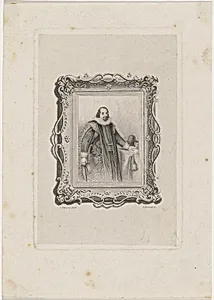
1742–1822
**George Murray (1742–1822)** was an American engraver of Scottish birth who became a prominent figure in early American printmaking. Born in Scotland around 1742, he trained under the noted English engraver Anker Smith before emigrating to the United States. By the mid-1790s he had established himself in Philadelphia, where he contributed to the growing American market for engraved portraits, book illustrations, and decorative prints.
Murray worked primarily in the tradition of reproductive engraving, producing line engravings and etchings after paintings and designs by other artists. He was a partner in the firm Murray, Draper, Fairman & Co., one of the leading engraving businesses of the period, which supplied illustrations for books, banknotes, and official documents. Among his documented works are an engraving of *Lord Bacon* and the title page for *Lord Bacon’s Essays*, both preserved in the National Gallery of Art’s Rosenwald Collection, as well as a portrait of George Washington.
His studio served as an important training ground for the next generation of American engravers; the young James B. Longacre apprenticed under Murray and executed early portraits of Washington, Jefferson, and Hancock while in the firm. Murray’s technical skill and business acumen helped professionalize engraving in the young republic, bridging British training with American demand for accessible printed imagery.
Although biographical details of his personal life remain limited, Murray’s legacy endures through the prints that circulated widely in the early nineteenth century and through the artists he mentored. His contributions to the Rosenwald Collection and other institutional holdings continue to document the development of American graphic arts in the Federal period.
No artworks found for this artist