Ctrl K
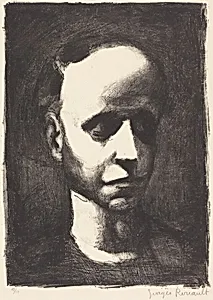
1871–1958
Georges-Henri Rouault was born on May 27, 1871, in a Paris cellar during the violent "Bloody Week" of the Paris Commune, when a stray shell destroyed his family's home in the working-class Belleville district. Raised by a carpenter father who worked at the Pleyel piano factory and a grandfather who collected prints by Honoré Daumier, Rembrandt, Courbet, and Manet, Rouault showed early artistic promise. At age 14, he apprenticed for five years with glass painter Georges Hirsch, restoring medieval stained-glass windows, including those at Chartres Cathedral—an experience that profoundly shaped his mature style. He attended evening classes at the École des Arts Décoratifs before entering the École des Beaux-Arts in 1890, where he studied under Symbolist master Gustave Moreau, becoming his favorite pupil alongside Henri Matisse and Albert Marquet. After Moreau's death in 1898, Rouault curated the Musée Gustave Moreau in Paris.
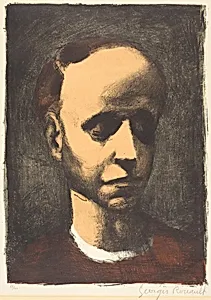
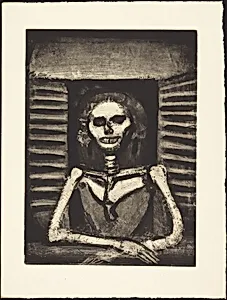
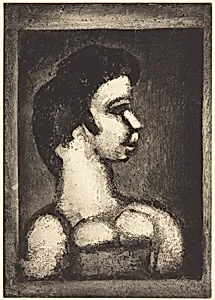
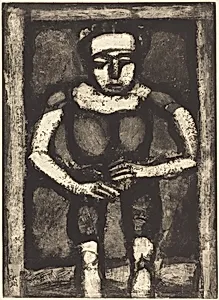
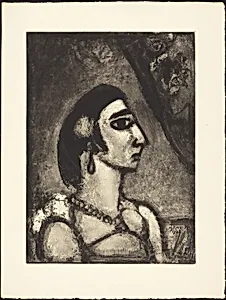
Rouault's work bridged Fauvism—through his 1905 Salon d'Automne exhibition with Matisse and friends like Marquet—and Expressionism, though he remained defiantly independent, never fully aligning with any movement. His signature style evoked stained glass with thick black outlines, vibrant glowing colors, and impasto oils, conveying raw emotionality and moral intensity. Influenced by Moreau's symbolism, Vincent van Gogh's contrasts, and his deepening Catholic faith after a 1895 conversion, Rouault depicted society's outcasts—clowns, prostitutes, corrupt judges—as emblems of human suffering and redemption, often infused with grotesque caricature and empathy.
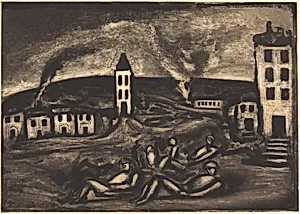
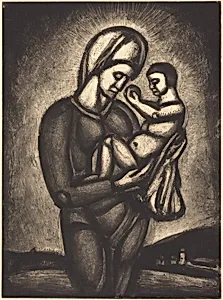
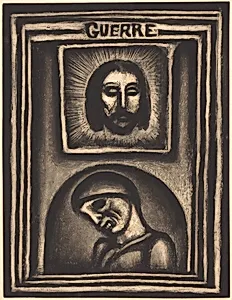
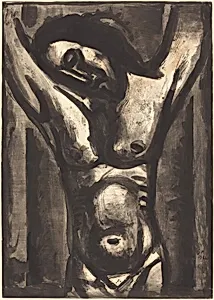
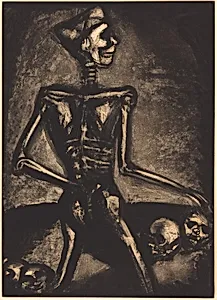
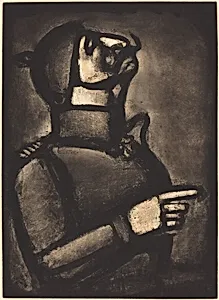
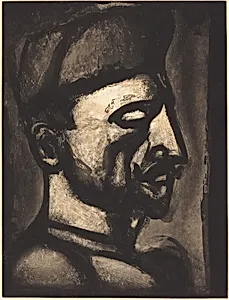
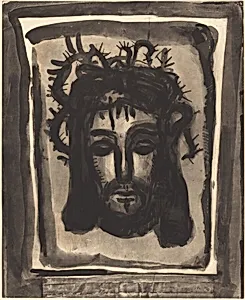
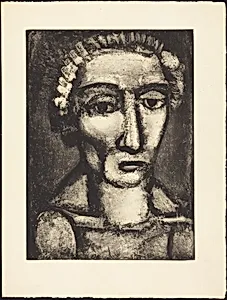
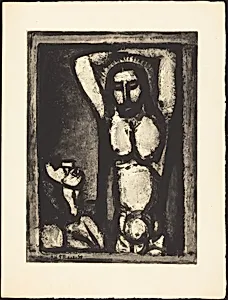
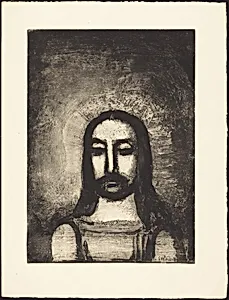
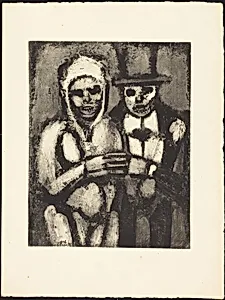
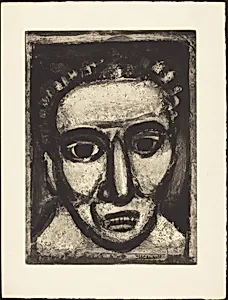
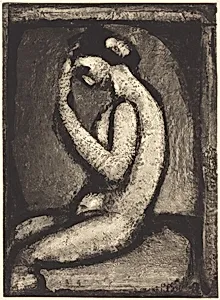
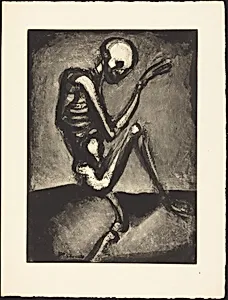
Key works include his early *The Way to Calvary* (1891), the Fauvist *Jeu de massacre (Slaughter)* (1905), empathetic *Two Nudes (The Sirens)* (1906–08), and the monumental engraving series *Miserere* (1912–27, published 1948), a cry against war and misery. *The Old King* (1916–36), reworked over decades, and serene clowns like *Pierrot* (1937–38) highlight his evolution toward mystical biblical landscapes, such as one from 1952. He designed sets for Sergei Diaghilev's 1929 ballet *The Prodigal Son* and created stained glass for a church in 1949.
In 1908, Rouault married pianist Marthe Le Sidaner, sister of painter Henri Le Sidaner; they had four children. After winning a 1947 lawsuit to reclaim unfinished works from dealer Ambroise Vollard, he burned over 300 canvases he deemed unworthy. Dying on February 13, 1958, Rouault received France's first state funeral for an artist. His unflinching fusion of faith, social critique, and modernist vigor influenced Expressionists and revived appreciation for religious art in a secular age, cementing his legacy as a profoundly spiritual outsider.