
Ctrl K
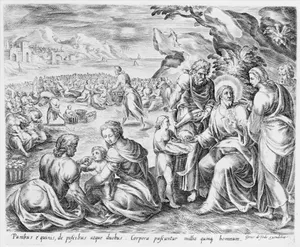
1509–1591
Gerard de Jode (c. 1509–1591) was a prominent Netherlandish cartographer, engraver, and publisher based in Antwerp. Born in Nijmegen, he established himself in the vibrant artistic and commercial center of Antwerp, where he was admitted to the Guild of St. Luke in 1547. This marked the beginning of his career as a publisher of maps and prints.
De Jode worked within the established Netherlandish tradition of precise engraving and cartographic publishing. He frequently produced and printed maps by other leading figures of the era, including Giacomo Gastaldi’s world map in 1555, Jacob van Deventer’s map of the Duchy of Brabant in 1558, and Abraham Ortelius’s eight-sheet world map in 1564. His own engravings demonstrate meticulous attention to detail and a refined line work characteristic of sixteenth-century Flemish printmaking.
His most significant achievement was the two-volume atlas *Speculum Orbis Terrarum*, published in 1578. Intended to rival Ortelius’s highly successful *Theatrum Orbis Terrarum* (1570), de Jode’s atlas featured maps noted by scholars for their superior detail and stylistic elegance, though it sold poorly at the time, with only about a dozen copies surviving. He also created influential world maps, such as the *Hemispherium Ab Æquinoctiali Linea, Ad Circulum Poli Antarctici*, drawing inspiration from Guillaume Postel’s polar planispheres, and may have produced a related terrestrial globe.
De Jode’s legacy endured through his family and the quality of his output. His son Cornelis de Jode completed and published an enlarged edition, *Speculum Orbis Terrae*, in 1593. Although commercial success eluded the atlases during his lifetime, de Jode’s maps and engravings are now recognized for their cartographic excellence and artistic merit, contributing to the rich tradition of Netherlandish mapmaking that influenced later generations. With dozens of works preserved in museum collections today, his contributions remain a vital part of the history of Renaissance cartography and print culture.
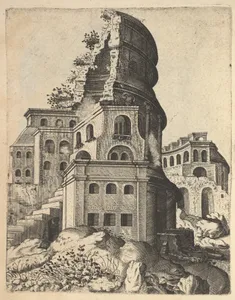
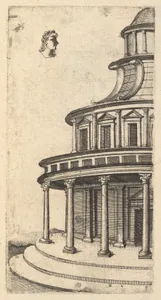
![Partial view of a Building [Tem Ro Penatibus Dicatu] from the series 'Ruinarum variarum fabricarum delineationes pictoribus caeterisque id genus artificibus multum utiles'](https://images.artheonmuseum.org/met/dp/thumb/partial-view-of-a-building-tem-ro-penatibus-dicatu-from-the-series-ruinarum-vari-408680.webp)
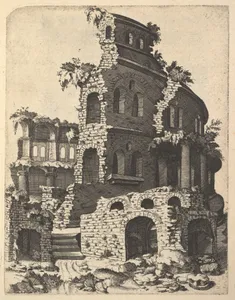
![Partial View of a Building [Palatium Claudie] from the series 'Ruinarum variarum fabricarum delineationes pictoribus caeterisque id genus artificibus multum utiles'](https://images.artheonmuseum.org/met/dp/thumb/partial-view-of-a-building-palatium-claudie-from-the-series-ruinarum-variarum-fa-408689.webp)
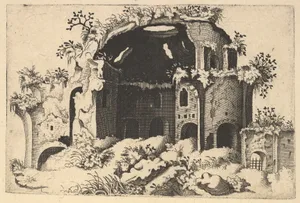
![Partial view of a Building [Templum Veneris] from the series 'Ruinarum variarum fabricarum delineationes pictoribus caeterisque id genus artificibus multum utiles'](https://images.artheonmuseum.org/met/dp/thumb/partial-view-of-a-building-templum-veneris-from-the-series-ruinarum-variarum-fab-408682.webp)
![Partial View of a Monument [Mercurii Templum] from the series 'Ruinarum variarum fabricarum delineationes pictoribus caeterisque id genus artificibus multum utiles'](https://images.artheonmuseum.org/met/dp/thumb/partial-view-of-a-monument-mercurii-templum-from-the-series-ruinarum-variarum-fa-408685.webp)
![Partial View of a Building [Templum Isaiae Prophetae] from the series 'Ruinarum variarum fabricarum delineationes pictoribus caeterisque id genus artificibus multum utiles'](https://images.artheonmuseum.org/met/dp/thumb/partial-view-of-a-building-templum-isaiae-prophetae-from-the-series-ruinarum-var-408687.webp)
![Ruin of a round Temple [Templum Idor Egito], from the series 'Ruinarum variarum fabricarum delineationes pictoribus caeterisque id genus artificibus multum utiles'](https://images.artheonmuseum.org/met/dp/thumb/ruin-of-a-round-temple-templum-idor-egito-from-the-series-ruinarum-variarum-fabr-408624.webp)
![Half of an Arch [Porta Antonae] from the series 'Ruinarum variarum fabricarum delineationes pictoribus caeterisque id genus artificibus multum utiles'](https://images.artheonmuseum.org/met/dp/thumb/half-of-an-arch-porta-antonae-from-the-series-ruinarum-variarum-fabricarum-delin-408627.webp)
![Cross-Section of Round Temple [Pinaculu Termar], from the series 'Ruinarum variarum fabricarum delineationes pictoribus caeterisque id genus artificibus multum utiles'](https://images.artheonmuseum.org/met/dp/thumb/cross-section-of-round-temple-pinaculu-termar-from-the-series-ruinarum-variarum-408629.webp)
![Half of Building [Templum Saturni] from the series 'Ruinarum variarum fabricarum delineationes pictoribus caeterisque id genus artificibus multum utiles'](https://images.artheonmuseum.org/met/dp/thumb/half-of-building-templum-saturni-from-the-series-ruinarum-variarum-fabricarum-de-408631.webp)
![Partial view of a Building [Sepulchrum Adriani] from the series 'Ruinarum variarum fabricarum delineationes pictoribus caeterisque id genus artificibus multum utiles'](https://images.artheonmuseum.org/met/dp/thumb/partial-view-of-a-building-sepulchrum-adriani-from-the-series-ruinarum-variarum-408681.webp)
![The Amphitheater in Bordeaux [Teatrum Bordeos; Transitorium Caesaris], from the series 'Ruinarum variarum fabricarum delineationes pictoribus caeterisque id genus artificibus multum utiles'](https://images.artheonmuseum.org/met/dp/thumb/the-amphitheater-in-bordeaux-teatrum-bordeos-transitorium-caesaris-from-the-seri-408630.webp)
![Ruin of a Palace Facade [Palatium M. Agrippa] from the series 'Ruinarum variarum fabricarum delineationes pictoribus caeterisque id genus artificibus multum utiles'](https://images.artheonmuseum.org/met/dp/thumb/ruin-of-a-palace-facade-palatium-m-agrippa-from-the-series-ruinarum-variarum-fab-408626.webp)