Ctrl K
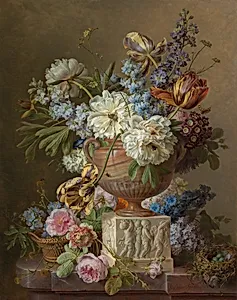
**Gerard van Spaendonck (1746–1822)** was a Dutch painter renowned for his exquisite floral still lifes and botanical illustrations, whose career flourished in France under royal and imperial patronage. Born in Tilburg on 22 March 1746, he was the older brother of fellow artist Cornelis van Spaendonck. In the 1760s he studied under the decorative painter Guillaume-Jacques Herreyns in Antwerp before moving to Paris in 1769.
There he quickly established himself, receiving appointment in 1774 as miniature painter to the court of Louis XVI. In 1780 he succeeded Madeleine Françoise Basseporte as professor of floral painting at the Jardin des Plantes and was elected to the Académie des beaux-arts. His pupils included the celebrated Pierre-Joseph Redouté and Henriette Vincent.
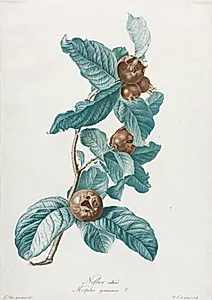
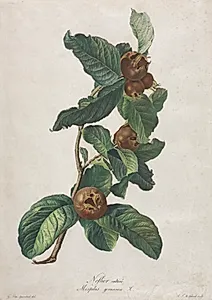
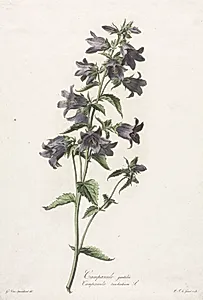
Van Spaendonck worked in both oil and watercolor, producing masterful compositions that blended the precise botanical detail of the Dutch tradition with French elegance and refinement. He contributed more than fifty works to the prestigious *Les Vélins du Roi*, the royal collection of botanical watercolors on vellum. Between 1799 and 1801 he published the influential series *Fleurs Dessinées d’après Nature*, twenty-four high-quality engraved plates that served as an instructional bible for floral artists.
His achievements earned him further honors: appointment as adviser to the Académie in 1788, founding membership in the Institut de France in 1795, the Légion d’honneur in 1804, and ennoblement by Napoleon. Van Spaendonck died in Paris on 11 May 1822 and is buried in Père Lachaise Cemetery. His legacy endures through his technical mastery, his role in elevating flower painting, and his influence on subsequent generations of botanical artists.