Ctrl K
1550–1620
**Giacomo Franco (1550–1620)**
Giacomo Franco, born around 1550 possibly in Urbino or Venice, emerged as a pivotal figure in Venetian printmaking as the natural son of the painter and engraver Battista Franco Veneziano. He likely received his early training in his father's workshop at Santa Fosca, where Battista had executed notable etchings of Michelangelo's Sistine Chapel and Raphael's Vatican frescoes, honing Giacomo's skills in intaglio techniques from a young age. By 1579, Franco was inscribed in Venice's guild of printers and booksellers, and from 1606 to 1619 in the painters' guild, establishing himself at "all'Insegna del Sole" in the Frezzeria as an engraver, designer, publisher, and dealer.
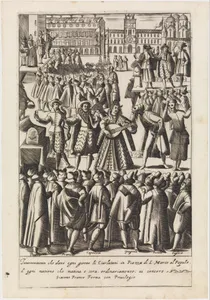
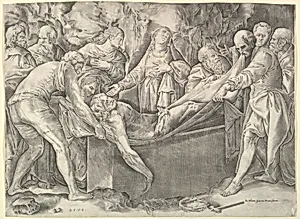
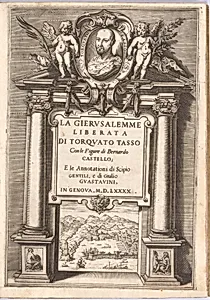
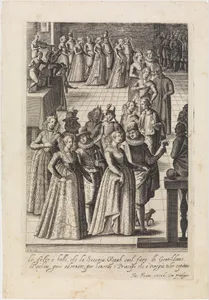
Franco's artistic style epitomized the Venetian tradition of detailed, documentary printmaking, capturing the city's vibrant daily life, architecture, costumes, and ceremonies with remarkable precision and immediacy. His works often featured intricate engravings of processions, festivals, and urban scenes, blending reportage with artistic flourish. Among his early contributions were engravings for Fabritio Caroso's dance manual *Il ballarino* (1581, reprinted 1630) and illustrations for a Venetian edition of Ovid's *Metamorphoses* (1584). He also produced reproductive prints after masters like Veronese, including *Pietà* and *Mystic Marriage of St. Catherine*, and collaborated on plates for Torquato Tasso's *Gerusalemme Liberata* (1590, possibly with Bernardo Castello and Agostino Carracci). Notable standalone pieces include *Entrance to the Arsenal, Venice*, *Studies of Arms, Shoulders, and Hands*, and views like the *Loggetta* in St. Mark's Square (1610).
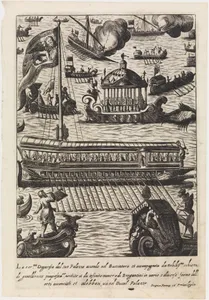
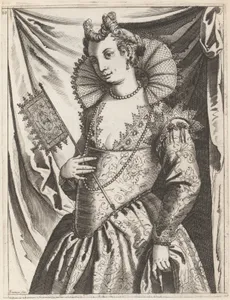
Franco's publishing ventures secured privileges for innovative series, such as *Habiti delle done venetiane* (1591) and *Nuova inventione de diverse mostre* (1596, with writing and sewing models), culminating in the expansive *Habiti d'huomeni et donne venetiane con la processione della Serenissima Signoria* (1610), which documented noble triumphs, public feasts, and customs. He inherited and acquired plates from predecessors like the Bertelli brothers and Carracci, enriching his output with scenes of charlatans in St. Mark's Square and the Bucintoro processions.
Franco's legacy endures as a chronicler of Renaissance Venice, his prints offering invaluable visual records of a golden age now preserved in institutions like the Metropolitan Museum, British Museum, and Biblioteca Nazionale Marciana. Dying on June 28, 1620, and styling himself a "dissegnador" (designer) in his will, he bridged painting and print culture, influencing generations with his vivid portrayals of la Serenissima's splendor.