Ctrl K
1681–1767
Giacomo Zoboli, also known as Jacopo Zoboli, was born on 23 May 1681 in Modena to Giambattista Zoboli and Lucrezia Panara. He began his artistic training with an apprenticeship under the Modenese painter Francesco Stringa. From 1701 to 1707 he continued his studies in Bologna under Giovan Gioseffo Dal Sole. Returning to Modena, he contributed to the fresco decoration of the Ducal Palace between 1707 and 1712, initially under Stringa and later under Jacopino Consetti following his first master’s death.
In 1712–13 Zoboli settled permanently in Rome, where he remained until his death on 23 February 1767. He became a member of the Congregation of the Virtuosi at the Pantheon in 1718 and was admitted to the Accademia di San Luca in 1725. He maintained close ties with leading Roman artists, notably collaborating with Sebastiano Conca, and enjoyed the patronage of influential figures such as Cardinal Angelo Maria Querini and Cardinal Neri Maria Corsini. Working in the late Baroque tradition, Zoboli developed a measured, rational style that scholars have described as an early anticipation of Neoclassicism, characterized by clarity of composition and a rejection of excessive Baroque exuberance.
Zoboli received numerous ecclesiastical and private commissions across Rome and beyond. Among his notable Roman works are the *Visitation of the Holy Virgin to Elizabeth* (1727) and *St Jerome Listening to the Trumpet of the Last Judgment* (1729) for the Basilica of Sant’Eustachio, as well as several altarpieces and frescoes in churches such as San Carlo al Corso and the Gesù. Outside the capital he painted major altarpieces for Brescia Cathedral (1732) and the Church of Santa Maria della Pace (1745), the *Triumph of Faith* for the Monastery of the Holy Cross in Coimbra (1745), and *Saint Francis of Sales and Blessed Joan Frances de Chantal* for the Visitation Monastery in Madrid (1754). He also produced history paintings such as the *Death of Caesar* (1724) and contributed cartoons for mosaics in St. Peter’s Basilica.
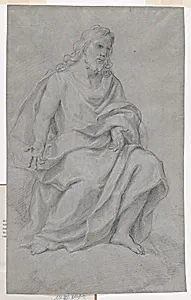
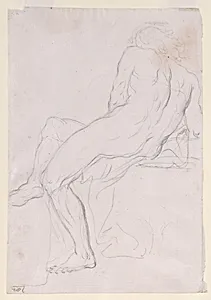
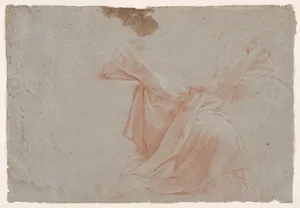
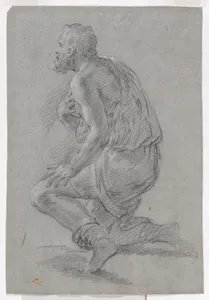
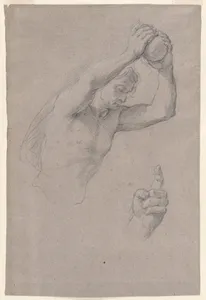
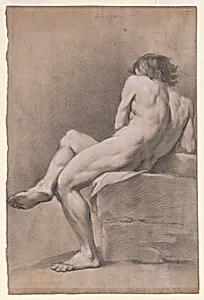
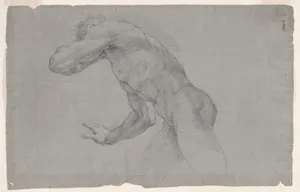
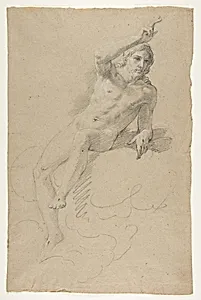
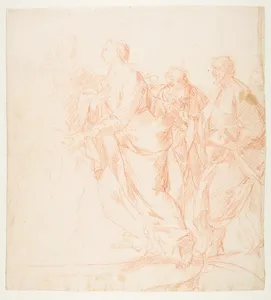
Zoboli’s legacy rests on his extensive output of religious and historical paintings, many of which remain in situ or in Italian museums, alongside numerous drawings preserved in collections including the Metropolitan Museum of Art. By his own wish he was buried in the Church of the Most Holy Stigmata of St. Francis in Rome. His measured approach to the Baroque helped bridge the stylistic transition toward the more austere ideals of the later eighteenth century.