Ctrl K
1560–1605
Giorgio Picchi (c. 1555–1605), known as il Giovane, was born in Casteldurante (modern Urbania) into a family of renowned maiolica painters. His father, Angelo di Giorgio Picchi, and mother, Giacoma di Giulio Venanzi, ran a prominent workshop producing decorated ceramics, exposing young Giorgio to intricate mythological and biblical scenes that honed his drawing skills. After Michelangelo's death in 1564, the family relocated to Rome, where Picchi transitioned from ceramics to panel and fresco painting, training in Vatican workshops amid the grand decorative projects of Popes Gregory XIII and Sixtus V. He married noblewoman Antistia Caffarelli and fathered a daughter, Cornelia, in 1583.
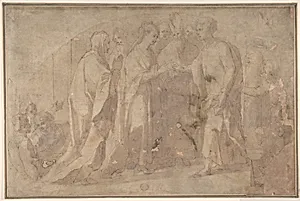
Picchi's career flourished in Rome during the late 1570s, contributing frescoes to the Logge Gregoriane in the Vatican (1576–1577) and scenes from the life of Saint Francis of Paola in the cloister of Trinità dei Monti (1578). By 1580, enrolled in the Compagnia di San Luca, he balanced Roman labors—like the Scala Santa at San Giovanni Laterano (1587) and Sistine Library decorations (1589)—with commissions in the Marches. He collaborated with Felice Damiani on Palazzo Brancaleoni's Greek room in Piobbico (1585) and painted the signed Nativity (Presepe) for Urbania's San Francesco church (1586). A pupil or close follower of Federico Barocci, his Mannerist style featured fluid, cursive figures and dynamic compositions adapted from Barocci's inventions, evolving toward Baroque drama in religious narratives.
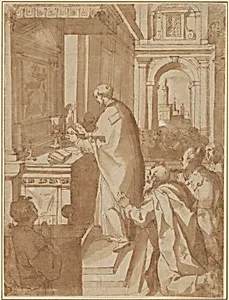
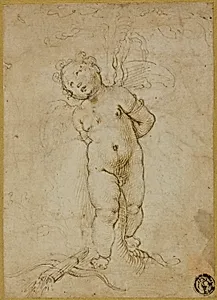
In the 1590s, health issues curtailed ambitious projects, such as unfinished frescoes at Cremona's San Pietro al Po (1595), but Picchi thrived regionally: a cycle of four canvases on Saint Marino's life in Rimini (1595), Madonna della Cintura for Rimini's Sant'Agostino (1593), and Vocation of Peter for Piobbico's San Pietro (1598–1600). Late masterpieces include the frescoed Oratorio del Carmine in Urbania (1604) and Madonna del Rosario with saints for rural San Giorgio in Plano (1602). Surviving drawings, like A Priest Celebrating Mass (c. 1600–1605, Metropolitan Museum) and Cupid Tied to a Tree (c. 1570–1599, Art Institute of Chicago), reveal his rapid penwork.
Picchi's legacy endures in Urbania's churches and museums, embodying Counter-Reformation fervor through Marian devotions and saintly cycles that bridged Roman grandeur with Marches regionalism. Dying on April 16, 1605, after signing his will, he left a prolific oeuvre—despite losses—celebrated in local annals and modern scholarship for elevating maiolica roots into monumental frescoes.