Ctrl K
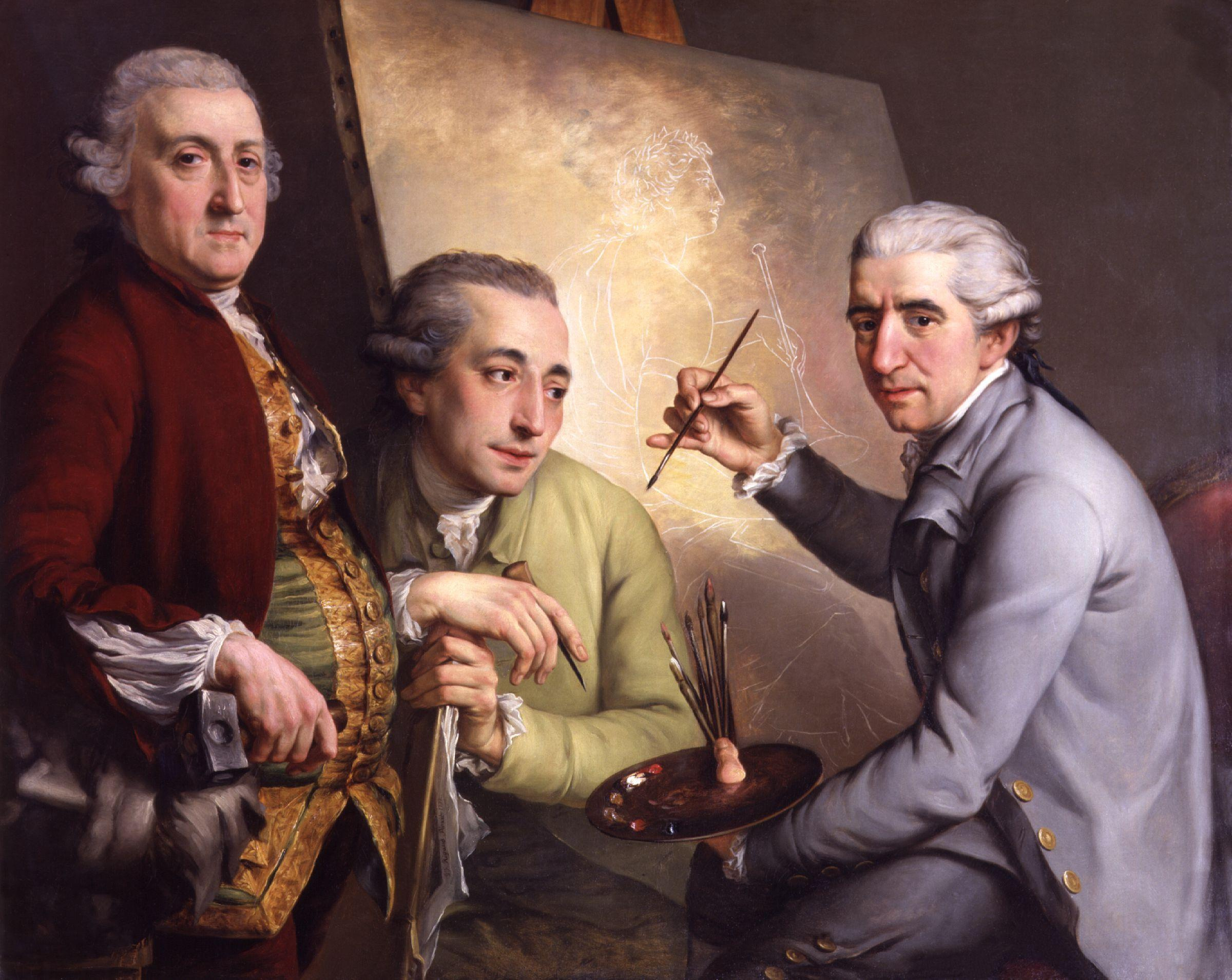
1766–1839
Occupations
Giovanni Battista Cipriani was born on April 20, 1766, in Siena, Italy, to Simon Pietro Cipriani and Eva Bandini. He grew up alongside his brothers Barbato, a sculptor, and Galgano, an engraver, in a family immersed in the arts. Cipriani began his education studying Latin and mathematics before pursuing fine arts under the sculptor and architect Giuseppe Silini in Siena.) His talent earned him a prestigious prize from the Fondazione Marcello Biringucci and Giulio Mancini at Siena's Istituto di beneficenza della Compagnia della Madonna, funding his advanced studies in architecture in Rome, where he settled permanently. There, he studied under architects Giuseppe Palazzo and Leonardo de' Vegni, honing skills evident in his early notebooks of meticulously measured ancient Roman structures, such as the 1784 section of S. Carlo ai Catinari and 1786 drawings of plans and elevations.)
In 1791, Cipriani married Maria Baldacconi from Siena, with whom he had two daughters, Matilde and Isabella. His career flourished as an antiquarian draftsman, engraver, and architect, blending painting, engineering, and topography. He contributed thirteen plates to Girolamo Masi's 1788 *La teoria e la pratica dell'architettura civile*, then formed a printing society in 1792 with architects G. D. Navone and others, yielding the acclaimed 1794 *Nuovo metodo per apprendere insieme le teorie e le pratiche della scelta architettura de' più cospicui esemplari di Roma*. These works showcased his precise pen-and-ink technique, capturing Roman monuments with architectural fidelity.))
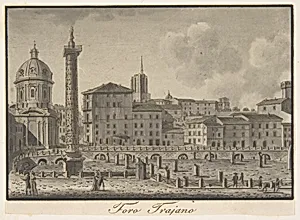
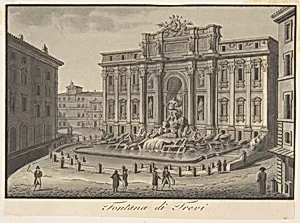
Cipriani's masterpiece, the three-volume *Monumenti di fabbriche antiche estratti dai disegni dei più celebri autori* (1796–1803), featured over 300 engravings of plans, sections, and decorative studies inspired by Andrea Palladio, blending neoclassical reconstruction with romantic ruinscapes. He also illustrated Francesco Milizia's *Principi di architettura civile* (1800), Palladio's orders (1801), and produced guides like *Itinerario figurato negli edifizi più rimarchevoli di Roma* (1835) and *Descrizione itineraria di Roma* (1838), alongside views such as the Trevi Fountain and Trajan's Forum. Working in the neoclassical tradition, his light, accurate lines served students and scholars, correcting texts and incorporating new archaeology.)
A member of the Accademia Tiberina, where he shared poetry, Cipriani's legacy endures in his didactic engravings that democratized Roman antiquities, influencing architects and antiquarians. He died in Rome on July 13, 1839, leaving manuscripts in Roman libraries that preserve his topographic passion.)
Wikidata (CC0)