Ctrl K
Giovanni Battista Piranesi (1720–1778) was born near Venice, Italy, the son of a stonemason and master builder. His brother Andrea, a Carthusian monk, introduced him to Latin literature and ancient Greco-Roman civilization, sparking a lifelong passion for antiquity. Apprenticed to his uncle Matteo Lucchesi, a leading architect in Venice's waterworks, Piranesi gained practical training in structural and hydraulic engineering. In 1740, he moved to Rome, working as a draughtsman for Venetian ambassador Marco Foscarini and studying etching under Giuseppe Vasi, who taught him engraving techniques despite noting his painterly tendencies. He collaborated with pupils of the French Academy and absorbed influences from Venetian printmakers like Canaletto and Tiepolo during brief returns home.
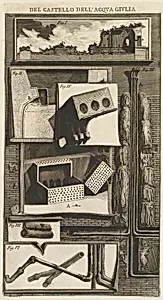
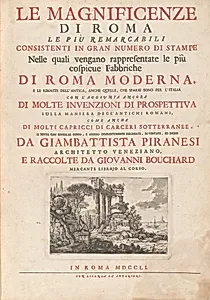
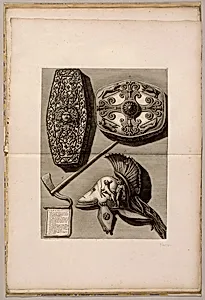
Piranesi considered himself an architect first, though he built little beyond the 1764 restoration of Santa Maria del Priorato for the Knights of Malta. His true genius emerged in etching, producing around 2,000 plates with bold contrasts, dramatic lighting, and intricate textures that blended precise topography with imaginative grandeur. Working in the vedutista tradition, he championed Roman architectural superiority over Greek models, drawing eclectically from Etruscan, Egyptian, and Rococo elements. Elected to the Accademia di San Luca in 1761, he opened his own workshop and printing house. Major series include *Prima parte di Architettura e Prospettive* (1743), the fantastical *Le Carceri d'Invenzione* (first edition 1750, expanded 1761), the exhaustive *Vedute di Roma* (1748–1778, featuring views like the Colosseum of 1776), *Le Antichità Romane* (1756–57), and *Avanzi degli Edifici di Pesto* (1777–78).
Piranesi's legacy endures as a cornerstone of Neoclassicism, shaping European views of Rome through prints avidly collected by Grand Tourists. His archaeological precision preserved vanishing monuments, while his spatial illusions inspired Goethe and modern architects. Knighted by the Pope and elected to London's Society of Antiquaries, his plates—continued by son Francesco—fueled debates on antiquity and design freedom, earning him the epithet "col sporcar si trova" (by messing about, one discovers).