Ctrl K
1796–1873
Giovanni Battista Silvestri (1796–1873) was a prominent Florentine architect and painter whose career bridged neoclassicism and emerging historicist styles in 19th-century Italy. Born in Florence, he received his formative training at the Accademia di Belle Arti di Firenze, where he excelled, winning numerous prizes and securing a pensionato scholarship to Rome in 1820. There, he honed his skills further, eventually becoming a member of the prestigious Accademia di San Luca, and later joined the Accademia delle Arti del Disegno in Florence. His education equipped him for a multifaceted practice blending architecture, urban planning, and veduta painting—topographical watercolors capturing architectural grandeur.
Silvestri's architectural oeuvre reflects a neoclassical rigor tempered by innovative flair. In Florence, he renovated Palazzo Altoviti Sangalletti in 1827 and designed the opulent Villa San Donato (now lost) as a neoclassical palace for the Russian Demidoff princes. His 1822 neo-Gothic facade proposal for Santa Maria del Fiore cathedral sparked renewed public and official interest in completing the long-stalled project after 150 years. Active across Tuscany, he served as assistant architect in Livorno (1836–1838), proposing fortifications near the Porto Mediceo, and as chief architect in Siena (1839–1849), including the Barriera San Lorenzo scheme. As "Architetto Corrispondente" for state public works, he influenced infrastructure and civil buildings.
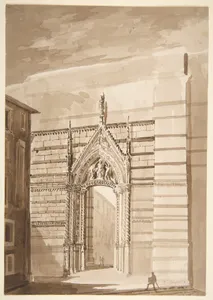
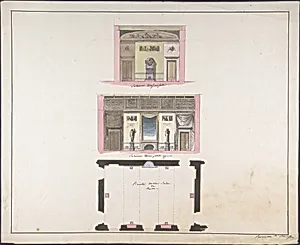
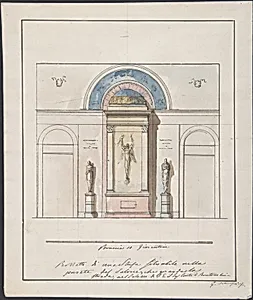
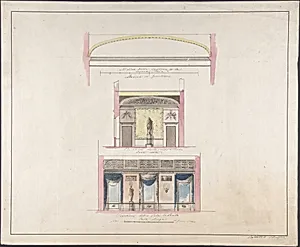
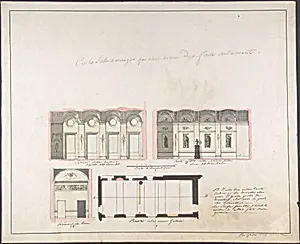
A skilled draftsman, Silvestri documented his visions in the 1833–1834 *Taccuino originale*, a published sketchbook of engraved plates showcasing monumental designs. His paintings, often watercolors, include vivid views like the Cloister of Certosa in Rome (1836), Fontana del Mascherone (1828), Siena's Piazza del Duomo entrance, Livorno's Quattro Mori group, and elevations for the "Nuova Galleria." Father to geologist Orazio Silvestri, he even designed his own tombstone in Florence's Pinti cemetery. Silvestri's legacy endures in his advocacy for Florence's architectural heritage and his precise, evocative depictions that preserve Tuscan landmarks for posterity.