Ctrl K
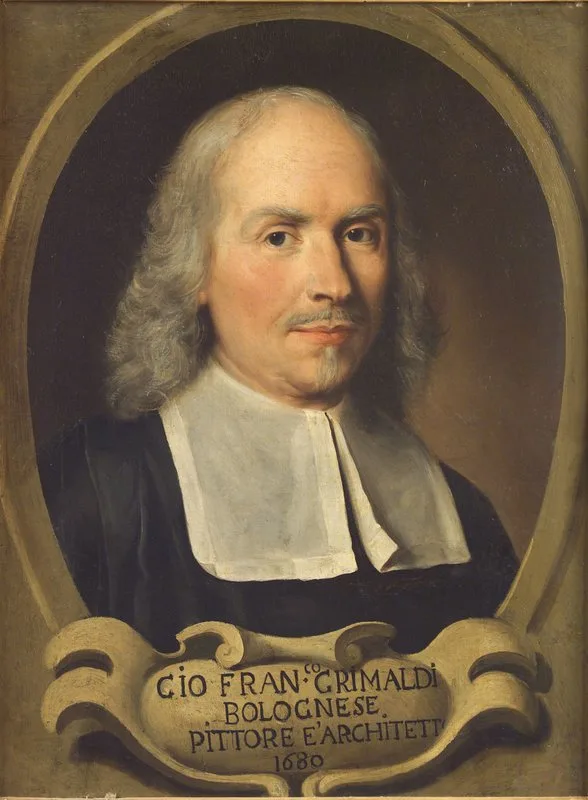
1606–1680
Giovanni Francesco Grimaldi (1606–1680), known as "Il Bolognese," was an Italian painter, draughtsman, and etcher whose career exemplifies the wide influence of the Bolognese school of landscape painting in seventeenth-century Rome. Born in Bologna, Grimaldi trained in the tradition of the Carracci, whose idealized approach to landscape — blending careful observation of nature with classical compositional order — had made Bologna the most influential center of landscape painting in Italy.
Grimaldi settled in Rome, where he worked for a succession of prestigious patrons including several popes, for whom he painted frescoes in the Vatican and at Castel Gandolfo. His decorative fresco cycles in Roman palaces and papal residences were among the most ambitious landscape commissions of the mid-seventeenth century, establishing him as one of the leading painters of idealized Roman campagna scenery. He also enjoyed the patronage of Cardinal Mazarin, which brought him to Paris, where his work introduced Bolognese landscape conventions to a French aristocratic audience.
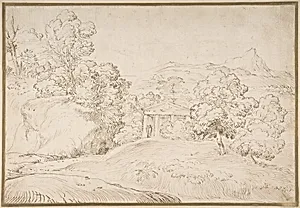
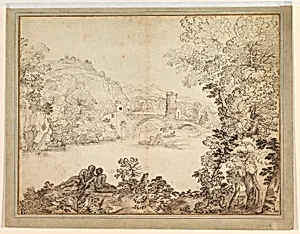
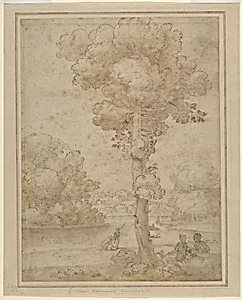
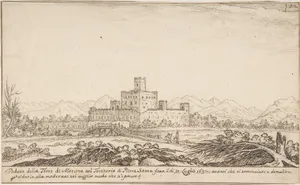
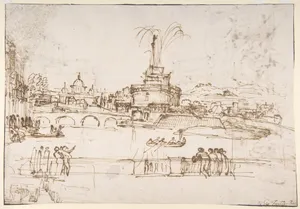
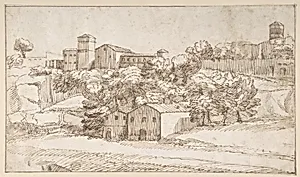
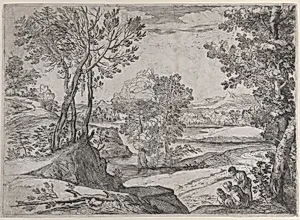
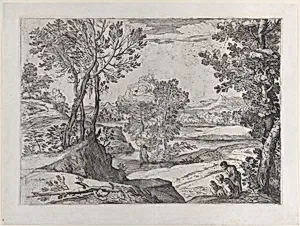
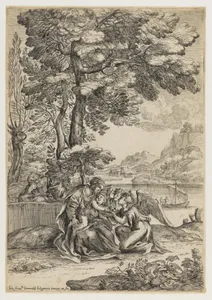
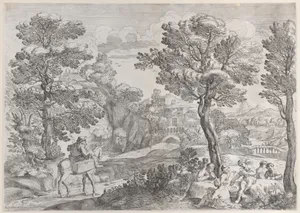
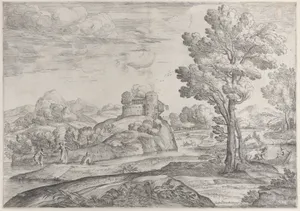
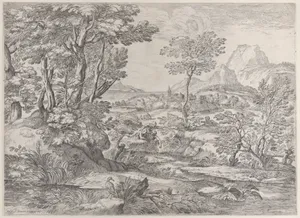
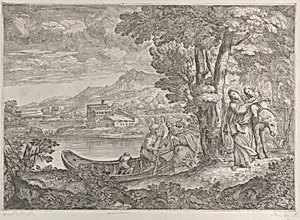
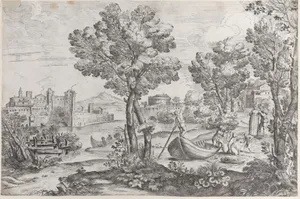
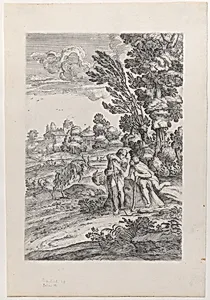
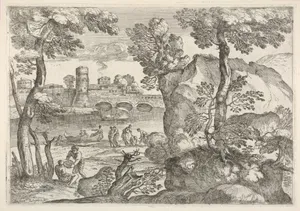
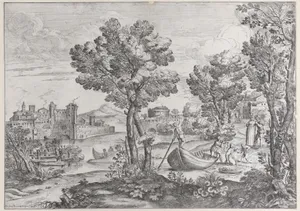
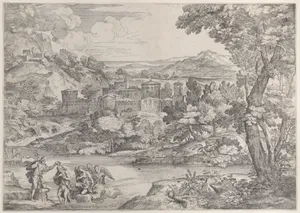
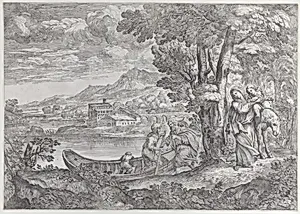
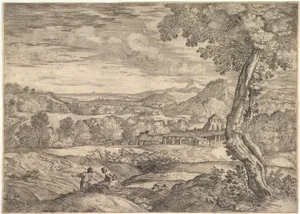
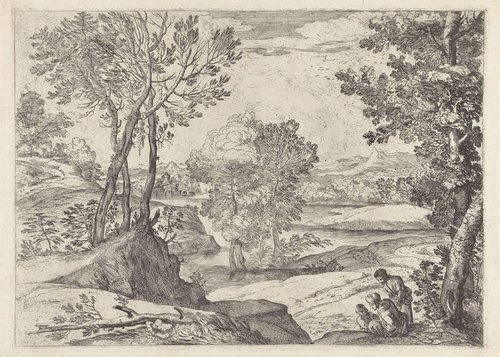
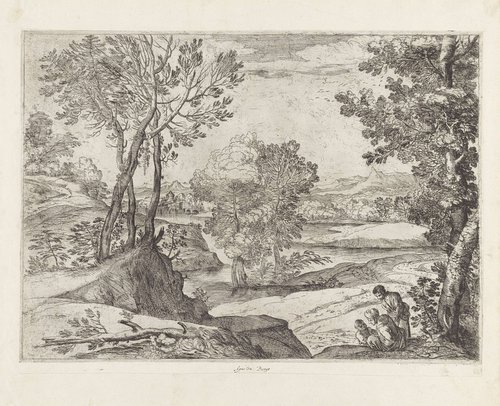
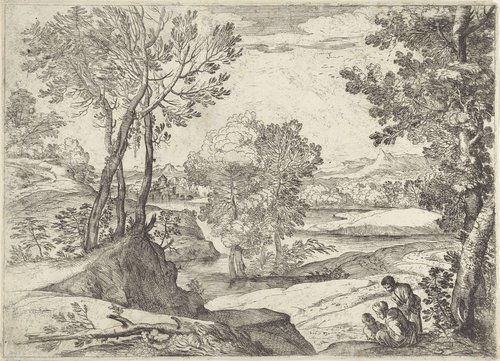
As an etcher, Grimaldi produced a significant body of landscape prints that circulated widely, disseminating his vision of the Italian countryside — populated with ancient ruins, shepherd figures, and luminous skies — throughout Europe. These etchings were collected and studied by subsequent generations of landscape artists, and his drawn landscapes in chalk and ink are prized for their confident handling and atmospheric quality.
Grimaldi's legacy lies in his role as a transmitter of the Bolognese classical landscape tradition into the mainstream of Roman Baroque decoration. His work bridges the monumental achievements of Annibale Carracci and the later developments of Claude Lorrain and the idealized landscape painting that would dominate European taste for the next century.