Ctrl K
1700–1800
Giovanni di Lorenzo Larciani (1484–1527), a Florentine painter known initially as the "Master of the Kress Landscapes," emerged from obscurity in the mid-1990s through the scholarship of Louis Waldman, who linked him to documents including a 1521 contract for an altarpiece. Born and active in Florence until his death, Larciani specialized in religious scenes enriched by vivid, atmospheric landscapes, a hallmark of his three seminal panels, *Scenes from a Legend* (c. 1515/1520), now in the National Gallery of Art's Samuel H. Kress Collection—the works that christened his anonymous moniker.
Larciani likely began his career as an assistant in the workshop of Francesco Granacci, contributing the background landscape to Granacci's *Joseph Being Led to Prison* for the Camera nuziale Borgherini. His style exemplifies the exuberant Florentine experimentation of the 1520s following Raphael's death, characterized by nervous, bizarre draughtsmanship, a vibrant palette, and sensual impasto that foreshadowed the Mannerism of Pontormo and Rosso Fiorentino. Many of his paintings, including early *Madonna and Child* compositions (c. 1510–1515 at Galleria Borghese and c. 1510–1520 in Arezzo), were long misattributed to Rosso.
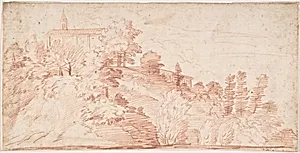
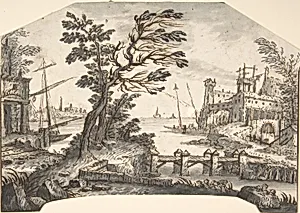
Among his verified oeuvre are the *Holy Family and Four Saints* (contract 1521, Museo di Fucecchio), *Crucifixion* (1523–1527, Musée des Beaux-Arts, Rouen), *Pietà* (Yale University Art Gallery), and multiple *Virgin and Child* panels in private collections. A 16th-century red chalk *Landscape* drawing survives at the Metropolitan Museum of Art.
Larciani's legacy lies in Waldman's reconstruction of his corpus, rescuing works from misattribution and illuminating a transitional figure in Florentine Renaissance art whose innovative landscapes bridged High Renaissance harmony with emerging Mannerist dynamism. Though his early life remains sparsely documented, his contributions endure in major collections, offering glimpses into Florence's vibrant post-Raphaelesque evolution.