
Ctrl K
1478–1537
Giovanni Maria Pomedelli remains one of the more elusive figures in art history, with scant biographical details available in major sources like Wikipedia or comprehensive art historical databases. Auction records, such as those on Invaluable.com, confirm his existence as a painter whose works periodically surface in sales, attracting collectors interested in lesser-known Italian artists. The virtual museum holds 17 of his known artworks, underscoring a niche but enduring appreciation for his output. Without a dedicated entry in standard references, Pomedelli exemplifies the many regional talents whose lives and careers have not been fully reconstructed.
His early life and training are not well documented. Searches yield no information on teachers, mentors, art schools, or familial artistic relationships that might have shaped his development. This absence of records is typical for artists outside the canonical narratives, leaving questions about whether he apprenticed in a workshop tradition or pursued independent study. No birth or death dates, provenance details, or geographic origins—likely northern Italian given the name—emerge from available sources, confining our understanding to the artifacts themselves.
Pomedelli's artistic style and school affiliation cannot be definitively classified due to the limited descriptions in accessible records. Without mentions of specific movements or influences in art history texts, his works appear to align with the broader spectrum of Italian painting traditions, potentially from the 17th or 18th century based on auction contexts, though this remains unverified. Major works are not highlighted in surveys, but the 17 pieces in the museum's collection represent his primary legacy, offering opportunities for future scholarship to analyze techniques, subjects, and iconography through direct examination.
Pomedelli's legacy endures quietly through these surviving canvases and auction interest, reminding us that art history is continually expanded by collections and markets rather than solely by famous biographies. As digital archives grow, renewed attention may uncover more about his contributions, inviting connoisseurs to appreciate the depth hidden in obscurity. His story encourages exploration beyond the giants like Caravaggio or Michelangelo, celebrating the threads of creativity that weave through every era.
![Giovanni Emo, Podesta of Verona 1527 [obverse]](https://images.artheonmuseum.org/nga/thumb/giovanni-emo-podesta-of-verona-1527-obverse-nga-44634.webp)
![Tommaso Moro, Captain of Verona 1527 [obverse]](https://images.artheonmuseum.org/nga/thumb/tommaso-moro-captain-of-verona-1527-obverse-nga-44636.webp)
![Phoenix on a Pyre [reverse]](https://images.artheonmuseum.org/nga/thumb/phoenix-on-a-pyre-reverse-nga-44637.webp)
![Neptune Seated on a Dolphin [reverse]](https://images.artheonmuseum.org/nga/thumb/neptune-seated-on-a-dolphin-reverse-nga-44633.webp)
![Stefano di Andrea Magno, c. 1500-1572 [obverse]](https://images.artheonmuseum.org/nga/thumb/stefano-di-andrea-magno-c-1500-1572-obverse-nga-44632.webp)
![Federigo II Gonzaga, 1500-1540, 5th Marquess of Mantua 1519 and 1st Duke of Mantua 1530 [obverse]](https://images.artheonmuseum.org/nga/thumb/federigo-ii-gonzaga-1500-1540-5th-marquess-of-nga-44644.webp)
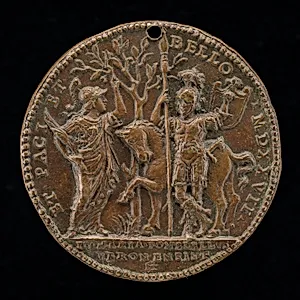
![The Altar of Faith on Mount Olympus [reverse]](https://images.artheonmuseum.org/nga/thumb/the-altar-of-faith-on-mount-olympus-reverse-nga-44645.webp)
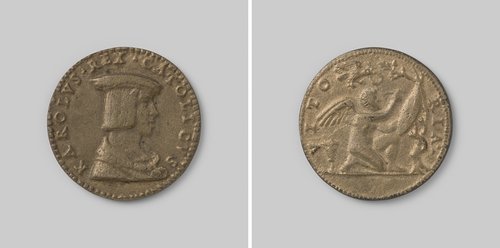
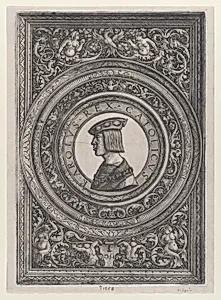
![Charles V, 1500-1558, King of Spain 1516-1556, Holy Roman Emperor 1519 [obverse]](https://images.artheonmuseum.org/nga/thumb/charles-v-1500-1558-king-of-spain-1516-1556-holy-nga-44638.webp)
![Winged Genius Writing on a Shield [reverse]](https://images.artheonmuseum.org/nga/thumb/winged-genius-writing-on-a-shield-reverse-nga-44639.webp)
![François I, 1494-1547, King of France 1515 [obverse]](https://images.artheonmuseum.org/nga/thumb/franois-i-1494-1547-king-of-france-1515-obverse-nga-44640.webp)
![Salamander in Flames [reverse]](https://images.artheonmuseum.org/nga/thumb/salamander-in-flames-reverse-nga-44641.webp)
![Isabella Michiel Sesso, Wife of Giambattista Sesso [obverse]](https://images.artheonmuseum.org/nga/thumb/isabella-michiel-sesso-wife-of-giambattista-sesso-nga-44646.webp)
![Fortune Seated on a Rock [reverse]](https://images.artheonmuseum.org/nga/thumb/fortune-seated-on-a-rock-reverse-nga-44647.webp)
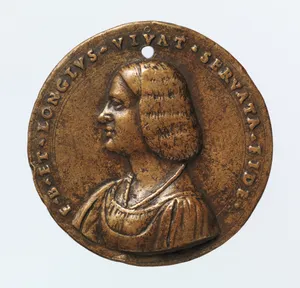
![Portrait of a Woman [obverse]](https://images.artheonmuseum.org/nga/thumb/portrait-of-a-woman-obverse-nga-44642.webp)
![Kneeling Man with Cupid [reverse]](https://images.artheonmuseum.org/nga/thumb/kneeling-man-with-cupid-reverse-nga-44643.webp)
![François I, 1494-1547, King of France 1515 [obverse]](https://images.artheonmuseum.org/nga/thumb/franois-i-1494-1547-king-of-france-1515-obverse-nga-44648.webp)
![Seated Diomedes Holding the Palladium [reverse]](https://images.artheonmuseum.org/nga/thumb/seated-diomedes-holding-the-palladium-reverse-nga-44649.webp)