Ctrl K
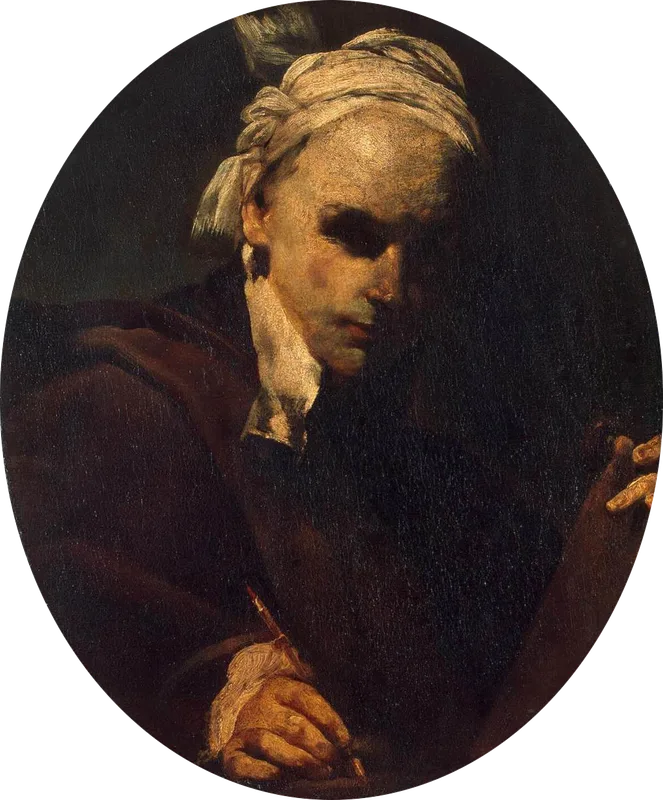
1665–1747
Giuseppe Maria Crespi (1665–1747) was an Italian painter of the late Baroque period whose innovative genre scenes and unorthodox approach to religious painting made him one of the most original artists of early eighteenth-century Bologna. Born in Bologna, he trained under Domenico Maria Canuti, Carlo Cignani, and in the tradition of the Carracci academy, but developed a markedly personal style that departed from the polished idealism of the Bolognese school.
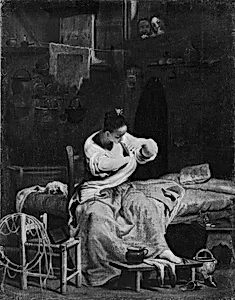
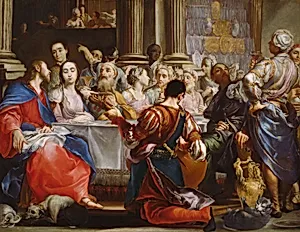
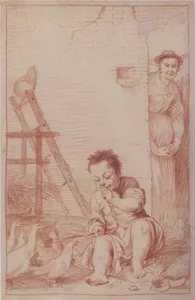
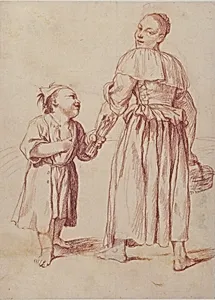
Crespi's most celebrated works are his genre paintings — scenes of everyday life depicting flea markets, kitchen interiors, washerwomen, and domestic activities — rendered with a naturalism, warmth, and sensitivity to light and shadow that anticipate the work of Chardin. His series "The Seven Sacraments" (c. 1712), painted for Cardinal Ottoboni, is considered his masterpiece: rather than depicting the sacraments as formal theological allegories, Crespi set them in humble, dimly-lit interiors with ordinary people, creating works of profound emotional intimacy.
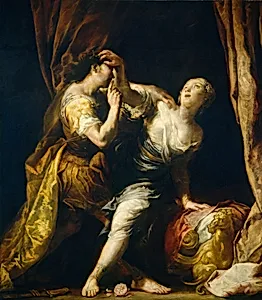
Crespi's painting technique was characterized by rich impasto, dramatic chiaroscuro, and a warm, earthy palette that distinguished his work from the cooler, more refined Bolognese tradition. His approach to light — often a single source illuminating figures emerging from deep shadow — reveals his study of Caravaggio and the Dutch masters.
As a teacher, Crespi trained several important painters, including Antonio Gionima and, most significantly, Pietro Longhi, who carried Crespi's interest in genre painting into the Venetian tradition. His work is held by the Pinacoteca Nazionale in Bologna, the Uffizi, the Gemäldegalerie in Dresden, the Louvre, and the National Gallery of Art in Washington.