Ctrl K
1654–1714
**Giuseppe Passeri (1654–1714)** was an Italian painter of the Baroque period, active primarily in his native Rome. Born on 12 March 1654, he trained first with his uncle, the painter and biographer Giovanni Battista Passeri, before entering the studio of the leading Roman artist Carlo Maratta.
This rigorous preparation shaped his elegant, classicizing approach to composition and figure drawing, hallmarks of the late Roman Baroque. Passeri began receiving significant commissions in the mid-1670s and produced his first dated works for the Palazzo Barberini in 1678. He remained based in Rome for his entire career, executing frescoes, altarpieces, and easel paintings for churches and palaces.
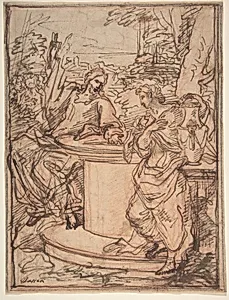
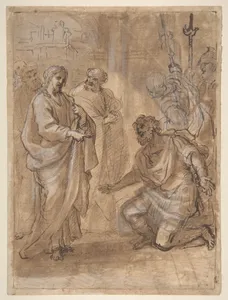
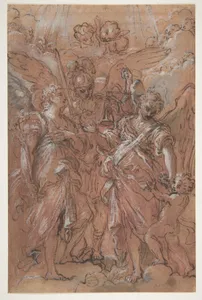
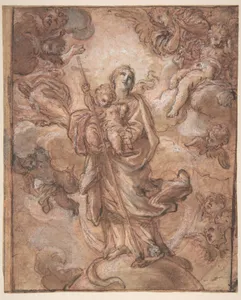
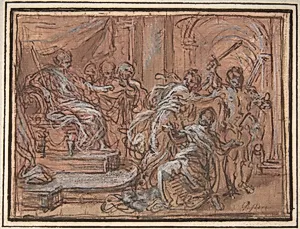
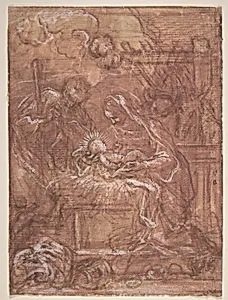
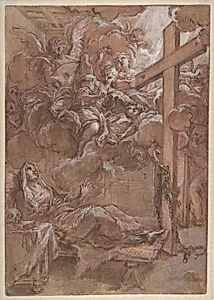
Among his notable works are the frescoes in the second chapel on the right of Santa Caterina a Magnanapoli (1700–1703), including the altar paintings *Three Archangels* and *Madonna of the Rosary*. He also created *Companions of Armida and Rinaldo* (Louvre, 1685–1690), a fresco of the *Assumption of the Virgin* (c. 1686), and *St. Peter Baptizes the Centurion*, whose original was later moved to Urbino. Passeri was equally admired as a draughtsman; many of his spirited pen-and-ink and wash studies survive and continue to appear at auction.
Passeri died in Rome on 2 November 1714. Though his oeuvre is smaller than that of his master Maratta, his refined Baroque style and numerous church commissions secured his place among the respected painters of late-seventeenth-century Rome. His drawings and paintings are held in major collections worldwide, including the Fitzwilliam Museum and the Walters Art Museum.