
Ctrl K
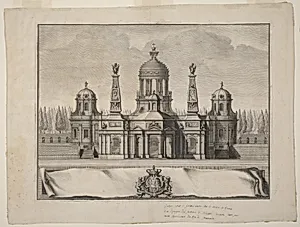
**Giuseppe Vasi (1710–1782)** was a prolific Italian engraver, architect, and vedutista born in Corleone, Sicily, who rose to prominence documenting the grandeur of 18th-century Rome. After a classical education, he trained as a printmaker in Palermo, possibly at the Jesuit Collegio Carolino, contributing views to *La reggia in trionfo* in 1736 before relocating to Rome that same year. There, under the patronage of Cardinal Troiano Acquaviva d'Aragona, he studied under Sebastiano Conca, Pier Leone Ghezzi, and Filippo Juvarra, honing his etching techniques amid Rome's vibrant artistic scene alongside Luigi Vanvitelli and Ferdinando Fuga.
Vasi worked in the Roman school of engraving tradition, specializing in vedute—detailed, panoramic cityscapes that captured Baroque Rome with lively, sometimes satirical flair, blending topographic precision with artistic vitality. Early in his Roman career, he produced the etching *Sepulcher for the Kings of France* (1739) after a design by his mentor Juvarra, the late-Baroque architect known for grand projects like Turin’s Basilica of Superga. This piece exemplifies his skill in translating architectural fantasies into intricate engravings. His masterpieces include *Vedute di Roma sul Tevere* (c. 1743), the monumental ten-volume *Delle magnificenze di Roma antica e moderna* (1747–1761) with over 250 plates of gates, squares, churches, and villas, and the vast *Prospetto dell'alma città di Roma* (1765) featuring 437 plates. He also authored the guidebook *Itinerario istruttivo* (1763) and collaborated on festival prints like the Chinea series.
In his Palazzo Farnese workshop—from 1748 onward—Vasi mentored Giovanni Battista Piranesi, teaching him single-cut engraving in the early 1740s and profoundly influencing the younger artist's dramatic style. With his son Mariano, he ran a calcographic enterprise, reissuing plates posthumously. Though eclipsed by Piranesi for two centuries, Vasi's oeuvre has been reevaluated since the 1980s for its documentary value and unique personality, cementing his legacy as a vital chronicler of Rome's magnificence.