Ctrl K
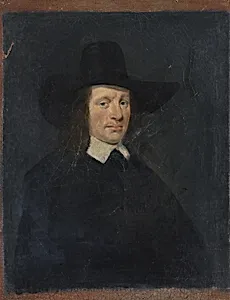
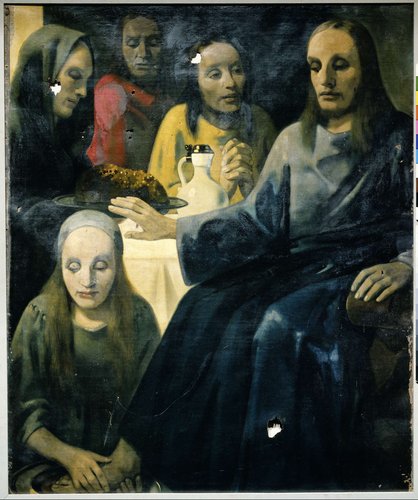
Han van Meegeren (1889–1947) occupies a unique and controversial position in art history—not as a celebrated master, but as one of the twentieth century's most ingenious and successful art forgers. Born Henricus Antonius van Meegeren on October 10, 1889, in Deventer, Netherlands, he would eventually dupe the art world's most distinguished experts, sell fake 'Vermeers' for millions, and paradoxically become a Dutch national hero by selling a forged masterpiece to Nazi Reichsmarschall Hermann Göring. Van Meegeren's criminal brilliance lay not merely in technical skill—though his mastery of seventeenth-century Dutch painting techniques was extraordinary—but in his psychological understanding of art historical scholarship. By creating paintings that perfectly confirmed the theories of leading Vermeer scholar Abraham Bredius, Van Meegeren exploited the confirmation bias of experts, demonstrating how scholarly preconceptions could override empirical observation. His most successful forgery, 'Christ and the Disciples at Emmaus' (1937), was authenticated by Bredius himself as Vermeer's masterpiece and acquired by Rotterdam's Boijmans Museum for a fortune—a deception that stood unchallenged for eight years.
Han van Meegeren was born October 10, 1889, the third of five children of Augusta Louisa Henrietta Camps and Hendrikus Johannes van Meegeren, a French and history teacher in Deventer.
While attending school, Van Meegeren met teacher and painter Bartus Korteling, who became his crucial mentor. Korteling, himself inspired by Johannes Vermeer, taught Van Meegeren the techniques of the seventeenth-century Dutch master—instruction that would prove instrumental in Van Meegeren's later forgery career.
Van Meegeren initially pursued a career as a legitimate artist, but his conventional academic paintings received critical dismissal, fueling resentment against the art establishment that would motivate his subsequent forgery scheme.
Van Meegeren developed extraordinarily sophisticated forgery techniques. He used authentic seventeenth-century canvases, mixed his own paints from period-appropriate raw materials like lapis lazuli and indigo, and created badger-hair paintbrushes similar to those used by Vermeer.
His crucial technical innovation involved mixing pigments with phenol formaldehyde, which hardened and formed convincing age cracks after baking—a method that successfully deceived X-ray analysis, pigment testing, and microscopic inspection.
Van Meegeren researched the artistic theories of Abraham Bredius, nicknamed 'the Pope' for his unquestioned authority on Vermeer, and deliberately created paintings that perfectly confirmed Bredius's hypotheses about Vermeer's lost religious works.
In September 1937, Bredius authenticated 'Christ and the Disciples at Emmaus' as Vermeer's masterpiece. The painting was acquired by Rotterdam's Boijmans Museum, and Van Meegeren's forgery was hailed by the international art establishment as one of the most important Vermeer discoveries.
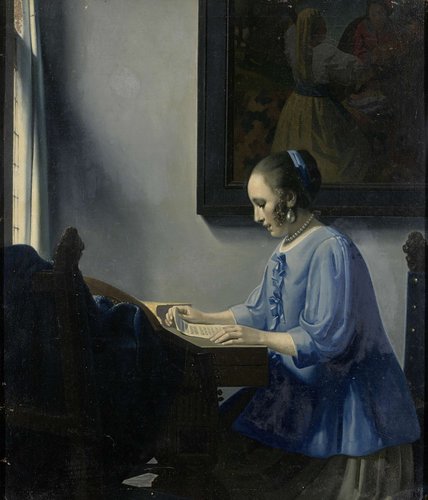
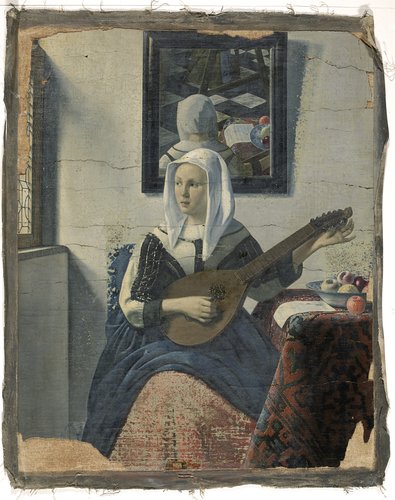
Emboldened by success, Van Meegeren produced fourteen known forgeries attributed to Vermeer and Pieter de Hooch. Nine had been sold before the war at enormous profit—a 1967 biography estimated he duped buyers out of more than US$30 million, with victims including the Dutch government itself.
After World War II, authorities discovered a painting titled 'Christ and the Woman Taken in Adultery' among Hermann Göring's looted art collection. The painting was traced to Van Meegeren, who was arrested in May 1945.
Facing charges of collaboration with the Nazis and selling Dutch cultural treasures to the enemy—crimes potentially carrying the death penalty—Van Meegeren made a stunning confession: the painting sold to Göring was not a genuine Vermeer but his own forgery.
To prove his claim, Van Meegeren painted his final forgery between July and December 1945 under observation by reporters and court-appointed witnesses: 'Jesus among the Doctors' (also called 'Young Christ in the Temple').
The confession transformed Van Meegeren from Nazi collaborator to national hero. A Dutch opinion poll conducted in October 1947 placed his popularity second in the nation, behind only the Prime Minister. The Dutch public viewed him as a cunning trickster who had successfully fooled pompous art experts and, more importantly, Hermann Göring.
On November 12, 1947, the Fourth Chamber of the Amsterdam Regional Court found Van Meegeren guilty of forgery and fraud, sentencing him to one year in prison. On December 30, 1947, just two months into his sentence, Han van Meegeren died of a heart attack in an Amsterdam prison at age fifty-eight.
Artheon Research Team
Last updated: 2025-11-09
Biography length: ~493 words