Ctrl K
1540–1577
Hans Speckaert (c. 1540–c. 1577) was a Flemish Renaissance painter from Brussels who spent much of his career in Italy. He is recognized as one of the earliest practitioners of Northern Mannerism, distinguished by his portraits, history paintings, and especially his numerous drawings. His fluid, elegant draftsmanship left a lasting mark on contemporary Northern European artists.%20was%20a%20Flemish%20Renaissance,influence%20on%20contemporary%20Northern%20artists.)
Details of Speckaert’s early life remain limited, but according to Karel van Mander he was the son of a Brussels embroiderer and a friend of the painter Aert Mijtens. He may have received his initial training in the Brussels workshop of Pieter de Kempeneer, also known as Pedro Campaña. Speckaert traveled to Italy and is believed to have arrived in Rome around 1566, where he remained until his death roughly a decade later. While in Rome he closely studied the works of Michelangelo and Raphael, absorbing their monumental figures and compositional sophistication.
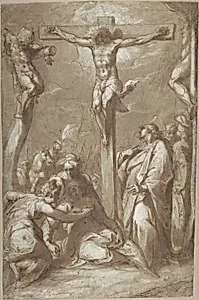
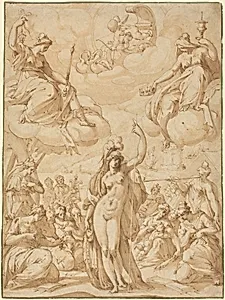
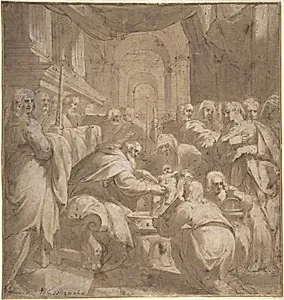
Speckaert produced relatively few paintings that survive today, yet his drawings circulated widely and exerted considerable influence. Notable surviving works include *Jaël and Sisera* and *The Crucifixion of Christ*. His time in Rome placed him among a circle of Northern artists working in the city during the 1560s and 1570s, and his graceful line and Mannerist sensibility helped transmit Italianate ideas back to the North.
Although his life is only sparsely documented, Speckaert’s legacy rests on his role as a bridge between Northern and Italian artistic traditions. His drawings, in particular, served as models for later generations of Flemish and Dutch artists, ensuring that the elegant distortions and dynamic compositions of Northern Mannerism continued to resonate well into the seventeenth century.