Ctrl K
1904–2001
Harry Sternberg (1904–2001) was an American printmaker, painter, and educator whose long career made him one of the most influential figures in the development of American graphic arts during the twentieth century. Born in New York City, he studied at the Art Students League, which was then the principal training ground for socially engaged American artists, and the League's emphasis on draftsmanship and accessible art became central to his own values and practice.
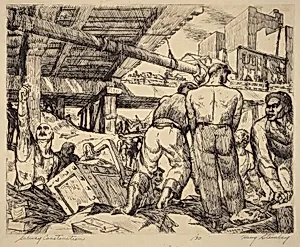
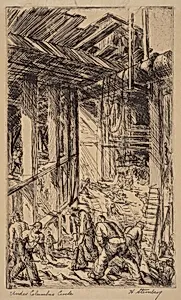
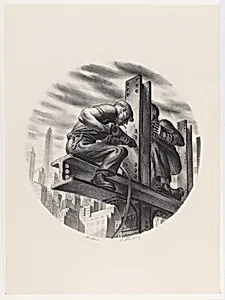
Sternberg's work in the 1930s and 1940s was deeply shaped by Social Realism, the movement that sought to use art as a vehicle for documenting and critiquing the lives of working people, the poor, and the marginalized. His prints and paintings depicted laborers, industrial scenes, and the struggles of ordinary Americans with directness and compassion, placing him alongside figures such as Ben Shahn and Philip Evergood in the broad current of Depression-era socially committed art. He was a prolific contributor to the Works Progress Administration's Federal Art Project, which brought original prints to public buildings and schools across the country.
Alongside his studio practice, Sternberg devoted enormous energy to teaching, serving on the faculty of the Art Students League for many years and writing several influential instructional books on printmaking and painting technique. His pedagogical writings helped democratize access to technical knowledge about etching, lithography, and screen printing, contributing to the postwar expansion of printmaking as a major American art form.
Sternberg's legacy is that of an artist who understood art as a form of civic engagement. His commitment to social themes never wavered even as the art world shifted toward abstraction, and his remarkable longevity — he continued working well into his nineties — allowed him to witness and participate in nearly a full century of American artistic life.
All 3 artworks loaded