Helen Frankenthaler (1928–2011) was born in New York City into a cultivated family; her father was a justice of the New York Supreme Court. She studied painting at the Dalton School under the Mexican muralist Rufino Tamayo and went on to Bennington College in Vermont, graduating in 1949. Returning to New York, she entered the circle of the Abstract Expressionist painters and studied with Hans Hofmann, whose teachings on the push-pull dynamic of colour remained a lasting influence. Through her relationship with the critic Clement Greenberg she encountered the work of Jackson Pollock, whose method of working on unprimed canvas laid directly on the floor proved decisive for her own development.
In 1952 Frankenthaler created Mountains and Sea, the painting that would secure her historical importance. Working on a large sheet of unprimed canvas, she poured and spread thinned oil paint directly into the raw fabric, allowing colour to saturate rather than sit on the surface. This soak-stain technique produced effects of luminous transparency quite unlike the impasto density characteristic of most Abstract Expressionist painting. When the painters Morris Louis and Kenneth Noland visited her studio in 1953 and saw Mountains and Sea, they were transformed by what they encountered, and went on to develop the method into the movement known as Color Field painting — making Frankenthaler a pivotal figure in one of the major transitions in postwar American art.
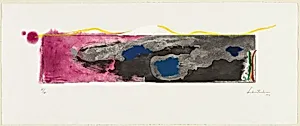
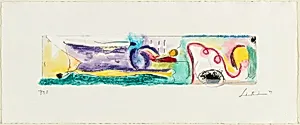
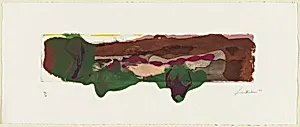
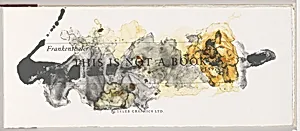
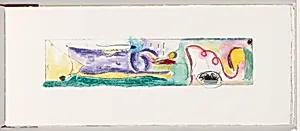
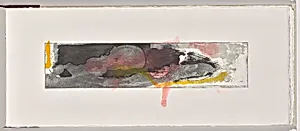
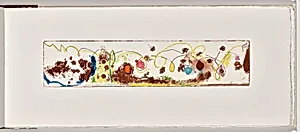
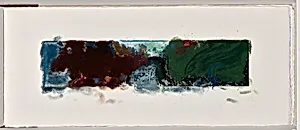
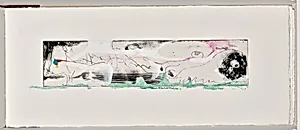
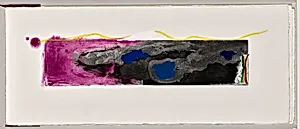
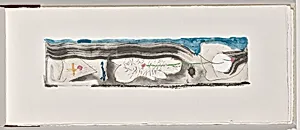
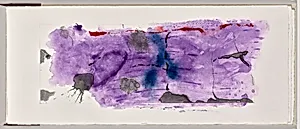
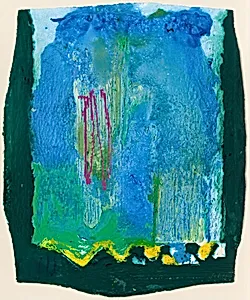
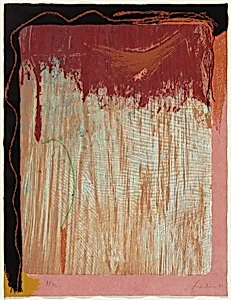
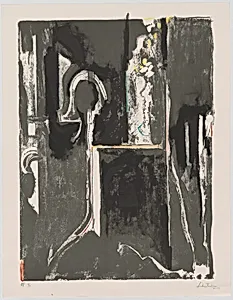
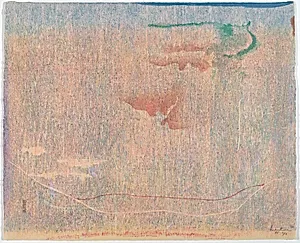
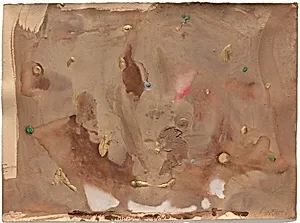
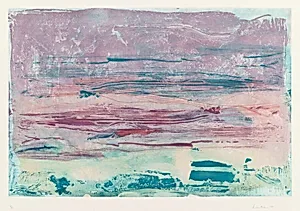
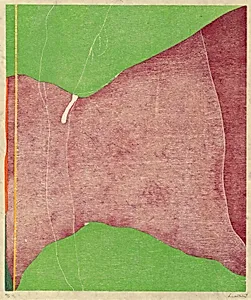
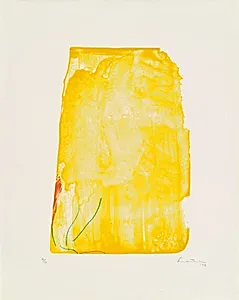
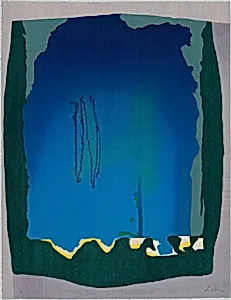
Over a career spanning more than six decades, Frankenthaler continued to expand and revise her practice, exploring new formats, scales, and materials while maintaining her fundamental commitment to colour as the primary vehicle of emotional and spatial experience. She worked extensively in printmaking, bringing her characteristic improvisational freedom to woodcut, lithography, and etching with exceptional results. A major retrospective was held at the Museum of Modern Art in New York in 1989, and she received the National Medal of Arts in 2001.
Frankenthaler died in Connecticut in December 2011. She was appointed an Honorary Academician of the Royal Academy of Arts in London in the final year of her life. Her legacy is double: as an artist of sustained invention whose paintings are held in collections around the world, and as the originator of a technical breakthrough whose consequences rippled through American abstraction for half a century.