Ctrl K
1868–1919
Helen Hyde (1868–1919) was born in Lima, New York, and spent much of her childhood in California, where her family had relocated. She began her formal artistic training at the San Francisco School of Design and continued at the Art Students League in New York from 1888 to 1889. In 1890 she traveled to Europe, spending time in Berlin and subsequently in Paris from 1891 to 1894, where she became captivated by the Japanese woodblock prints that were transforming the aesthetics of the European avant-garde. An exhibition of color etchings by the American painter Mary Cassatt, herself deeply influenced by Japanese graphic art, made a particular impression on Hyde and pointed her toward the fusion of Western printmaking technique with Japanese visual sensibility that would define her career.
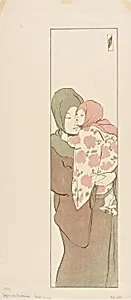
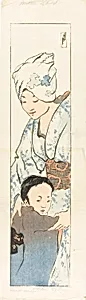
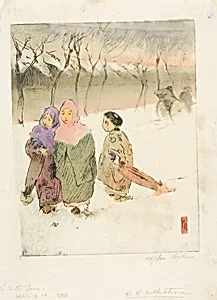
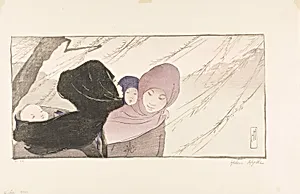
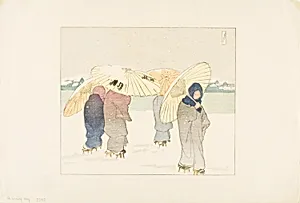
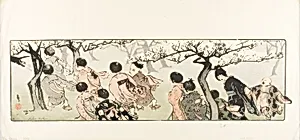
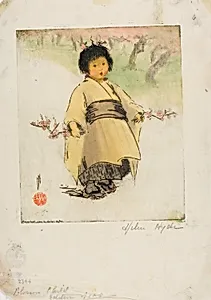
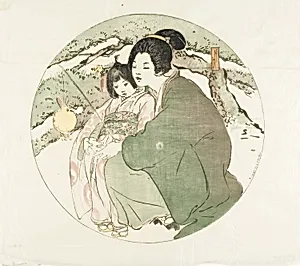
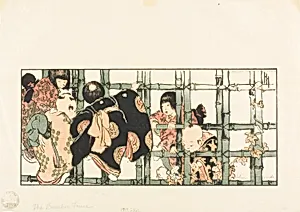
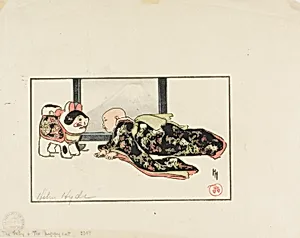
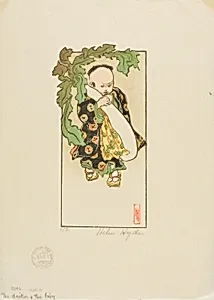
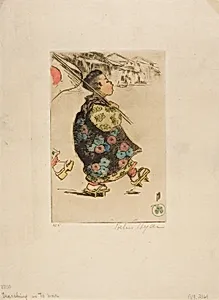
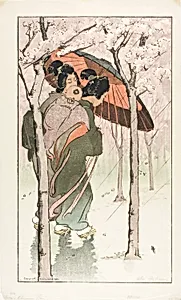
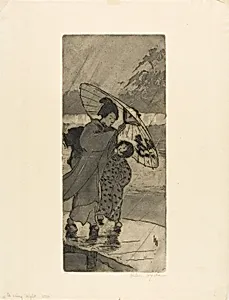
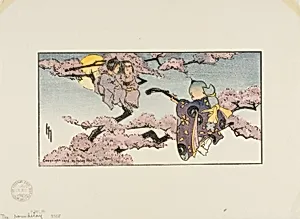
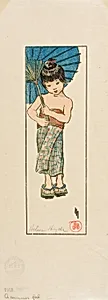
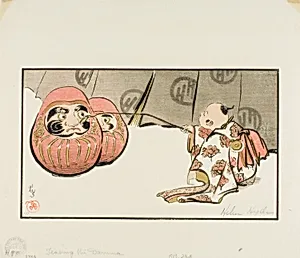
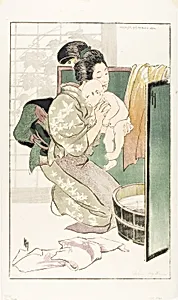
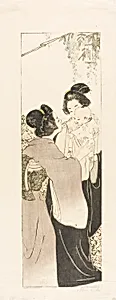
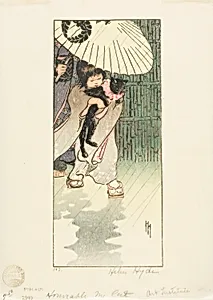
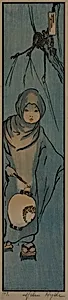
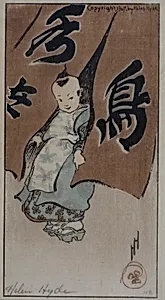
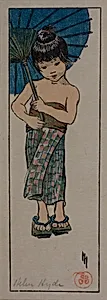
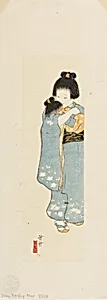
Hyde returned to the United States and began producing color etchings that incorporated Japanese compositional principles—flat planes, asymmetrical arrangements, and intimate domestic subjects, particularly images of women and children. Her prints attracted favorable attention and established her reputation, but it was her decision to travel to Japan that transformed her practice entirely. She lived in Japan from 1903 to 1913, during which time she studied the traditional woodblock printing techniques from Japanese masters and became recognized as the first American woman artist to undertake this training in Japan itself. During this decade she produced an estimated sixteen thousand signed prints, traveling also to China, India, and Mexico to draw on a wider range of material.
Hyde's Japanese subjects—mothers and children, women in traditional dress, domestic interiors rendered in delicate color—were embraced by Western audiences who found in them an appealing combination of the exotic and the tender. Her prints circulated widely in the United States and Europe, and she was among the American artists most responsible for popularizing the aesthetic of Japanese graphic art for a Western public in the early twentieth century.
Hyde returned to the United States in 1914 and died in 1919 at the age of fifty-one. A substantial collection of her work is held in the Library of Congress in Washington, D.C., and her prints continue to be collected and studied as significant documents of the dialogue between Western and Japanese visual cultures in the Meiji and Taisho eras.