Ctrl K
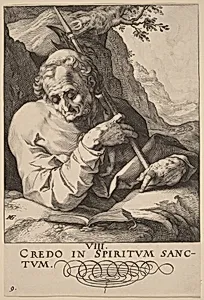
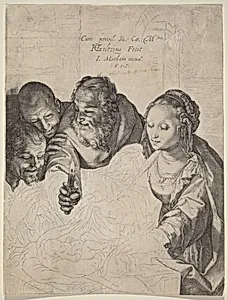
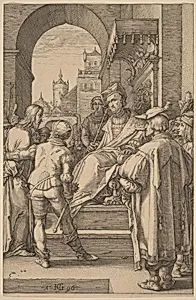
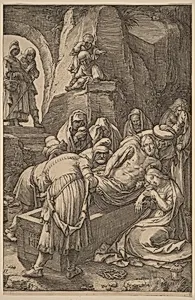
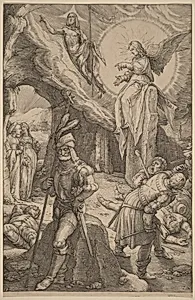
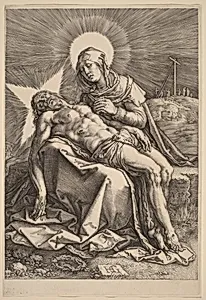
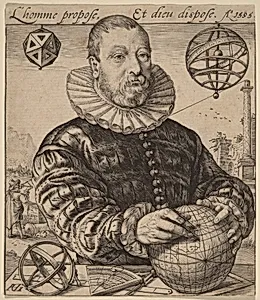
Hendrick Goltzius (1558–1617), born near Viersen in the Duchy of Jülich (modern Germany), emerged as the preeminent Dutch engraver of the Northern Mannerist era. From a lineage of artists—his great-grandfather and grandfather were painters in Venlo, and his father, Jan Goltz II, a glass painter—Goltzius began his training under his father in painting on glass. A childhood fire severely deformed his right hand, yet this anomaly proved advantageous for engraving, enabling a powerful "swelling line" technique that modulated thickness for dramatic tonal effects. In his teens, he apprenticed with the engraver Dirck Volckertsz Coornhert in Xanten, relocating with him to Haarlem in 1577. There, around 1578, he established his own print publishing house after marrying a wealthy widow, Margaretha Jansdr, becoming stepfather to the engraver Jacob Matham, whom he later trained.
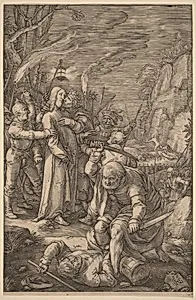
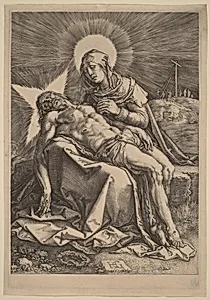
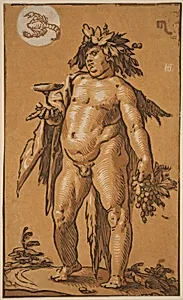
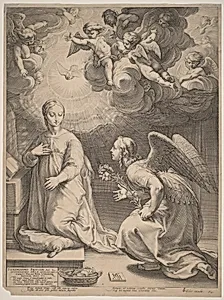
In the 1580s, Goltzius co-founded Haarlem's first art academy with Karel van Mander and Cornelis van Haarlem, fostering life drawing and aesthetic discourse in the tradition of Italian academies. His engravings, blending exuberant Mannerist compositions with virtuoso burin work—innovating "dot and lozenge" shading—rivaled painting's expressive power. Masterpieces like *The Great Hercules* (1589), an audacious rendering of the Farnese statue, and *Icarus* from *The Four Disgracers* (1588) after Cornelis van Haarlem, showcased muscular anatomies and dynamic poses inspired by Bartholomeus Spranger. A 1590 pilgrimage to Italy deepened his reverence for Michelangelo, prompting a shift toward classicism upon his 1591 return. His workshop produced nearly 400 prints, many after Spranger, disseminating Mannerism across Europe and challenging Antwerp's dominance.
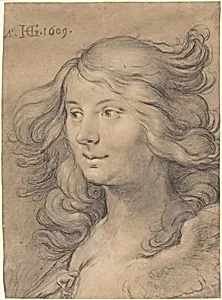
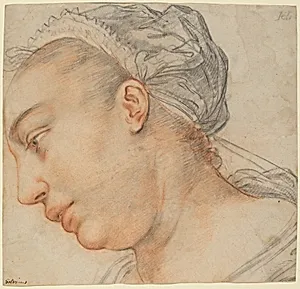
By 1600, at age 42, Goltzius largely abandoned engraving for painting, deeming it art's pinnacle, and produced about 50 oils influenced by Titian and, after Peter Paul Rubens's 1612 visit, a richer Baroque palette. Standouts include *Jupiter and Antiope* (1612, National Gallery, London), *The Fall of Man* (1616, National Gallery of Art), and *Sine Cerere et Baccho friget Venus* (1600–1603). His 500 surviving drawings, like the poignant study of his malformed hand and colored-chalk portraits, reveal a "rare Proteus" mimicking masters from Dürer to Correggio.
Goltzius's legacy endures as a Haarlem School founder, bridging Mannerism and the Dutch Golden Age. His technical innovations and international renown—patronized by Emperor Rudolf II—elevated printmaking's status, influencing Rembrandt and beyond through reproductive engravings that popularized elite designs.