Ctrl K
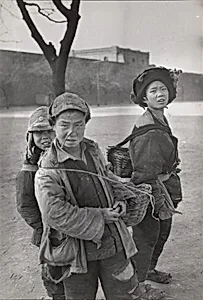
Henri Cartier-Bresson (1908–2004) is widely regarded as one of the most important photographers of the twentieth century, a founding figure of modern photojournalism and the originator of the concept of the 'decisive moment' — the instant when form, meaning, and geometry align in a single unrepeatable image. Born on 22 August 1908 in Chanteloup-en-Brie, France, into a wealthy textile family, he was drawn first to painting, studying at André Lhote's academy in Montparnasse in 1927 and immersing himself in the bohemian intellectual world of Parisian Modernism. His encounters with Cubism and Surrealism profoundly shaped his visual sensibility, and their influence is legible throughout his photographic work.
In 1931, Cartier-Bresson acquired a 35mm Leica camera and discovered his true medium. The Leica's small size and fast shutter speed suited his instinct for unguarded, spontaneous observation, and within a year he was traveling through Europe, Africa, and the Americas, building a body of street photography of extraordinary coherence and authority. Taken prisoner by the Germans during the Second World War, he escaped on his third attempt and joined the French Resistance. After the war, he documented the liberation of France and made a searing photographic record of the last days of the Nationalist government in China before the Communist revolution of 1949.
In 1947, Cartier-Bresson co-founded Magnum Photos alongside Robert Capa, David 'Chim' Seymour, and others — a photographer-owned cooperative that redefined the relationship between photojournalists and their work. His 1952 book Images à la sauvette, published in English as The Decisive Moment, laid out his aesthetic philosophy and became a foundational text of photographic thought. In it he described the photograph as the simultaneous recognition of an event's significance and the precise arrangement of forms to express it.
In 1968, Cartier-Bresson gradually withdrew from photography and returned to drawing and painting. In 2003, with his wife Martine Franck and their daughter, he established the Fondation Henri Cartier-Bresson in Paris to preserve and exhibit his archive. He died on 3 August 2004. His legacy is inseparable from the history of the medium: the decisive moment remains the central concept against which street photography continues to measure itself.