Ctrl K
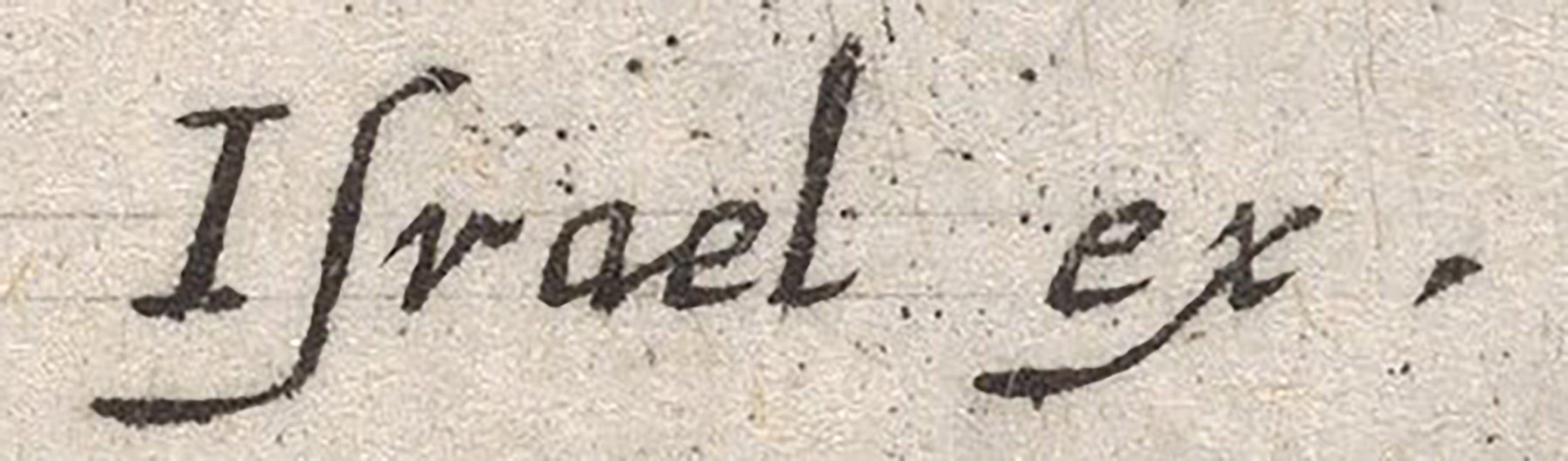
1585–1661
Occupations
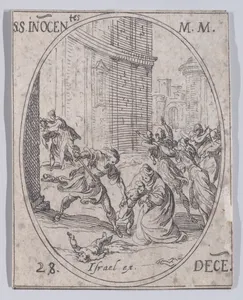
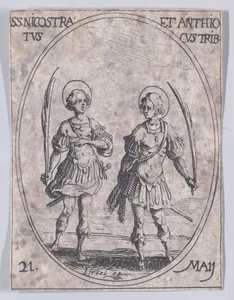
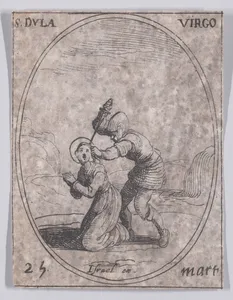
Israël Henriet (c. 1590–1661) stands as one of the most important figures in 17th-century French printmaking, not only as an accomplished engraver in his own right but as the principal publisher and preserver of Jacques Callot's extraordinary legacy. Born in Nancy, Lorraine, around 1590, Henriet belonged to an artistic family and grew up as a childhood friend of Callot, the preeminent printmaker of the Baroque era. This personal connection would shape the course of printmaking history, as Henriet dedicated much of his career to acquiring, preserving, and disseminating Callot's copper plates and prints. Henriet's significance extends beyond his role as Callot's publisher. He was a skilled draughtsman and engraver who established himself in Paris as a successful print publisher and seller, achieving sufficient renown to be selected as drawing instructor to King Louis XIV—a position of considerable prestige. His dual role as practitioner and publisher made him a central figure in the Parisian print trade during a pivotal period when printmaking was transitioning from artisanal craft to recognized art form. His legacy is particularly significant through his mentorship of his nephew, Israël Silvestre (1621–1691), whom he raised and trained. Silvestre would become one of France's most celebrated engravers and topographical artists, carrying forward the technical excellence and artistic standards established by both Henriet and Callot. Through his preservation of Callot's work, his own artistic production, and his training of the next generation, Henriet served as a crucial link in the chain of French printmaking tradition.
Israël Henriet was born around 1590 in Nancy, the capital of the Duchy of Lorraine, into a family with strong connections to the arts. His father, Claude Henriet, held the prestigious position of premier painter to Charles III, Duke of Lorraine, though some sources identify Claude as a glass painter. This artistic environment provided the young Israël with early exposure to the visual arts and the patronage systems of court culture.
Most significantly for Henriet's future career, he grew up as a childhood friend of Jacques Callot (1592–1635), who was born just two years later. Nancy in the late 16th and early 17th centuries was a vibrant artistic center, benefiting from the patronage of the Dukes of Lorraine and its strategic position between French and Germanic cultural spheres. The friendship between Henriet and Callot, forged in this environment, would prove to be one of the most consequential relationships in the history of printmaking.
During these formative years, Henriet would have witnessed Callot's early development as an artist and his eventual departure for Italy around 1608, where Callot would train in Florence and Rome before returning to Nancy as a master printmaker. The connection between the two friends remained strong throughout Callot's lifetime.
By the 1620s, Henriet had established himself in Paris as a print publisher, seller, and practicing engraver. Paris was rapidly becoming the center of French cultural life, and the print trade was expanding to meet growing demand from collectors, scholars, and the general public. Henriet's shop became an important venue for the distribution of contemporary prints.
During this period, Henriet developed his own skills as a draughtsman and engraver while building his publishing business. He maintained close contact with Jacques Callot, who continued working primarily in Nancy until his death in 1635. Henriet was well positioned in the Parisian market to distribute Callot's prints, which were achieving widespread fame throughout Europe.
The relationship between publisher and artist in this period was complex and collaborative. Publishers like Henriet not only distributed prints but often commissioned works, advised on subjects that would appeal to the market, and helped shape artistic careers. Henriet's understanding of both the artistic and commercial dimensions of printmaking made him particularly effective in this role.
When Jacques Callot died in 1635 at the age of just 42, Henriet moved quickly to secure his friend's artistic legacy. Through a combination of inheritance and purchase, Henriet obtained hundreds of Callot's copper plates—the engraved metal plates from which prints were made. This was an acquisition of immense cultural and commercial significance.
Callot had revolutionized the art of etching, developing new techniques that allowed for unprecedented detail, tonal variation, and expressive power. His prints ranged from religious subjects to depictions of contemporary life, from the horrors of war in his famous 'Miseries and Misfortunes of War' series to theatrical scenes and landscapes. By controlling the plates, Henriet could continue producing prints from Callot's designs long after the artist's death.
Henriet published these works systematically over the following decades, introducing new generations to Callot's art and maintaining the market for his prints. This was not merely a commercial venture but an act of cultural preservation. In an era before photographic reproduction, the copper plates were the only means of producing authentic prints, and their loss would have meant the loss of access to Callot's work.
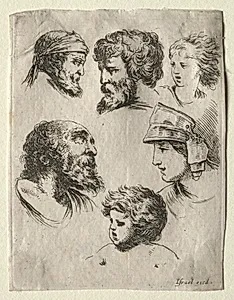
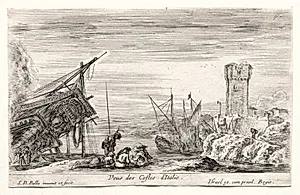
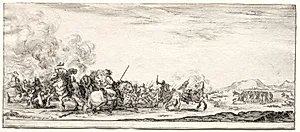
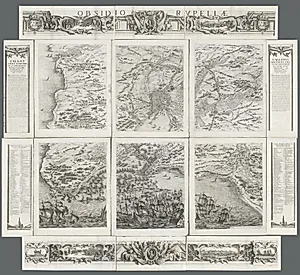
During this period, Henriet also continued his own work as an engraver, creating original prints and working on commissions. However, his role as Callot's publisher increasingly defined his career and reputation.
Henriet's expertise and reputation led to his appointment as drawing instructor to the young King Louis XIV, a position of considerable prestige that reflected his status within the Parisian artistic community. Teaching the king placed Henriet at the center of court culture and would have brought him into contact with the leading artists, architects, and cultural figures of the period.
During these final years, Henriet's most important contribution was the training of his nephew, Israël Silvestre, whom he had raised from childhood. Born in 1621, Silvestre trained under his uncle's guidance and absorbed not only technical skills but also the standards of excellence established by Callot. Silvestre would go on to become one of the most celebrated engravers of his generation, particularly renowned for his topographical views and architectural prints.
Henriet continued publishing Callot's work and managing his own print business until his death in 1661. His careful stewardship of Callot's plates ensured that these masterworks of Baroque printmaking remained available to artists, collectors, and the public throughout the 17th century and beyond.
Artheon Research Team
Last updated: 2025-11-09
Biography length: ~1,285 words
Wikidata/Wikimedia Commons