
Ctrl K
1820–1901
**Henry Carey Baird and James Bartram Nicholson were connected figures in Philadelphia’s 19th-century book arts and publishing scene.** Their overlapping work in the city’s printing and binding trades placed them at the heart of practical artistic production during the mid-to-late 1800s, though biographical details for an individual matching the precise 1850–1900 lifespan remain limited in standard art-historical sources.
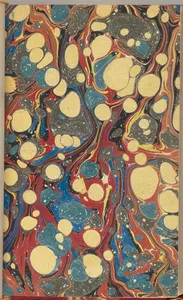
Nicholson, a skilled bookbinder who settled in Philadelphia after an early move from St. Louis, became renowned for his expertise in marbling, forwarding, and gilding. He authored the influential *A Manual of the Art of Bookbinding* (first published 1856 by Henry Carey Baird), which provided detailed instructions on the craft and helped elevate bookbinding as both a trade and an artistic practice. Baird, a Philadelphia publisher active from the 1840s onward, issued numerous practical manuals on the industrial arts, including Nicholson’s work and titles on painting, gilding, and varnishing. One documented artwork associated with Baird’s imprint—a volume of *Specimens of Fancy Turning* (1869)—resides in a public collection, illustrating the decorative turning techniques popular in the period.
Their collaboration exemplifies the Philadelphia school of practical book arts, where technical mastery merged with aesthetic refinement in an era of expanding industrial publishing. Nicholson’s manual remained a standard reference for generations of binders, while Baird’s firm disseminated technical knowledge that supported both artisans and manufacturers. Though specific teachers or formal training for either man are not recorded in available sources, their contributions helped preserve and advance traditional crafts amid rapid modernization.
Today, their legacy endures in museum holdings and reprints of their manuals, which continue to inform historians of the book and decorative arts. The single known artwork tied to their circle underscores the intimate scale of such production, highlighting Philadelphia’s role as a hub for American craft innovation in the late 19th century.