Ctrl K
1843–1908
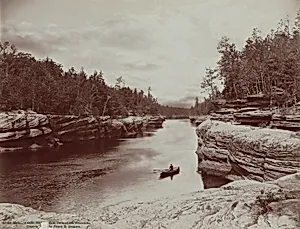
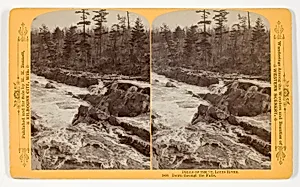
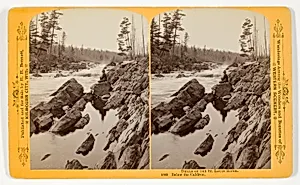
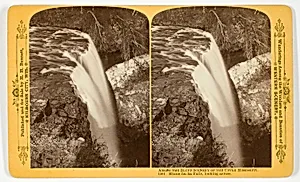
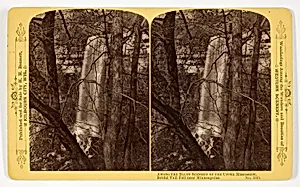
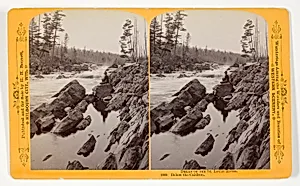
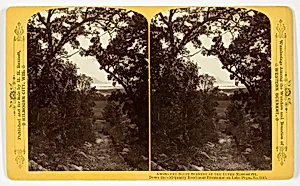
Henry Hamilton Bennett (1843–1908) was a pioneering American photographer whose breathtaking images of the Wisconsin Dells transformed a rugged river gorge into one of the nation's premier tourist destinations. Born in Farnham, Quebec, Canada, on January 15, 1843, Bennett moved with his family to Brattleboro, Vermont, before settling in Kilbourn City (now Wisconsin Dells), Wisconsin, in 1857 at age 14. He trained as a carpenter, a skill that later proved invaluable in crafting his own cameras and darkrooms. During the Civil War, he served in the Wisconsin Volunteer Infantry but suffered a hand injury that ended his carpentry career.
In 1865, Bennett purchased a tintype studio from local photographer Leroy Gates and swiftly pivoted to landscape photography amid waning portrait demand. Largely self-taught, he honed his craft through relentless fieldwork, often trekking into remote Dells terrain with a portable darkroom tent to capture wet-plate images on-site. His friend and mentor, photographer William H. Metcalf, collaborated with him on designing the iconic H.H. Bennett Studio in 1875, the oldest continuously operating photography studio in the United States. Bennett's style emphasized precise, naturalistic compositions that portrayed the Dells as an accessible wilderness playground, pioneering stereoscopic views for immersive depth—his first in 1868—and inventing the "Snapper," a stop-action shutter for freezing motion.
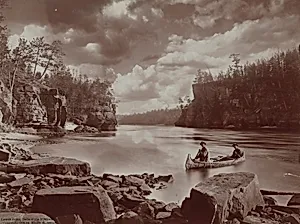
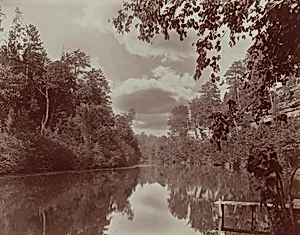
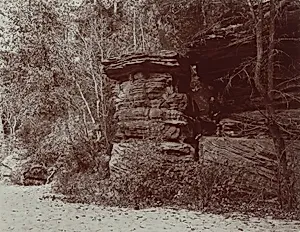
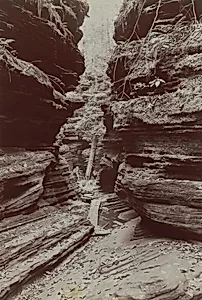
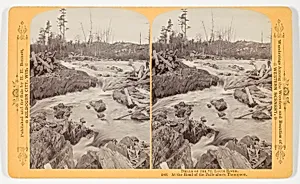
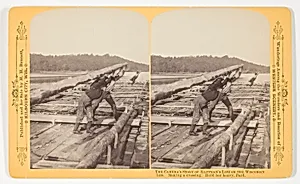
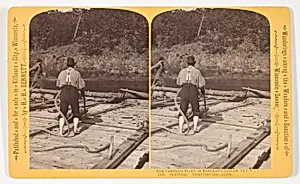
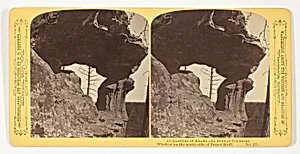
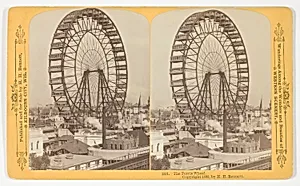
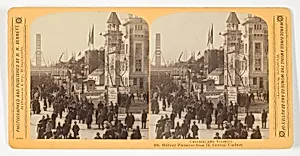
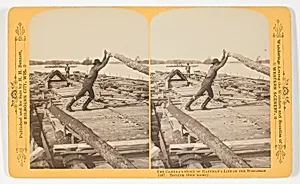
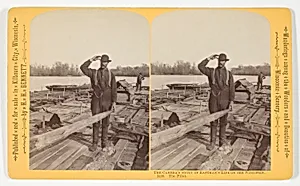
Among his most celebrated works is the iconic 1886 stereograph of his son Ashley Whiting Bennett leaping across Stand Rock, demonstrating his shutter innovation. That same year, he produced *The Story of Raftsmen's Life on the Wisconsin*, a groundbreaking 30-image photojournalistic series chronicling a raft journey. Bennett also documented Ho-Chunk people in their native settings, Chicago's 1893 World's Columbian Exposition, and a massive St. Paul ice palace, alongside countless Dells vistas like Witches’ Gulch and Steamboat Rock.
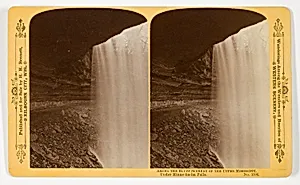
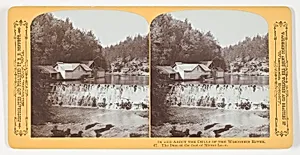
Bennett's legacy endures through over 130 known works in collections worldwide, including the Smithsonian and Museum of Modern Art, which elevated photography as fine art. His images, sold via postcards and stereoviews, drew hordes of visitors via railroad promotions, cementing the Dells' fame. Family-run until 1998, his studio now operates as a Wisconsin Historical Society museum, preserving his inventive spirit and vivid portrayal of 19th-century American wilderness.