Ctrl K
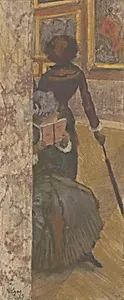
1834–1917
Hilaire Germain Edgar Degas, born on July 19, 1834, in Paris to a prosperous banking family, was the eldest of five children. His mother, Célestine Musson, a Creole from New Orleans whose father Germain Musson had roots in Haiti, died when Degas was thirteen, leaving his father Augustin and unmarried uncles to guide him. Educated at the elite Lycée Louis-le-Grand, where he earned a baccalauréat in literature in 1853, Degas showed early artistic promise, turning a room into a studio by eighteen and copying masters at the Louvre. He briefly studied law before committing to art, meeting Jean-Auguste-Dominique Ingres in 1855, who urged him to "draw lines... from life and from memory." That year, Degas enrolled at the École des Beaux-Arts, studying under Louis Lamothe, an Ingres disciple who instilled rigorous draftsmanship. From 1856 to 1859, he immersed himself in Italy, copying Renaissance giants like Michelangelo, Raphael, and Titian, honing a classical foundation.
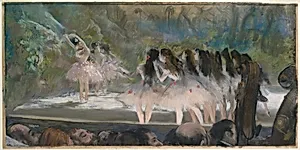
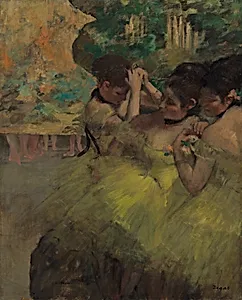
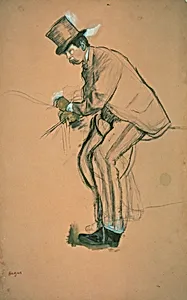
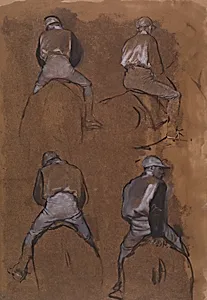
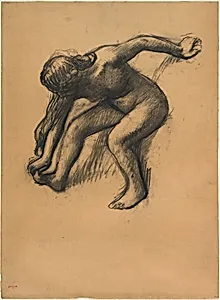
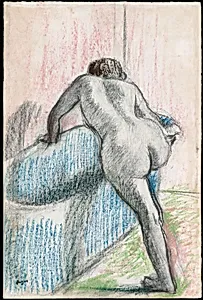
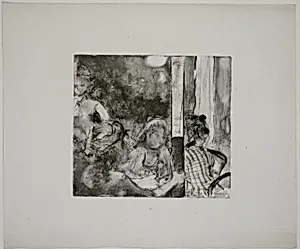
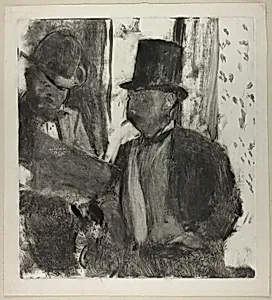
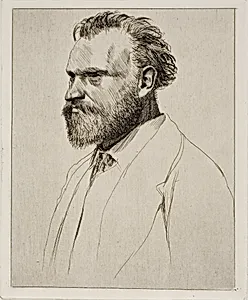
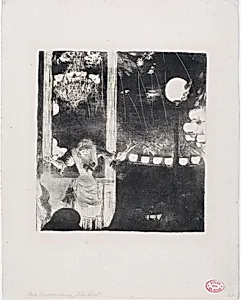
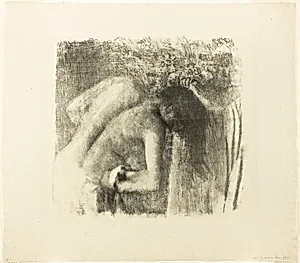
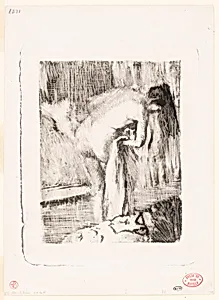
Degas initially pursued history painting, debuting at the Salon with *Scene of War in the Middle Ages* (1865) and *Scene from the Steeplechase: The Fallen Jockey* (1866), but soon pivoted to modern life—influenced by Édouard Manet, whom he met in 1864—capturing ballet dancers, racehorses, and urban scenes with psychological depth and off-center compositions inspired by Japanese prints and photography. A founder of the Impressionist exhibitions (organizing most from 1874 to 1886), he rejected the label, preferring "Realist," and painted indoors from memory rather than en plein air. Iconic works include the tense family portrait *The Bellelli Family* (1858–1867), *The Dance Class* (1874), *L'Absinthe* (1875–76), and *Portraits at the Stock Exchange* (c. 1878–79). His pastel mastery shone in later nudes like *After the Bath, Woman Drying Herself* (c. 1884–86), while the wax *Little Dancer Aged Fourteen* (1878–81) scandalized viewers with its raw realism.
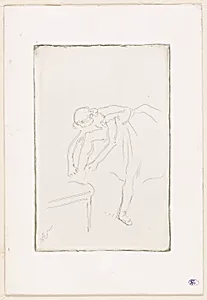
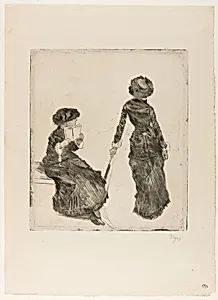
In his later years, worsening eyesight from a Franco-Prussian War injury and family financial woes—exacerbated by brother René's debts—isolated Degas. He experimented with sculpture, monotypes, and photography until nearly blind around 1912, dying on September 27, 1917. Though controversial for antisemitism during the Dreyfus Affair, his legacy endures as a bridge between academic tradition and modernism, influencing Mary Cassatt, Henri de Toulouse-Lautrec, Picasso, and Matisse through his 1,500+ dancer depictions and innovative techniques. Today, his works grace museums worldwide, celebrating the poetry of movement and human isolation.