Ctrl K
1801–1887
Hippolyte Bayard (1801–1887) was a French civil servant and artist who holds a remarkable, if bittersweet, place in the history of photography: he was one of the independent inventors of the photographic process in the late 1830s, developing his own direct positive paper print method at virtually the same moment that Louis Daguerre and William Henry Fox Talbot were arriving at their own solutions to the challenge of fixing images made by light. Born in Breteuil-sur-Noye, he trained as a government administrator and pursued photography as a passionate avocation rather than a profession.
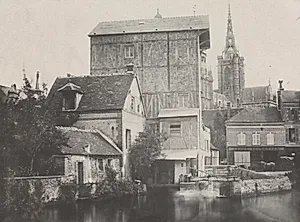
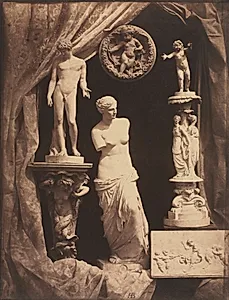
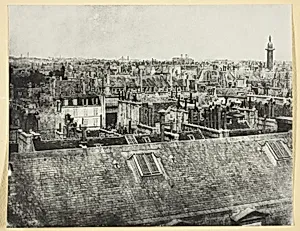
Bayard's process, which he called the direct positive print on paper, produced images of quiet beauty — matte, cream-toned photographs that captured still lifes, architectural views, and the rooftops and gardens of Paris with a sensitivity to tone and composition that reveals a genuinely artistic sensibility. Perhaps his most celebrated image is his 1840 self-portrait staged as a drowned man, an ironic protest at his exclusion from the official recognition lavished on Daguerre by the French Academy of Sciences. In this photograph — often cited as the first photographic self-portrait and as one of the earliest examples of staged or conceptual photography — Bayard inscribed a mock-mournful caption lamenting the neglect of his contribution to the new art.
Despite the historic injustice of his marginalization in the official narrative of photography's invention, Bayard remained active as a photographer for decades, producing an extensive body of work that encompasses calotypes, waxed-paper negatives, and albumen prints. He was a founding member of the Société Française de Photographie and contributed to the development of photographic practice and community in France throughout the mid-nineteenth century.
Bayard's legacy has been significantly rehabilitated by later historians of photography, who recognize his inventive mind, his artistic eye, and the melancholy significance of his story as a reminder that the history of technology is rarely a straightforward tale of solitary genius. His photographs are held in major collections, and his self-portrait as a drowned man remains one of the most resonant and frequently discussed images in the entire history of the medium.
![[Still Life with Statuary]](https://images.artheonmuseum.org/met/ph/thumb/still-life-with-statuary-285907.webp)
![[Classical Head in Profile]](https://images.artheonmuseum.org/met/ph/thumb/classical-head-in-profile-829988.webp)
![[Classical Head]](https://images.artheonmuseum.org/met/ph/thumb/classical-head-829987.webp)
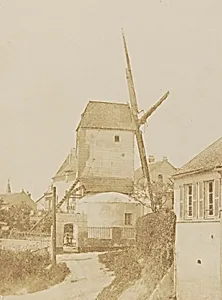
![[Windmills, Montmartre]](https://images.artheonmuseum.org/met/ph/thumb/windmills-montmartre-285909.webp)