Ctrl K
**The Hischylos Painter** was an anonymous Athenian vase-painter active in the late Archaic period, roughly 525–500 BCE. He is conventionally named after the potter Hischylos, who signed numerous cups with the verb *epoiesen* (“made it”), several of which the painter decorated. Working exclusively in the red-figure technique on terracotta kylikes (drinking cups), he specialized in eye-cups and bilingual vessels that combined red-figure interiors with black-figure exteriors, a transitional format popular in the final decades of the sixth century.
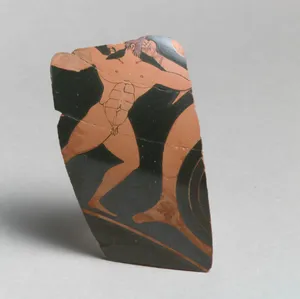
Little is known of his training or personal life; like most Attic vase-painters of the period, he remains an artistic personality reconstructed through stylistic analysis by modern scholars. His hand is recognized by a distinctive, somewhat austere figure style marked by careful incision for details and a preference for compact, balanced compositions suited to the curving surfaces of cups. Attributions include fragments now in the Metropolitan Museum of Art (one dated ca. 530–510 BCE and another ca. 520 BCE) as well as vases in European collections such as the Villa Giulia and the Antikensammlungen in Munich.
The painter’s surviving output consists largely of cup fragments and a handful of more complete vessels depicting mythological or genre scenes—Dionysos and Ariadne, athletes, and arming warriors among them. These works illustrate the rapid refinement of red-figure drawing in the generation immediately following the technique’s invention around 530 BCE. Although his career was relatively brief, the Hischylos Painter contributed to the shift from black-figure to red-figure dominance in Athenian pottery workshops and helped establish the cup as a primary vehicle for narrative imagery in the early red-figure repertoire. His attributed pieces continue to be studied for insights into the collaborative relationship between potters and painters in late Archaic Athens.