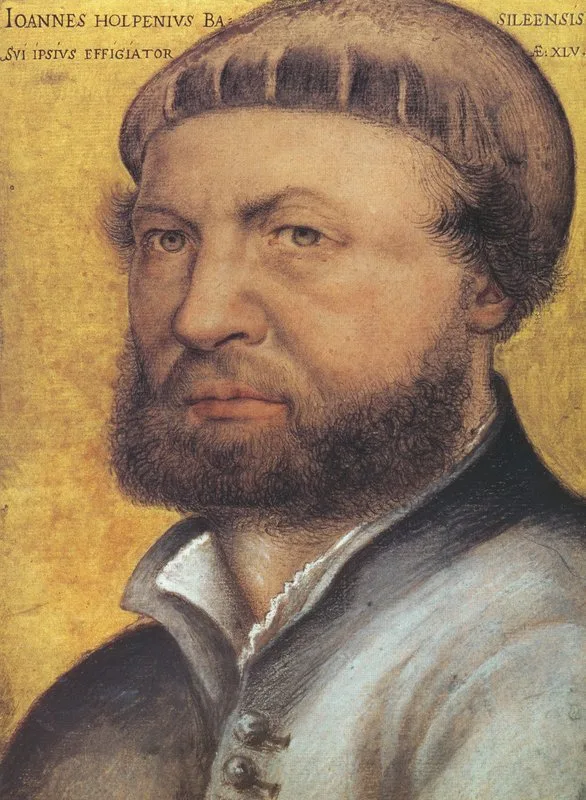
1497–1543
Occupations
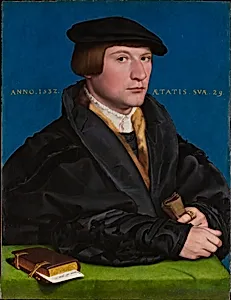
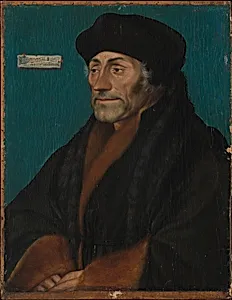
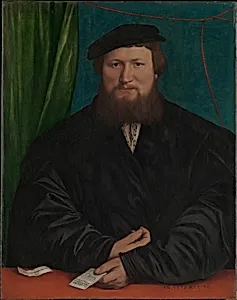
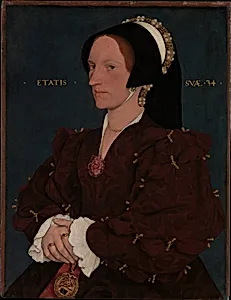
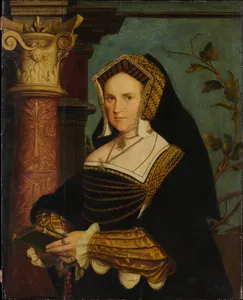
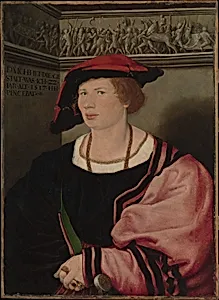
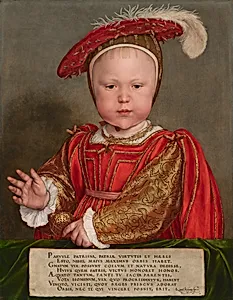
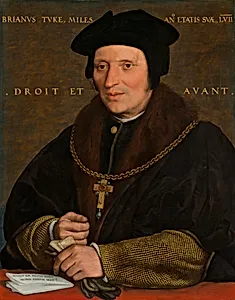
Hans Holbein the Younger (c. 1497-1543) stands as one of the greatest portraitists of the 16th century and the preeminent artist of the Northern Renaissance. Born in Augsburg, Germany, into a family of accomplished painters, Holbein received his earliest training from his father, Hans Holbein the Elder, before establishing himself in Basel, Switzerland, where he became a master of religious art, murals, and book illustrations. His exceptional talent for capturing precise likenesses and penetrating character brought him international recognition through his portraits of the humanist scholar Desiderius Erasmus. The spread of the Protestant Reformation dramatically altered the artistic landscape of Northern Europe, reducing demand for religious imagery and prompting Holbein to seek patronage in England. Armed with a letter of introduction from Erasmus, he arrived in London in 1526 and quickly gained favor within the humanist circle of Sir Thomas More. After a brief return to Basel, Holbein settled permanently in England in 1532, eventually securing appointment as King's Painter to Henry VIII by 1535. In this prestigious role, he created an extraordinary visual record of the Tudor court, producing approximately 150 portraits during his final decade, along with designs for jewelry, ceremonial objects, and monumental decorations. Holbein's technical mastery combined the unsparing realism and emphasis on line characteristic of the Late Gothic tradition with the humanist principles and compositional sophistication of the Italian Renaissance. His portraits are celebrated for their meticulous rendering of textures—velvet, fur, jewels, and flesh—and their psychological depth. Beyond surface likeness, Holbein embedded layers of symbolism and allusion that continue to fascinate scholars. His iconic images of Henry VIII, his courtiers, and potential royal brides have defined our visual understanding of the Tudor era. Holbein died during a plague epidemic in London between October and November 1543, leaving a legacy that profoundly influenced English portraiture for generations and secured his position among history's supreme masters of the portrait genre.
Born in Augsburg, Germany, during the winter of 1497-98 to the painter Hans Holbein the Elder, one of the leading artists of the Late Gothic school
Received initial artistic training from his father alongside his older brother Ambrosius, both following the family trade
A silverpoint portrait from 1511 documents that Hans was 14 years old, establishing his birth around late 1497 or early 1498
Steeped in the Late Gothic style with its unsparing realism and emphasis on line, influences that would remain throughout his career
Father Hans Holbein the Elder was an accomplished painter and draughtsman, providing the foundation for his sons' artistic education
Moved to Basel with brother Ambrosius in 1515, a major center of learning, humanism, and the printing trade
Apprenticed to Hans Herbster, Basel's leading painter, continuing their professional development as journeyman painters
In 1515, invited by preacher Oswald Myconius to add marginal pen drawings to a copy of 'The Praise of Folly' by Erasmus
Entered the painters' corporation in 1519, married a tanner's widow, and became a burgher of Basel in 1520
By 1521, executed important mural decorations in the Great Council Chamber of Basel's town hall
Worked extensively for printer Johann Froben, designing stained glass windows and book illustrations
Painted his first portraits of Erasmus in 1523, creating likenesses to be sent to the scholar's friends and admirers throughout Europe—these paintings established Holbein's international reputation
Created the Darmstadt Madonna (c. 1526-1530) for Burgermeister Jakob Meyer zum Hasen, a resolutely Catholic work that opposed the Reformation
As religious imagery demand declined with the Protestant Reformation, began seeking alternative patronage
Traveled to England in 1526 with a letter of introduction from Erasmus to Sir Thomas More
Welcomed into More's humanist circle in Chelsea, where More praised him in letters to Erasmus as 'a wonderful artist'
Executed portraits of leading humanists and courtiers, building a distinguished reputation
Created the magnificent portrait of Sir Thomas More (1527), featuring meticulous observation extending to tiny stubble, iridescent velvet sleeves, and abstract decorative effects of gold chain
Painted members of More's household and other prominent figures in the English humanist movement
This period established Holbein's reputation for creating true likenesses with unprecedented psychological depth
Returned to Basel in 1528 as religious and political conditions temporarily improved
Maintained his workshop and continued accepting commissions in Basel
Completed the Darmstadt Madonna during this period, demonstrating his continued skill in religious painting
However, the ongoing religious upheaval and iconoclasm of the Reformation continued to reduce opportunities for traditional religious art
Recognized that his future lay in England, where portrait commissions were abundant and royal patronage possible
Prepared for permanent relocation to England where his talents would find greater appreciation and reward
Settled permanently in England in 1532 under the patronage of Anne Boleyn and Thomas Cromwell
Created 'The Ambassadors' (1533), a double portrait of French diplomats Jean de Dinteville and Georges de Selve, featuring revolutionary use of anamorphosis with a distorted skull in the foreground
Appointed King's Painter to Henry VIII by September 1536, receiving royal commissions, gifts of livery, and regular salary of thirty pounds annually
Commissioned to create the monumental Whitehall Palace mural (1536-37) depicting Henry VIII, Jane Seymour, and Henry's parents—destroyed by fire in 1698 but renowned for its shocking lifelike appearance and powerful propaganda value
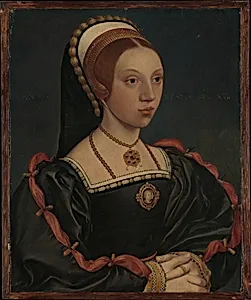
Painted portraits of Henry VIII's wives including Jane Seymour (1536), Anne of Cleves (1539), and possibly Katherine Howard, along with a drawing of Anne Boleyn
Sent to Brussels in 1538 to paint Christina of Denmark in a three-hour sitting (1-4 PM on March 12) as a potential bride portrait for Henry VIII
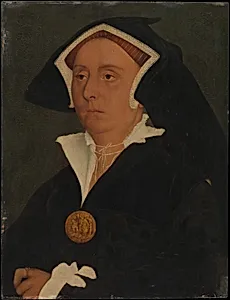
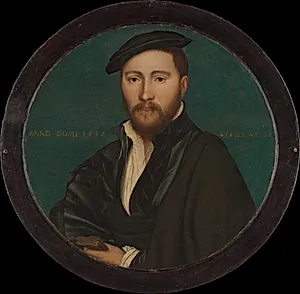
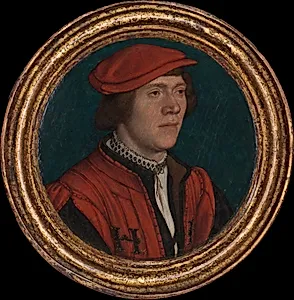
Produced approximately 150 portraits during his final decade, ranging from German merchants in London to French ambassadors to royalty
Created the only surviving painting of Henry VIII from his hand, now in the Thyssen-Bornemisza Museum in Madrid
Beyond portraiture, designed jewelry, ceremonial objects, sword hilts, clothing, buttons, and festive decorations for the court
His portraits documented the Tudor court during the crucial years when Henry VIII was asserting supremacy over the Church of England
Died in a plague epidemic in London between October 7 and November 29, 1543, at age 45
Artheon Research Team
Last updated: 2025-11-28
Biography length: ~1,247 words
Wikidata/Wikimedia Commons