
Ctrl K
1801–1886
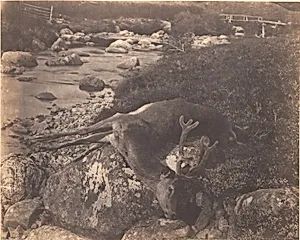
Horatio Ross was born in Scotland in 1801 and became one of the most remarkable early practitioners of photography in Britain, as well as a celebrated sportsman, marksman, and Highland gentleman. Before photography claimed his deepest attention, Ross had already distinguished himself as one of the finest rifle shots in the country, winning numerous competitions and earning a reputation as an outstanding deer stalker and fisherman. This background as a sportsman was not incidental to his photographic practice: many of his earliest and most significant photographs document the world of Scottish field sports, bringing the camera into landscapes and activities that had previously been the domain of sporting painters.
Ross began experimenting with the calotype process — the paper negative system invented by William Henry Fox Talbot — in the early 1840s, making him one of a small pioneering group of Scottish photographers that also included David Octavius Hill and Robert Adamson. His photographs of deer, game, fishing scenes, and Highland landscapes are among the earliest photographic documents of the sporting life of Victorian Scotland. He worked with sensitivity to light and composition unusual among early amateur photographers, and his images possess a directness and authority that transcends mere documentation.
Beyond sport, Ross photographed portraits of family members, friends, and Scottish worthies, as well as architectural subjects and rural genre scenes. His work was motivated by personal interest rather than commercial ambition, and as a gentleman of independent means he could afford to experiment freely. He exhibited at the Edinburgh Photographic Society and contributed to the early institutional life of photography in Scotland.
Ross died in 1886, leaving behind a body of photographic work of considerable historical and aesthetic importance. His sporting photographs in particular are now recognized as pioneering examples of action photography avant la lettre, capturing subjects — moving animals, outdoor scenes — that challenged the technical limitations of the calotype process. He stands as a significant, if often underappreciated, figure in the early history of British photography.
![[Portrait of a Man in Military Regalia]](https://images.artheonmuseum.org/met/ph/thumb/portrait-of-a-man-in-military-regalia-288085.webp)
![[Prize Cow and Calf]](https://images.artheonmuseum.org/met/ph/thumb/prize-cow-and-calf-288084.webp)
![[Peel Ross, Son of Horatio Ross]](https://images.artheonmuseum.org/met/ph/thumb/peel-ross-son-of-horatio-ross-288054.webp)
![[Mrs. Kennedy]](https://images.artheonmuseum.org/met/ph/thumb/mrs-kennedy-288057.webp)
![[Miss Macrae of Inverinate, Wife of Horatio Ross]](https://images.artheonmuseum.org/met/ph/thumb/miss-macrae-of-inverinate-wife-of-horatio-ross-288053.webp)
![[Two Stags, One Shot by Mr. Ross and the Other by Mrs. Ross]](https://images.artheonmuseum.org/met/ph/thumb/two-stags-one-shot-by-mr-ross-and-the-other-by-mrs-ross-288061.webp)
![[Spying in Glenfeshie]](https://images.artheonmuseum.org/met/ph/thumb/spying-in-glenfeshie-288082.webp)
![[Stag Trophy Head, Killed by Ned Ross]](https://images.artheonmuseum.org/met/ph/thumb/stag-trophy-head-killed-by-ned-ross-288060.webp)
![[Macrae, Ross, and Warner Families Outdoors]](https://images.artheonmuseum.org/met/ph/thumb/macrae-ross-and-warner-families-outdoors-288058.webp)
![[Edward Ross, Youngest Son of Horatio Ross]](https://images.artheonmuseum.org/met/ph/thumb/edward-ross-youngest-son-of-horatio-ross-288055.webp)
![[Two Stags and Roe Buck]](https://images.artheonmuseum.org/met/ph/thumb/two-stags-and-roe-buck-288063.webp)
![[Colin and Horatio Ross Reading with Jessie Macrae]](https://images.artheonmuseum.org/met/ph/thumb/colin-and-horatio-ross-reading-with-jessie-macrae-288077.webp)
![[Stag Shot by Mrs. Ross]](https://images.artheonmuseum.org/met/ph/thumb/stag-shot-by-mrs-ross-288079.webp)
![[Dead Stag]](https://images.artheonmuseum.org/met/ph/thumb/dead-stag-286900.webp)
![[Stag Trophy Head Killed by Ned Ross]](https://images.artheonmuseum.org/met/ph/thumb/stag-trophy-head-killed-by-ned-ross-288067.webp)
![[Hunters Stalking a Deer]](https://images.artheonmuseum.org/met/ph/thumb/hunters-stalking-a-deer-288083.webp)
![[Ned and Colin Ross with Hunt Trophy]](https://images.artheonmuseum.org/met/ph/thumb/ned-and-colin-ross-with-hunt-trophy-288056.webp)
![[Elegant Group Outdoors]](https://images.artheonmuseum.org/met/ph/thumb/elegant-group-outdoors-288073.webp)
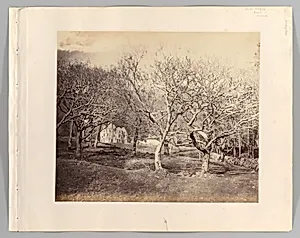
![[Old Tom]](https://images.artheonmuseum.org/met/ph/thumb/old-tom-288072.webp)
![[View in the Gardens at Netherley]](https://images.artheonmuseum.org/met/ph/thumb/view-in-the-gardens-at-netherley-288080.webp)
![[Man and Boys Fishing]](https://images.artheonmuseum.org/met/ph/thumb/man-and-boys-fishing-288078.webp)
![[Stags Heads - Dibedale]](https://images.artheonmuseum.org/met/ph/thumb/stags-heads-dibedale-288068.webp)