Ctrl K
1550–1600
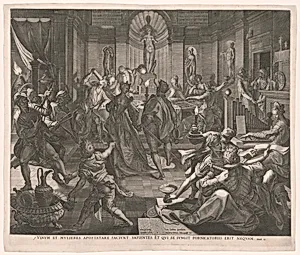
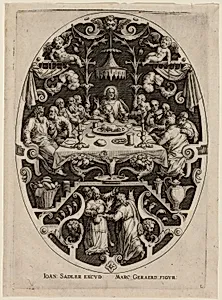
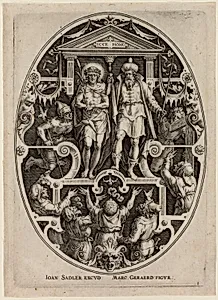
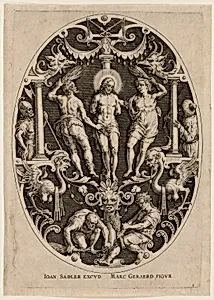
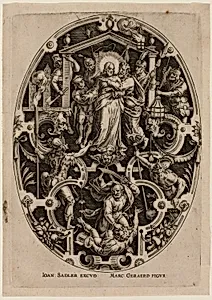
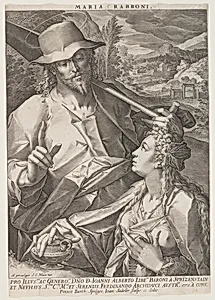
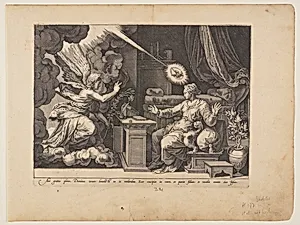
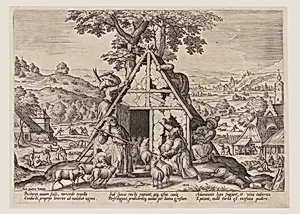
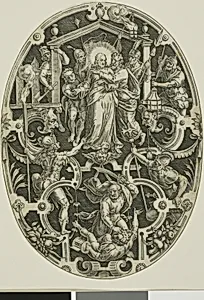
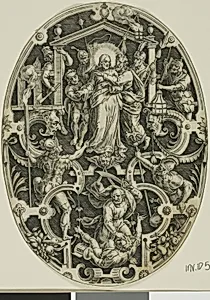
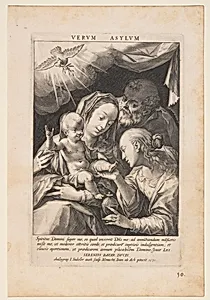
Jan Sadeler I (1550–1600) was born in Brussels and became the most prominent member of the largest and most successful dynasty of Flemish printmakers in the sixteenth and seventeenth centuries. The Sadeler family — which included Jan's brothers Aegidius and Raphael — produced an extraordinary volume of engravings that circulated across Catholic Europe, disseminating images of religious subjects, portraits, and mythological scenes to a vast and geographically dispersed audience. Jan was active in Antwerp by 1572, at the height of that city's dominance as the centre of the Northern European print trade.
Over the following decades Jan moved through the major cities of Catholic Europe in search of patronage and markets. He was in Cologne by around 1579, returned periodically to Antwerp, and from 1588 served as court engraver in Munich to Duke Wilhelm V of Bavaria, working alongside his brother Raphael. He received an imperial privilege for his prints in 1581, renewed in 1593, which provided legal protection for his publications across the Holy Roman Empire. Around 1595 he and Raphael left Munich and made their way to Venice via Verona, where Jan spent the final years of his life and received a papal privilege for his work around 1598.
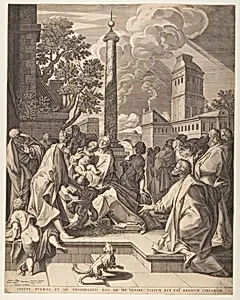
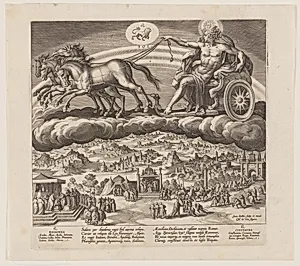
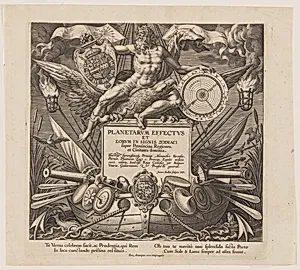
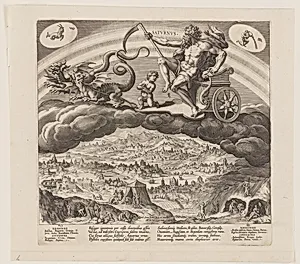
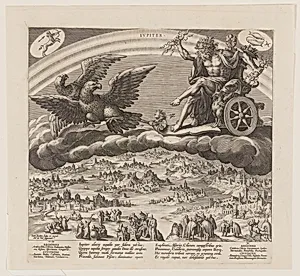
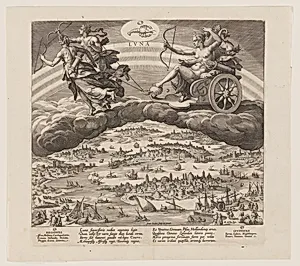
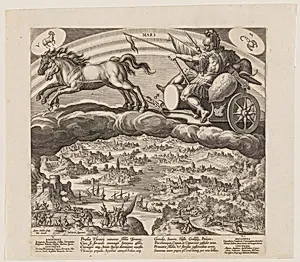
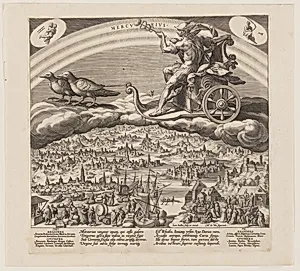
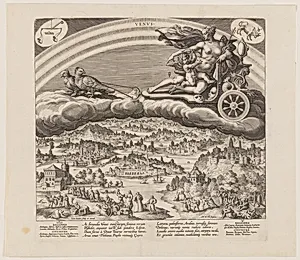
Sadeler was one of the foremost reproductive engravers of his era, translating the compositions of major painters — including Maerten de Vos, whose large devotional cycles provided many of the images Sadeler disseminated — into precise, tonal engravings of high technical sophistication. His burin work is distinguished by its command of hatching systems that modelled form and conveyed surface texture with exceptional clarity. The inventory of his Venetian print shop, drawn up at his death in 1600, listed 475 copperplates, evidence of the remarkable commercial scale of his publishing enterprise.
Jan Sadeler died in Venice in 1600, leaving the business in the hands of his son Justus. The family firm continued to operate into the seventeenth century, but it was Jan who established its methods, reputation, and pan-European reach. As both a skilled technician and a shrewd distributor of images, he played a central role in shaping the visual culture of Counter-Reformation Catholicism across the continent.