Ctrl K
1685–1732
Ignatius van Logteren (1685–1732) was a distinguished Dutch sculptor, stucco artist, and architect who contributed significantly to Amsterdam's architectural decoration during the early eighteenth century. Born in Amsterdam on June 8, 1685, into an artistic family—his father Jan van Logteren the elder was a painter—Ignatius received his first drawing lessons from his father before pursuing sculptural training. He became heavily influenced by the work of Francis van Bossuit, possibly studying under him, and absorbed the sophisticated baroque sculptural style that would characterize his mature work. Van Logteren's career encompassed garden sculpture for important clients, stucco plaster reliefs, and facade sculptures for Amsterdam's prestigious canal houses. In his early years, he frequently collaborated with Daniel Marot, the French architect and designer who moved to Amsterdam from The Hague around 1702-03, combining sculptural and architectural elements in unified decorative schemes. From 1717 onward, Van Logteren specialized increasingly in stucco reliefs and facade sculptures, executing commissions for numerous Amsterdam canal houses that enriched the city's architectural character. His death on November 4, 1732, at age forty-seven, ended a career that had significantly enhanced Amsterdam's sculptural and architectural decoration during its continued prosperity in the eighteenth century.
Ignatius van Logteren was born on June 8, 1685, in Amsterdam, to Jan van Logteren the elder, an established painter working in the Dutch Republic's artistic capital. Growing up in an artistic household provided Ignatius with early exposure to drawing, composition, and the professional practices of Amsterdam's artistic community.
He received his first drawing lessons from his father, acquiring foundational skills in observation and representation before specializing in sculpture. This early training in drawing proved essential for sculptural work, which required ability to design compositions in two dimensions before executing them in three-dimensional form.
Van Logteren's sculptural education likely involved apprenticeship with an established sculptor, with evidence suggesting significant influence from Francis van Bossuit (1635–1692), a sculptor known for refined small-scale works in ivory and terracotta. Though Bossuit died when Van Logteren was only seven, the young sculptor may have trained with Bossuit's followers or studied his works, absorbing his sophisticated approach to relief sculpture and figure modeling.
Van Logteren's early professional career coincided with Daniel Marot's arrival in Amsterdam around 1702-03. Marot, a French Huguenot architect and designer who had worked for William III of Orange, brought sophisticated French decorative approaches to Dutch architecture and interiors.
Van Logteren frequently collaborated with Marot during this period, creating sculptural elements integrated into Marot's architectural and garden designs. These collaborations combined Marot's overall design vision with Van Logteren's sculptural execution, producing unified decorative schemes for wealthy Amsterdam patrons.
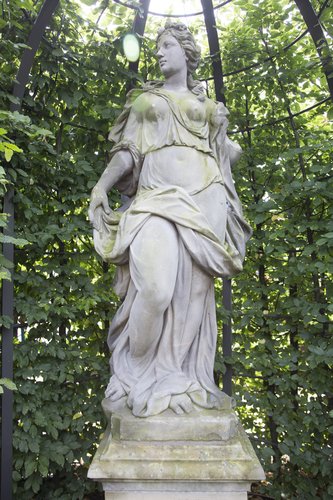
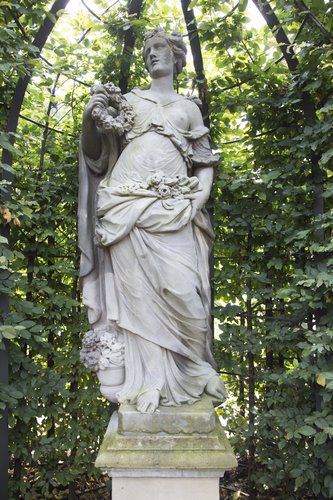
During these years, Van Logteren executed various garden sculptures for important clients, creating works in stone designed for outdoor display in the formal gardens fashionable among Amsterdam's merchant elite. These commissions demonstrated his ability to work at larger scales and in durable materials suitable for exterior installation.
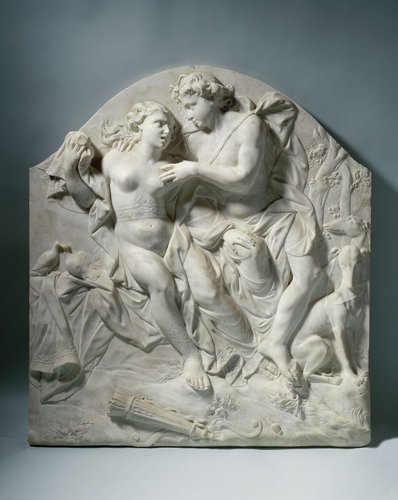
From 1717 onward, Van Logteren increasingly specialized in stucco plaster reliefs and facade sculptures for Amsterdam canal houses. Stucco work—decorative plasterwork often enriched with relief sculpture—became a hallmark of prosperous canal house interiors during this period, with elaborate ceiling and wall decorations demonstrating owners' wealth and cultural refinement.
Van Logteren executed stucco commissions for numerous Amsterdam canal houses, creating decorative schemes that enhanced these residences' architectural character. His facade sculptures contributed to canal houses' exterior decoration, enriching Amsterdam's streetscapes with sculptural elements celebrating commerce, mythology, and civic virtues.
This specialization in architectural decoration positioned Van Logteren within Amsterdam's building trades while maintaining artistic status through the quality and sophistication of his sculptural work. His ability to combine architectural requirements with artistic expression made him valuable to patrons seeking both functional building elements and aesthetic refinement.
Van Logteren died on November 4, 1732, in Amsterdam at age forty-seven. His workshop was continued by his son Jan van Logteren (who took over in November 1732), ensuring continuation of the family's artistic enterprise and preservation of his approaches to sculptural decoration.
Artheon Research Team
Last updated: 2025-11-09
Biography length: ~492 words
All 6 artworks loaded