Ctrl K
1800–1900
The Illman Brothers—Edward, George, Henry, and William—formed a renowned engraving and printing firm in Philadelphia, active from the mid-19th century through the early 20th, with operations spanning roughly 1860 to 1907. Founded by their English-born father, Thomas Illman, the business began as Illman & Sons around 1840 before evolving into the brothers' collaborative enterprise after his death. George, born in England in 1824, immigrated young and worked alongside Edward, born in New York City in 1832, establishing the family as pioneers in American steel engraving. Their early lives and formal training remain sparsely documented, reflecting the era's focus on collective workshop output over individual apprenticeships.
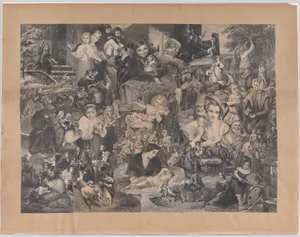
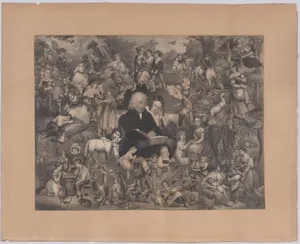
Operating in the vibrant tradition of 19th-century reproductive engraving, the Illman Brothers excelled at translating paintings into intricate steel plates for mass reproduction. They contributed extensively to popular periodicals like *Peterson's Magazine* and *Godey's Lady's Book*, producing fashion plates such as those from *Les Modes Parisiennes* that captured Parisian styles for American audiences in the 1860s. Historical subjects dominated their portfolio, including dramatic Revolutionary War scenes: "George Washington at the Battle of Trenton" (1870) after Edward Lamson Henry, "The Surrender of Cornwallis at Yorktown" (ca. 1860–1870), and "The State House in Philadelphia, 1778" (Independence Hall) derived from Charles Willson Peale's painting. Religious and genre works, like "Jesus at the Age of Twelve" after J.M.H. Hofmann, further showcased their meticulous line work and tonal depth.
The Illman Brothers' legacy lies in democratizing visual culture, bridging fine art with everyday print media at a time when illustrated magazines shaped public taste. Their engravings adorned collages on family life, rural idylls, and moral tales, preserving historical narratives and ephemeral fashions for posterity. Active into the early 1900s, the firm exemplified Philadelphia's role as a hub for precision printmaking, influencing generations of illustrators and collectors who prize their detailed, evocative plates today. Though individual biographies fade behind the collective imprint, their output endures in museum collections, evoking the artistry of a mechanical age.