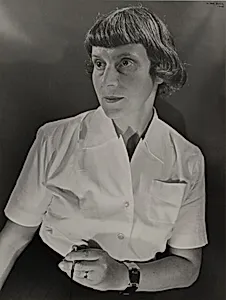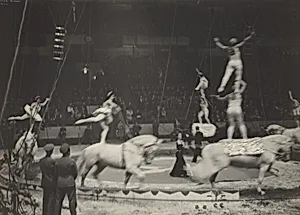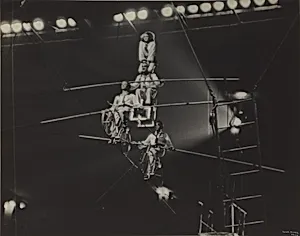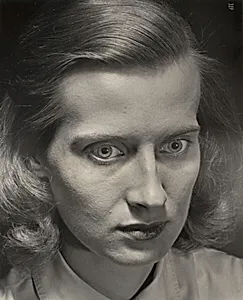
Ilse Bing, born on March 23, 1899, in Frankfurt am Main, Germany, into a prosperous Jewish merchant family, grew up immersed in music and art. The daughter of Louis Bing and Johanna Elli Bing (née Katz), she pursued studies in mathematics and physics at the University of Frankfurt starting in 1920, later shifting to art history and architecture. A semester at Vienna's Kunsthistorisches Institut in 1923–1924 enriched her understanding of European art. While illustrating her dissertation on Neo-Classical architect Friedrich Gilly, Bing purchased a Voigtländer camera in 1928 and taught herself photography, abandoning academia in 1929 after acquiring a Leica—the lightweight 35mm camera that earned her the moniker "Queen of the Leica."
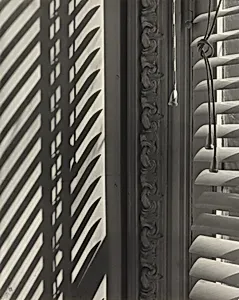
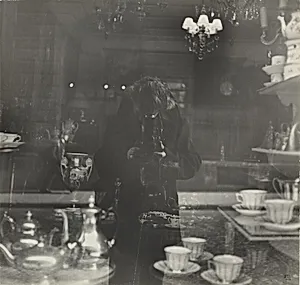
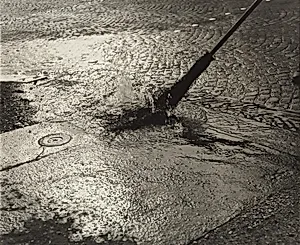
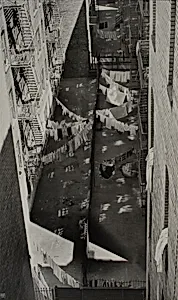
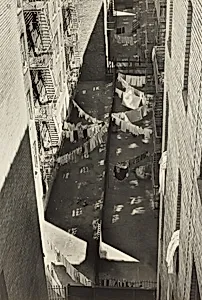
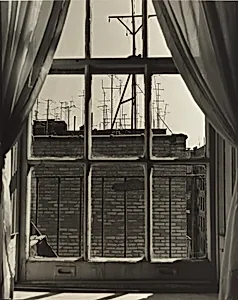
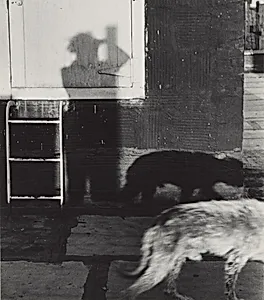
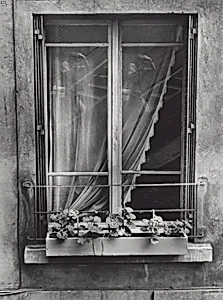
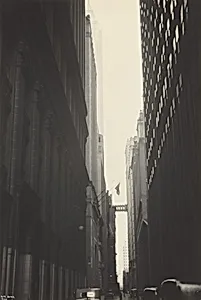
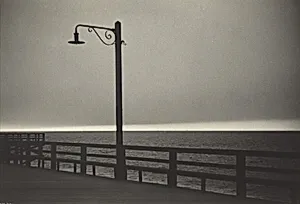
Commissioned by Bauhaus teacher Mart Stam to document his Frankfurt housing projects, Bing honed her modernist eye, capturing dizzying angles and stark shadows that aligned with the New Photography movement. In 1930, inspired by Florence Henri's work, she relocated to Paris, freelancing in photojournalism, fashion, and advertising for outlets like *Vu*, *Harper's Bazaar*, and *Vogue*. Her avant-garde style—marked by geometric compositions, tilted horizons, dramatic light-shadow contrasts, reflections, and solarization—blended New Vision aesthetics with Surrealist elements, often turning everyday urban scenes into poetic abstractions. Iconic works include *Lamp Post, Germany* and *Laundry, Frankfurt* (both 1929), the *Moulin Rouge* dancer series (1931, her debut Paris exhibition), *Self-Portrait in Mirrors* (1931), *Rue de Valois, Paris* (1932), and *Shoes for Harper's Bazaar* (1935).
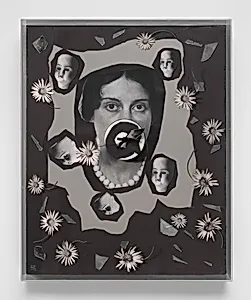
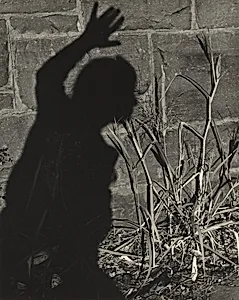
In 1937, Bing married pianist Konrad Wolff, whom she met in 1933. Fleeing Nazi persecution, the couple endured internment—Bing in Camp Gurs—before emigrating to New York in 1941, where she became a U.S. citizen. There, her style evolved toward harsher lines and isolation, evident in portraits and works like *Shadow Self-Portrait, Washington, D.C.* (1953). She experimented with color in the 1950s but ceased photography in 1959, turning to poetry, collages, and drawings, as in *Words as Visions: Logograms* (1974).
Bing's legacy as a pioneer of modernist photography endures through retrospectives like the Victoria & Albert Museum's "Ilse Bing: Queen of the Leica" (2004) and the Cleveland Museum of Art's (2020), alongside holdings at MoMA and ICP. Her innovative Leica mastery and boundary-blurring of art, journalism, and commerce influenced generations, capturing the interwar era's dynamism before war's shadow.