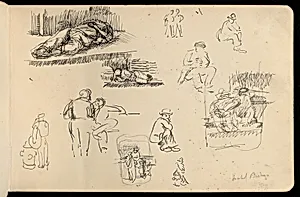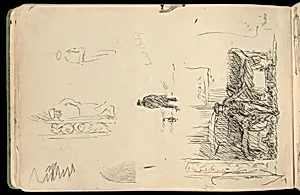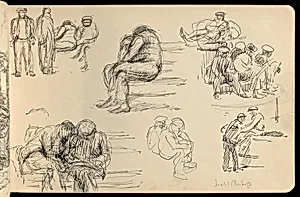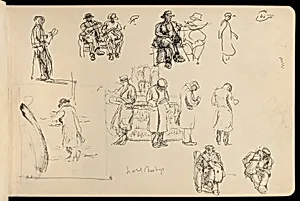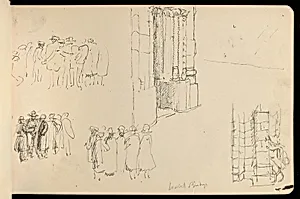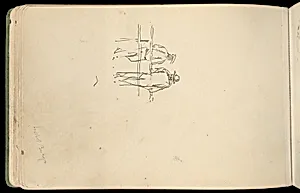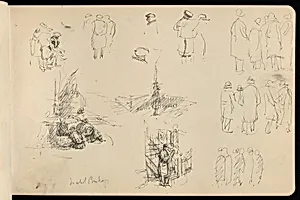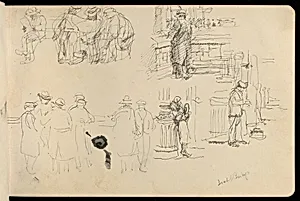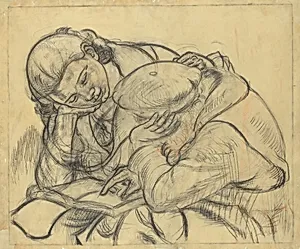
Isabel Bishop (1902–1988) was an American painter and printmaker whose career spanned more than six decades and whose work stands as one of the most quietly powerful achievements in twentieth-century American realism. Born in Cincinnati, Ohio, she moved to New York City as a teenager to study art, first at the New York School of Applied Design for Women and then at the Art Students League, where she studied under the influential painter and teacher Kenneth Hayes Miller. Miller's emphasis on the grand tradition of European figure painting — rooted in Rubens, Rembrandt, and the Italian masters — gave Bishop a rigorous classical foundation that she spent her career transforming into something entirely her own.
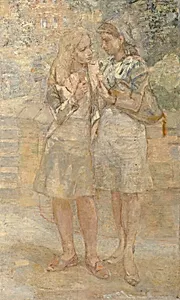
Bishop spent most of her working life in a studio on Union Square in Manhattan, and the neighborhood's daily human traffic became her enduring subject. She painted office workers, shoppers, and young women on their lunch breaks with a luminous, flickering technique — loosely applied, almost vaporous strokes that dissolved solid form into atmosphere while preserving keen observation of gesture and expression. Her figures exist in a state of transient pause, caught between motion and stillness, suggesting both the individuality of each person and the anonymity of city life.
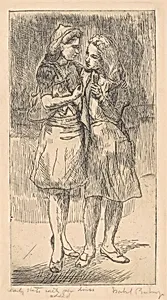
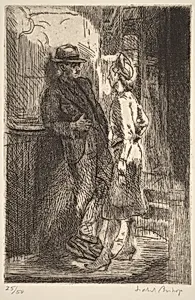
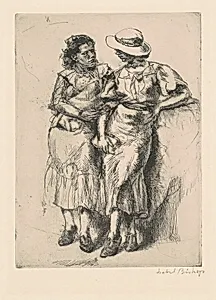
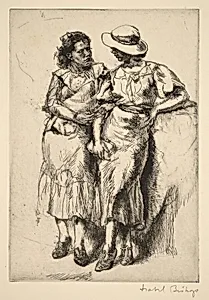
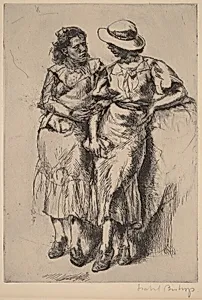
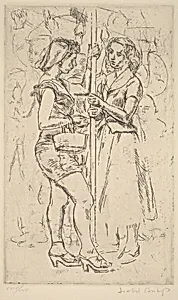
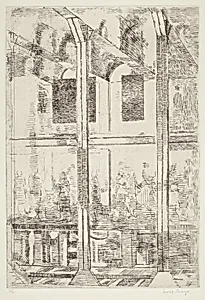
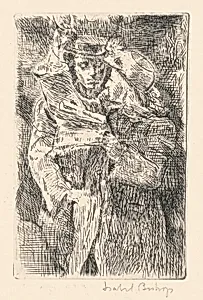
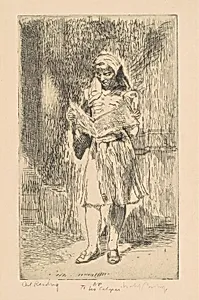
Beyond painting, Bishop was a gifted printmaker and produced a significant body of etchings and aquatints. She was elected to the National Academy of Design and to the American Academy of Arts and Letters, and she received the National Medal of Arts. Her recognition came slowly but grew substantially in the later decades of her career as critics recognized the depth and originality of her achievement.
Bishop's legacy is that of an artist who brought genuine humanism and technical sophistication to subjects that might easily have been dismissed as mundane. Her Union Square paintings endure as a compassionate record of ordinary urban life in mid-century America.

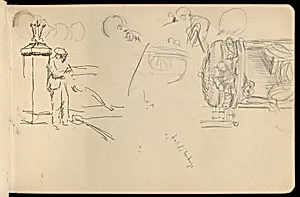
![Study for "Two Girls Outdoors" [recto]](https://images.artheonmuseum.org/nga/thumb/study-for-two-girls-outdoors-recto-nga-194585.webp)