Ctrl K
1435–1503
Israhel van Meckenem (c. 1445–1503), also known as Israhel van Meckenem the Younger, was a pioneering German engraver and goldsmith based in Bocholt, near the Dutch border, renowned as the most prolific printmaker of the fifteenth century. Born into a family possibly of Dutch origin, he was the son of Israhel van Meckenem the Elder, a goldsmith who settled in Bocholt in 1457. He trained initially as a goldsmith and engraver in his father's workshop, producing early copies of paternal prints, before traveling to work with Master E. S., the era's preeminent Northern engraver. His first dated print emerged in 1465 from Cleves; by 1470, he worked in Bamberg, returning to Bocholt around 1480. In the late 1480s, he married Ida, his business partner, whom he immortalized alongside himself in an innovative double portrait engraving—the first identifiable portrait print and self-portrait by an engraver.
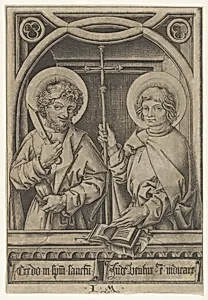
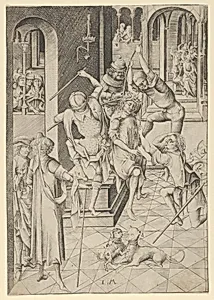
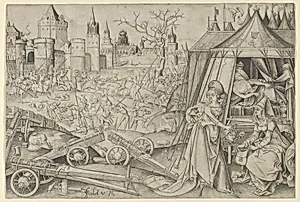
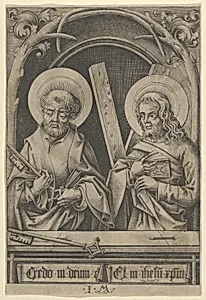
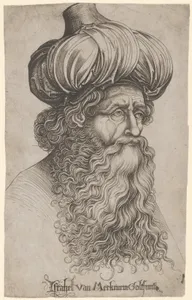
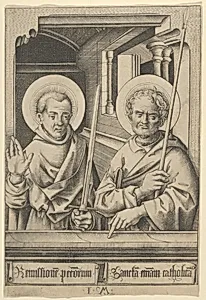
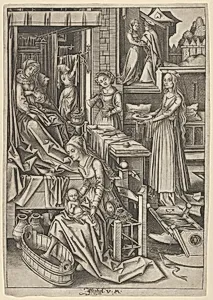
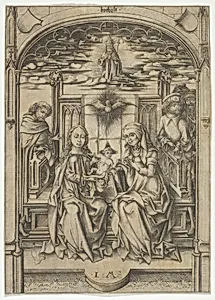
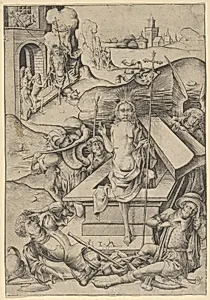
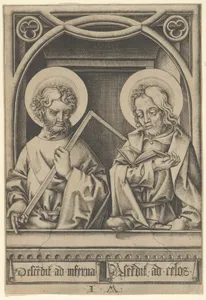
Van Meckenem's style evolved from crude early efforts to a refined, lively personal manner in the 1480s, blending intricate detail with dynamic compositions that captured secular daily life alongside religious themes. Operating a thriving workshop, he produced over 620 engravings—about 20% of all Northern European prints during his career—most as reproductive copies after masters like Master E. S. (whose plates he acquired and reworked), the Housebook Master, Martin Schongauer, and even young Albrecht Dürer. His Life of the Virgin series drew from Hans Holbein the Elder's drawings, suggesting commercial ties. He pioneered branding by signing prints with his name and town, issued the first engraved indulgences (promising vast Purgatory reductions), and sold large editions, including bootlegged works.
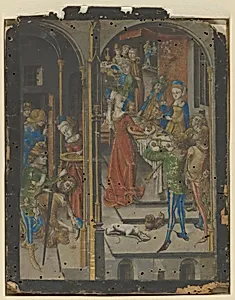
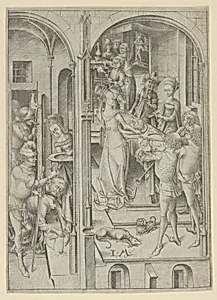
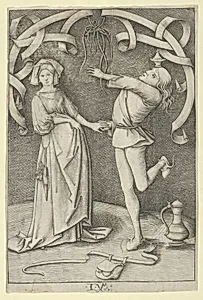
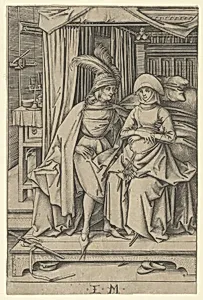
Among his major works are the double portrait *Israhel van Meckenem and his Wife* (c. 1480s–1490s), *Hares Roasting the Hunter*, *Dance at the Court of Herod* (c. 1490–1500), *The Death of Lucretia* (c. 1500/03), *The Angry Wife* (c. 1495/1503), *The Organ Player and His Wife* (c. 1495/1503), and *A Couple Seated on a Bed* (after 1495). These reflect his fascination with couples, folly, music, and inversion motifs, often in large, finished formats.
Van Meckenem's legacy endures as a commercial innovator who transformed printmaking into a branded enterprise, bridging goldsmithing and mass reproduction. His vast output, workshop derivatives, and savvy self-promotion influenced the Northern Renaissance print market, with impressions integrated into manuscripts like the *Heures de Charles d'Angoulême*. Buried in Bocholt's Georgskirche, he left an indelible mark on old master prints.