Ctrl K
1800–1900
**Joseph Salter Pearse (c. 1822–1896)** was a celebrated British decorative artist and architect whose intricate designs captured the opulent spirit of Victorian-era interiors. Active primarily between 1854 and 1868, Pearse began his career as a house decorator before gaining renown for his architectural ornamentation. Little is known of his early life or formal training, which remains sparsely documented, though his proficiency in watercolor over graphite suggests a mastery honed through practical experience in the decorative arts tradition.
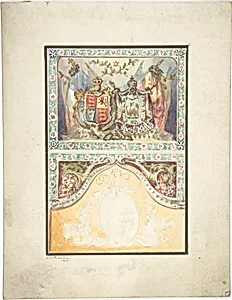
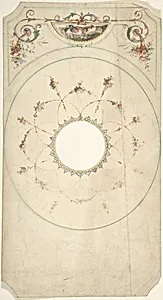
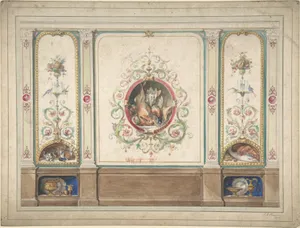
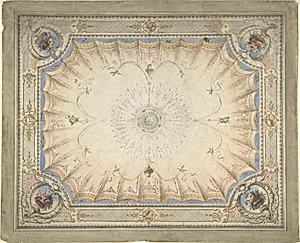
Pearse's oeuvre exemplifies the Victorian fascination with elaborate interior schemes, blending architectural precision with fanciful motifs. His surviving works, preserved in The Metropolitan Museum of Art's collection, showcase this expertise: *Design for Decorative Panels with Hunting Scenes Inset* (1854), featuring dynamic equestrian vignettes; *Design for a Coat of Arms* (1858), a heraldic watercolor; *Ceiling Design with Center Cut Out* (1854–68, attributed); and *Ceiling Design for the Boudoir, Ardgowan* (ca. 1868, attributed), an exquisite plan for an intimate chamber adorned with scrolling foliage and central medallions. These pieces, gifted by the Royal Institute of British Architects, highlight his role in crafting bespoke ornamental elements for elite residences, where symmetry, nature-inspired patterns, and classical references converged to elevate everyday spaces into statements of grandeur.
Pearse's legacy endures through his influence on subsequent generations, as the patriarch of a distinguished artistic dynasty—his son Alfred Pearse (1855–1933), a prominent illustrator and suffragist cartoonist, represented the fourth generation. Married to Loveday Colbron, Pearse's family life in London's Islington and Marylebone districts nurtured this creative continuum. Though his career spanned a brief documented period, his designs remain touchstones of mid-19th-century British decorative innovation, bridging functionality and artistry in the opulent homes of the era. Today, his four extant works invite us to appreciate the unsung architects of Victorian splendor.