
Ctrl K
**Jacob Hoefnagel (1573–c. 1632)**
Born in Antwerp and baptized on 25 December 1573, Jacob Hoefnagel was the eldest son of the renowned Flemish miniaturist and natural history painter Joris Hoefnagel (1542–1601) and Susanna van Onsem. The family fled the city following the devastating Sack of Antwerp in 1576, which depleted their merchant fortunes in diamonds and luxury goods. Unlike his self-taught father, who had transitioned from trade to art, Jacob received formal training as a pupil of Abraham Liesaert, registering in the Antwerp Guild of Saint Luke in 1582. He also learned drawing from Joris, absorbing his meticulous approach to nature studies early on.
Jacob's career was peripatetic and multifaceted, spanning painting, printmaking, diplomacy, and politics across Europe. Reuniting with his father in Frankfurt by 1592, he published *Archetypa studiaque patris Georgii Hoefnagelii* at age 19—a groundbreaking series of 48 engravings depicting insects, plants, fruits, and small animals *ad vivum*, directly after Joris's designs, each accompanied by emblematic mottos reflecting divine creation. Appointed court painter to Emperor Rudolf II in Prague in 1602, he produced small-scale Mannerist oil paintings on vellum or copper, such as *Orpheus Charming the Animals* (1613, Morgan Library & Museum) and *Winter* (1618), echoing the Prague style of Hans von Aachen and Bartholomeus Spranger. He contributed to Rudolf's lavish "Museum or Bestiary," a scientific compendium of 180 parchment leaves, and created a detailed topographical view of Vienna in 1609.
In his later years, amid the Thirty Years' War, Jacob served Protestant causes, acting as agent for the Bohemian estates in the Dutch Republic (1618–1620) before positions in Sweden, including portraits of King Gustav II Adolf and Queen Maria Eleonora (c. 1624), earning royal rewards. He published *Diversae insectarum volatilium icones* (1630), 16 hyper-realistic insect engravings suggesting lens magnification, advancing proto-scientific illustration. Settling in Hamburg by 1632 after five marriages and financial woes, Jacob's legacy endures in his fusion of art and science. His prints, models for Dutch still lifes into the 19th century, bridged Mannerism and naturalism, immortalizing the Hoefnagel dynasty's precision.
![Archetypa studiaque patris Georgii Hoefnagelii [Part 1, Plate 6]](https://images.artheonmuseum.org/nga/thumb/archetypa-studiaque-patris-georgii-hoefnagelii-nga-224560.webp)
![Archetypa studiaque patris Georgii Hoefnagelii [Part 1, Plate 7]](https://images.artheonmuseum.org/nga/thumb/archetypa-studiaque-patris-georgii-hoefnagelii-nga-224561.webp)
![Archetypa studiaque patris Georgii Hoefnagelii [Part 1, Plate 8]](https://images.artheonmuseum.org/nga/thumb/archetypa-studiaque-patris-georgii-hoefnagelii-nga-224562.webp)
![Archetypa studiaque patris Georgii Hoefnagelii [Part 1, Plate 9]](https://images.artheonmuseum.org/nga/thumb/archetypa-studiaque-patris-georgii-hoefnagelii-nga-224563.webp)
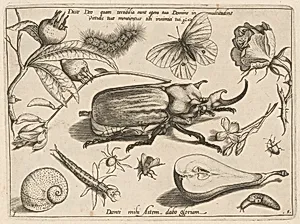
![Archetypa studiaque patris Georgii Hoefnagelii [Part 1, Title Page]](https://images.artheonmuseum.org/nga/thumb/archetypa-studiaque-patris-georgii-hoefnagelii-nga-224554.webp)
![Archetypa studiaque patris Georgii Hoefnagelii [Part 1, Plate 2]](https://images.artheonmuseum.org/nga/thumb/archetypa-studiaque-patris-georgii-hoefnagelii-nga-224556.webp)
![Archetypa studiaque patris Georgii Hoefnagelii [Part 1, Plate 3]](https://images.artheonmuseum.org/nga/thumb/archetypa-studiaque-patris-georgii-hoefnagelii-nga-224557.webp)
![Archetypa studiaque patris Georgii Hoefnagelii [Part 1, Plate 4]](https://images.artheonmuseum.org/nga/thumb/archetypa-studiaque-patris-georgii-hoefnagelii-nga-224558.webp)
![Archetypa studiaque patris Georgii Hoefnagelii [Part 1, Plate 5]](https://images.artheonmuseum.org/nga/thumb/archetypa-studiaque-patris-georgii-hoefnagelii-nga-224559.webp)
![Archetypa studiaque patris Georgii Hoefnagelii [Part 4, Plate 8]](https://images.artheonmuseum.org/nga/thumb/archetypa-studiaque-patris-georgii-hoefnagelii-nga-224601.webp)
![Archetypa studiaque patris Georgii Hoefnagelii [Part 1, Plate 10]](https://images.artheonmuseum.org/nga/thumb/archetypa-studiaque-patris-georgii-hoefnagelii-nga-224564.webp)
![Archetypa studiaque patris Georgii Hoefnagelii [Part 1, Plate 11]](https://images.artheonmuseum.org/nga/thumb/archetypa-studiaque-patris-georgii-hoefnagelii-nga-224565.webp)
![Archetypa studiaque patris Georgii Hoefnagelii [Part 1, Plate 12]](https://images.artheonmuseum.org/nga/thumb/archetypa-studiaque-patris-georgii-hoefnagelii-nga-224566.webp)
![Archetypa studiaque patris Georgii Hoefnagelii [Part 2, Title Page]](https://images.artheonmuseum.org/nga/thumb/archetypa-studiaque-patris-georgii-hoefnagelii-nga-224567.webp)
![Archetypa studiaque patris Georgii Hoefnagelii [Part 2, Plate 1]](https://images.artheonmuseum.org/nga/thumb/archetypa-studiaque-patris-georgii-hoefnagelii-nga-224568.webp)
![Archetypa studiaque patris Georgii Hoefnagelii [Part 2, Plate 2]](https://images.artheonmuseum.org/nga/thumb/archetypa-studiaque-patris-georgii-hoefnagelii-nga-224569.webp)
![Archetypa studiaque patris Georgii Hoefnagelii [Part 2, Plate 3]](https://images.artheonmuseum.org/nga/thumb/archetypa-studiaque-patris-georgii-hoefnagelii-nga-224570.webp)
![Archetypa studiaque patris Georgii Hoefnagelii [Part 2, Plate 4]](https://images.artheonmuseum.org/nga/thumb/archetypa-studiaque-patris-georgii-hoefnagelii-nga-224571.webp)
![Archetypa studiaque patris Georgii Hoefnagelii [Part 2, Plate 5]](https://images.artheonmuseum.org/nga/thumb/archetypa-studiaque-patris-georgii-hoefnagelii-nga-224572.webp)
![Archetypa studiaque patris Georgii Hoefnagelii [Part 2, Plate 6]](https://images.artheonmuseum.org/nga/thumb/archetypa-studiaque-patris-georgii-hoefnagelii-nga-224573.webp)
![Archetypa studiaque patris Georgii Hoefnagelii [Part 2, Plate 7]](https://images.artheonmuseum.org/nga/thumb/archetypa-studiaque-patris-georgii-hoefnagelii-nga-224574.webp)
![Archetypa studiaque patris Georgii Hoefnagelii [Part 2, Plate 8]](https://images.artheonmuseum.org/nga/thumb/archetypa-studiaque-patris-georgii-hoefnagelii-nga-224575.webp)
![Archetypa studiaque patris Georgii Hoefnagelii [Part 2, Plate 9]](https://images.artheonmuseum.org/nga/thumb/archetypa-studiaque-patris-georgii-hoefnagelii-nga-224576.webp)