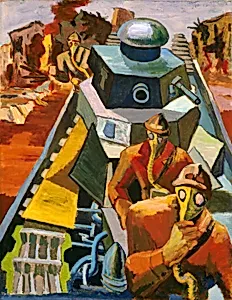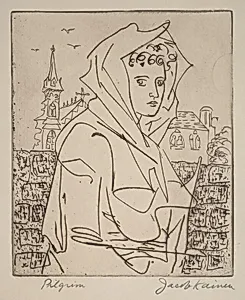
Jacob Kainen was born on December 7, 1909, in Waterbury, Connecticut, to Russian immigrant parents who nurtured his cultural interests; his father was an inventor, and his mother instilled a love of music and literature. The family relocated to New York City in 1918, where Kainen immersed himself in art through newspaper clippings and visits to the Metropolitan Museum. After graduating from DeWitt Clinton High School, he studied drawing at the Art Students League under Kimon Nicolaides, who taught him to trust the freedom of his hand, and enrolled at Pratt Institute in 1927, though he was expelled near graduation for rebelling against its commercial focus. In the 1930s, amid the Great Depression, he worked in the WPA Graphics Division, producing social realist prints and paintings infused with German Expressionist influences, such as *Tenement Fire* (1934), *The Flood* (1936), *Hot Dog Cart* (1943), and *Bronx El* (1940).
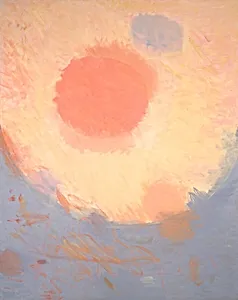
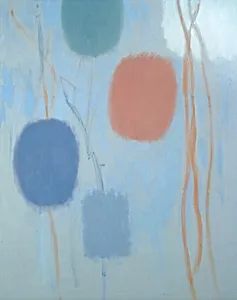
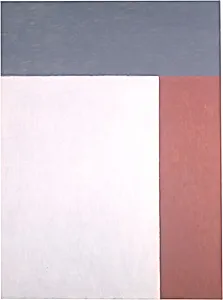
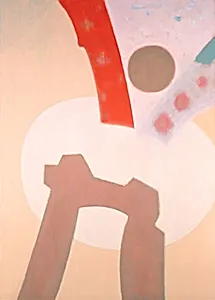
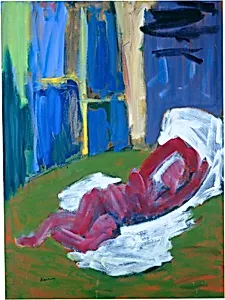
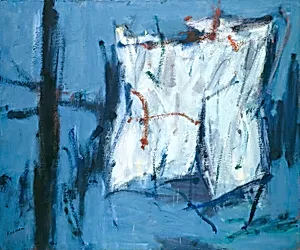
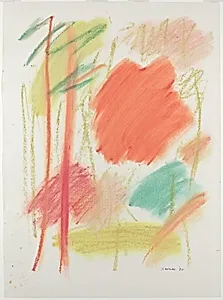
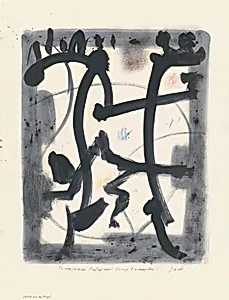
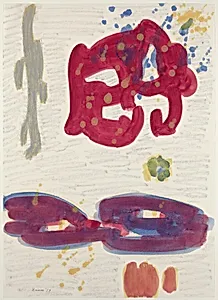
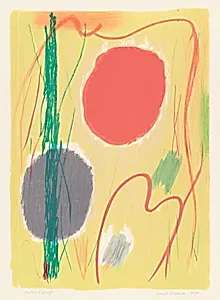
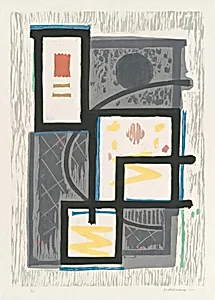
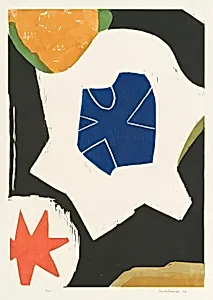
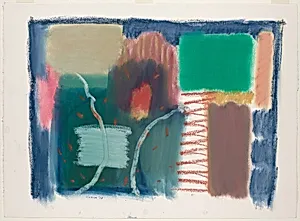
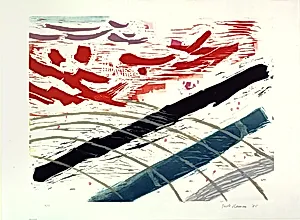
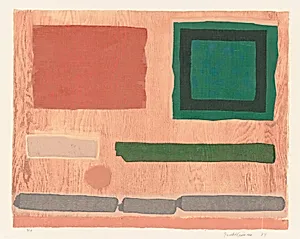
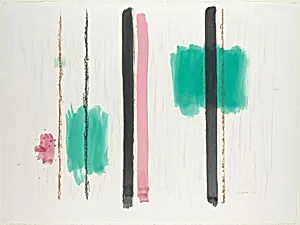
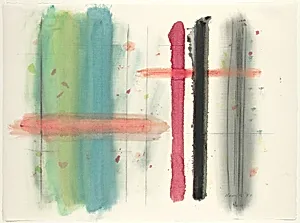
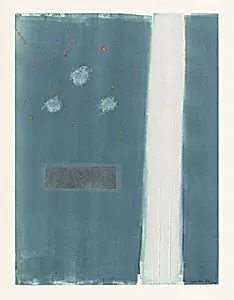
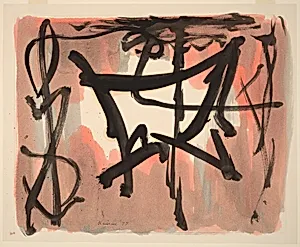
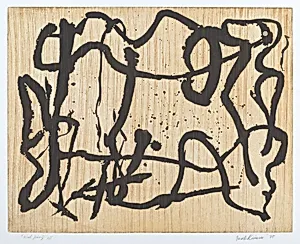
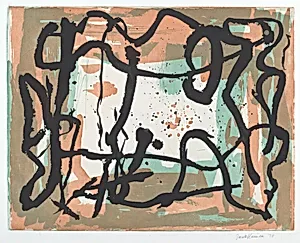
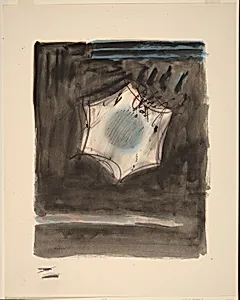
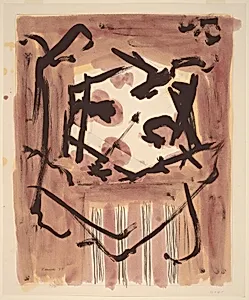
Kainen's career pivoted in 1942 when he joined the Smithsonian Institution as an aide in the Division of Graphic Arts, rising to curator by 1946 and serving until 1970; he also curated prints at the National Collection of Fine Arts. He taught painting and printmaking at the Washington Workshop Center for the Arts, where he introduced Morris Louis to Kenneth Noland and hired Louis as an instructor, catalyzing innovations in the staining technique central to the Washington Color School—though Kainen himself worked in its tradition without formal membership. His style evolved dynamically: from emotive social realism blending raw human drama and urban grit, to bold abstractions in the 1940s and 1950s amid McCarthy-era scrutiny—like *Exorcist* (1952) and *Unmoored #2* (1952)—then elegant figurative works post-1954, returning to lyrical geometric abstraction after retirement.
Retiring to paint full-time, Kainen published scholarly works including *John Baptist Jackson* (1962) and *The Etchings of Canaletto* (1967), married Ruth Cole in 1968 (his second wife), and with her amassed a renowned German Expressionist collection donated to the National Gallery of Art in 1985. Father to mathematician Paul Kainen and inventor Daniel Kainen, he left a profound legacy as painter, printmaker, curator, teacher, and mentor who shaped Washington's postwar art scene, with works in major institutions like the Smithsonian American Art Museum, Phillips Collection, and Whitney. Kainen died on March 19, 2001, in Chevy Chase, Maryland, a quiet giant whose humanism infused abstraction with emotional depth.