Ctrl K
1875–1963
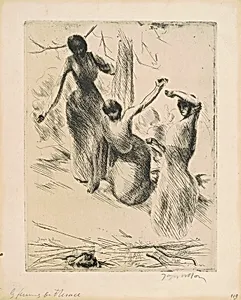
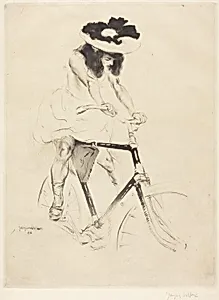
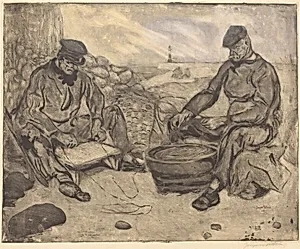
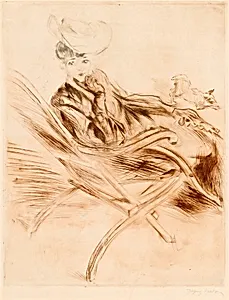
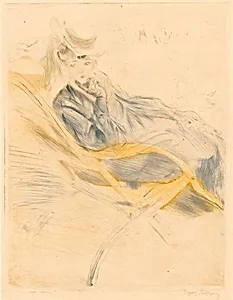
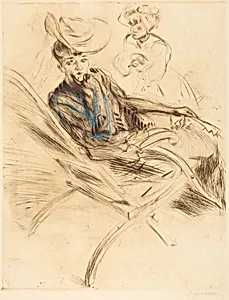
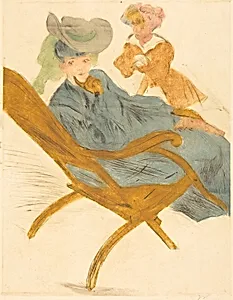
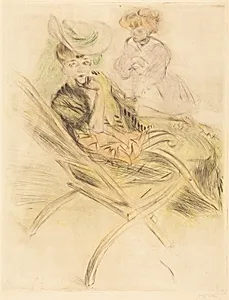
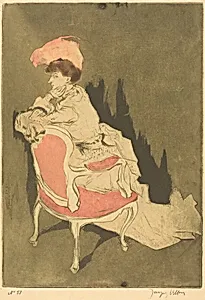
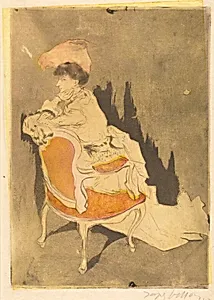
Jacques Villon, born Gaston Émile Duchamp on July 31, 1875, in Damville, Normandy, hailed from a family brimming with artistic talent. As the eldest of six children, he grew up alongside his brothers Raymond Duchamp-Villon, a pioneering sculptor, and Marcel Duchamp, the renowned Dadaist, as well as his sister Suzanne Duchamp, also a painter. Their maternal grandfather, Émile Frédéric Nicolle, a printmaker, introduced the young Gaston to engraving during weekends in Rouen, where at age 16 he produced his first prints—portraits of his father and grandfather. In 1894, Villon moved to Paris with Raymond to study law at the University of Paris, but art soon eclipsed academics. He apprenticed at the Rouen School of Beaux-Arts, attended Fernand Cormon's Montmartre atelier in 1895, the École des Beaux-Arts, and Académie Julian from 1904 to 1905, absorbing influences from Edgar Degas and Henri de Toulouse-Lautrec.
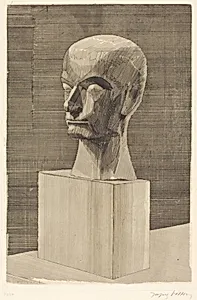
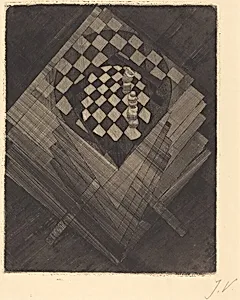
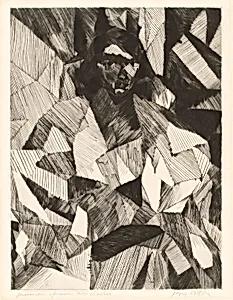
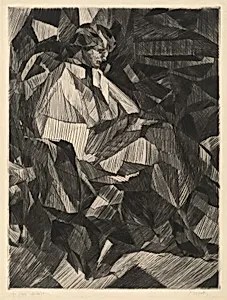
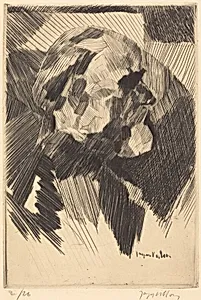
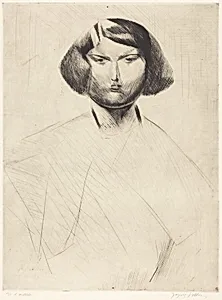
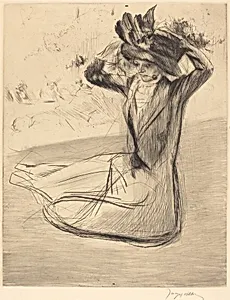
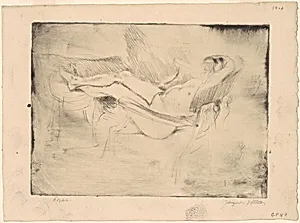
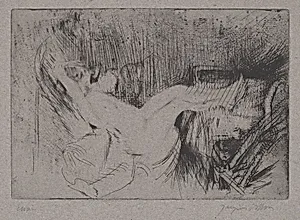
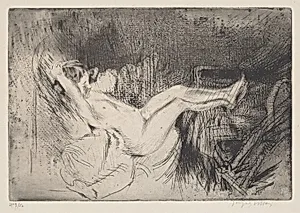
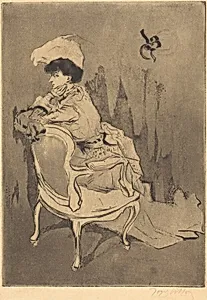
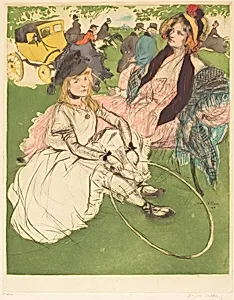
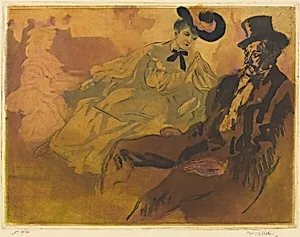
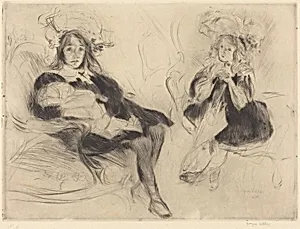
Villon's career ignited as a printmaker and illustrator in Montmartre, producing cartoons for satirical newspapers like *Le Courrier français* and Belle Époque posters until 1904. Relocating to Puteaux in 1906, he honed drypoint techniques with Manuel Robbe, transitioning to painting in Neo-Impressionist and Fauvist modes before embracing Cubism. A key figure in the Puteaux Group—formed at his home in 1911 with brothers Raymond and Marcel, alongside Jean Metzinger, Albert Gleizes, Robert Delaunay, and Fernand Léger—he named their 1912 Salon de la Section d'Or after the golden section, showcasing geometric harmony in over 200 works. Villon pioneered a purely graphic Cubism in prints, blending faceted forms with luminous colors, earning the moniker "Cubist-Impressionist." His style evolved into abstracted figuration and landscapes, always rooted in nature's observation.
Among his masterpieces are *Girl at the Piano* (1912, Museum of Modern Art, New York), an oval Cubist composition of pyramidal planes exhibited at the Armory Show; *The Dining Table* (1912, Metropolitan Museum of Art); *Portrait of Marcel Duchamp* (1913); and *Portrait de M. J. B. peintre (Jacques Bon)* (1914, Columbus Museum of Art). His Armory Show debut in 1913 sold out, cementing his transatlantic fame. Post-World War I obscurity gave way to honors: Chevalier of the Legion of Honor (1938), Carnegie Prize (1950), Venice Biennale Grand Prix (1956), and stained-glass windows for Metz Cathedral (1955).
Villon's legacy endures as the innovator of modern printmaking and a bridge between Cubism's rigor and Impressionism's light, influencing artists like Henri Fautrier through his mathematical precision and color theory. Though often overshadowed by Marcel, retrospectives like the 1957 Paris show and holdings in MoMA, the Met, and beyond affirm his profound contributions to 20th-century art.