Ctrl K
1770–1870
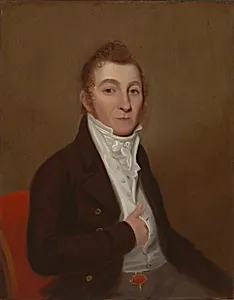
**James Alexander (1770–1870)** was a pioneering American coverlet weaver whose workshop in Orange County, New York, helped shape the distinctive textile traditions of the early republic. Born in Belfast, Ireland, to Scottish parents, Alexander arrived in America in 1789 already trained as a skilled trade weaver. He eventually settled in Little Britain, where he combined farming with the operation of a busy weaving workshop that employed several assistants.
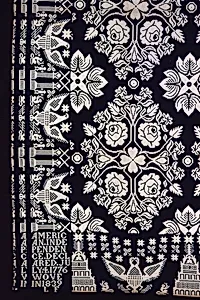
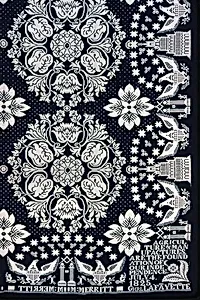
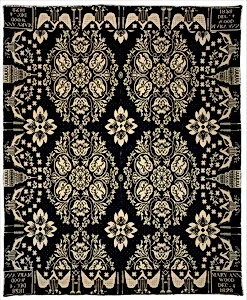
Alexander’s coverlets reflect the practical yet decorative aesthetic of early nineteenth-century American domestic weaving. Working in the established coverlet tradition of the Hudson Valley, he produced double-woven wool-and-cotton textiles, typically in two panels that were later sewn together. His designs are readily identifiable by their framed corner blocks bearing the client’s name, a sprigged leaf motif above the central eagle, and twin pine trees along the borders. These features distinguish his output from similar “Agriculture” group coverlets of the period.
Among the documented works from his workshop are coverlets dated 1820 (woven for Ann Blake), 1825, 1828, and 1839. Alexander maintained meticulous account books recording clients, expenditures, and receipts, providing rare insight into the economics of rural textile production. His brother John Alexander served as a business partner. Around 1828 Alexander retired from weaving to focus on farming; he lived to nearly one hundred and is buried in Newburgh, New York.
Today Alexander is recognized as one of the most important New York State coverlet weavers. The seven works attributed to him or his workshop in the museum’s collection exemplify the technical mastery and regional character of early American hand-weaving, preserving both functional artistry and the personal stories of the families who commissioned them.